Appearance Care as Emotional CareEpitheses that look like the real thing
Key Points
- Many people around the world suffer after losing a part of their body, and not a few refrain from going out or quit going to school or work.
- The option of having an epithesis made is not well known, so these artificial body part replacements and support for them are not yet widespread.
- It is important to have an understanding attitude and to refrain from labeling those who need epitheses as “unfortunate” or regarding them as “different.”
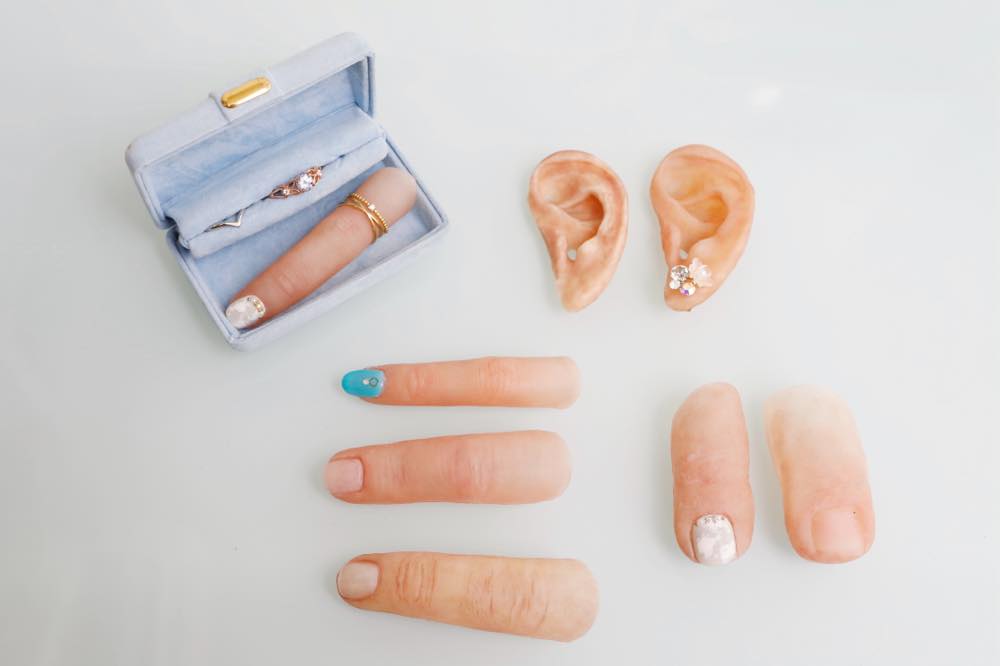
An epithesis is a prosthesis that is made to look almost exactly like the part of the body that was lost or impaired in an accident or due to disease or a congenital disorder. The main feature of an epithesis is its natural-looking appearance, since each piece can be crafted to perfectly match the individual’s physical characteristics.
Many people who have lost body parts have a complex about their appearance and have trouble interacting with others or returning to social life. Epitheses are designed to support such people by providing appearance care that also helps in their emotional recovery.
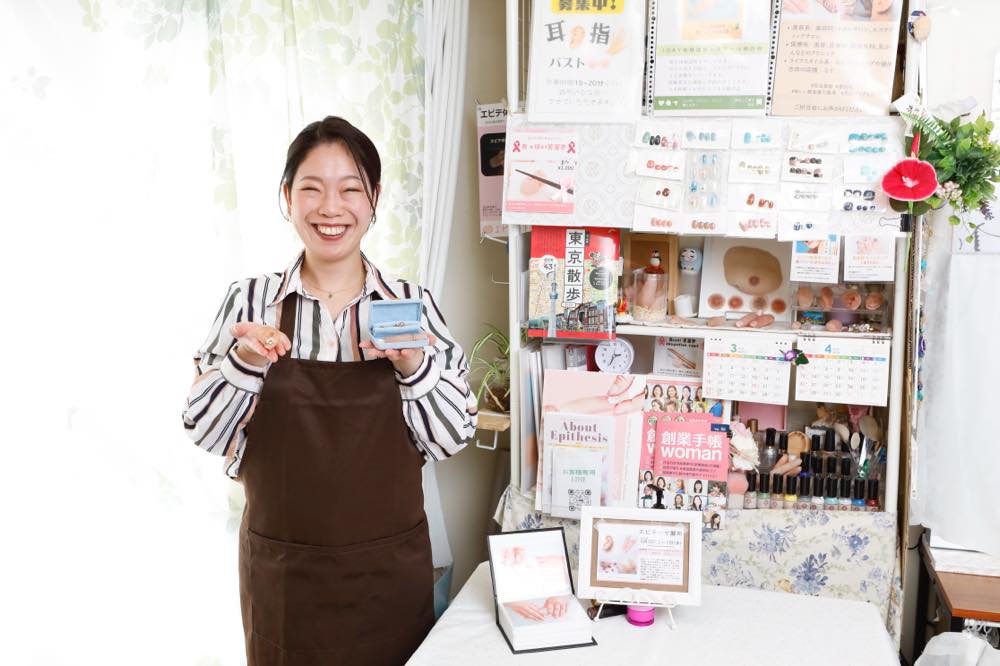
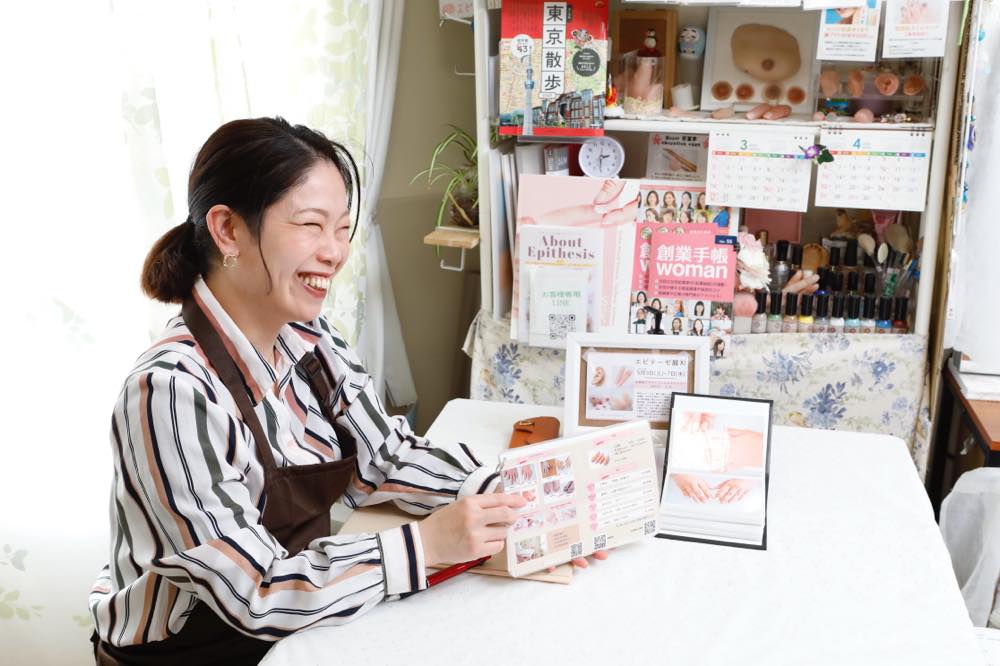
Situated in Tokyo’s Taito Ward, Epite Miyabi (external link, in Japanese) is a salon that specializes in order-made epitheses for women who have lost a body part.
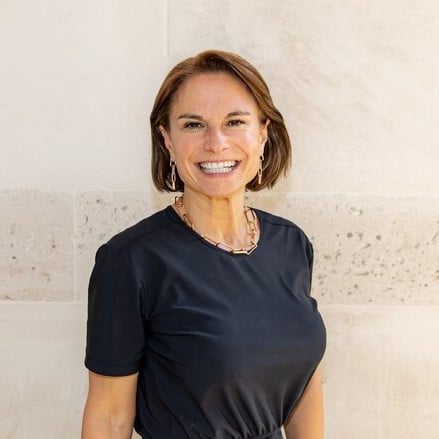
To find out how epitheses can support appearance care and emotional care and to learn about the concerns of people who have lost a body part, we spoke with Masami Tamura, an epithesis craftsperson who also serves as the Representative Director of Epite Miyabi.
Striving to let the world know about epitheses, when even those who need them might be unaware of their existence
The Nippon Foundation Journal Editing Department: Please tell us about your work at Epite Miyabi.
Masami Tamura: We produce customized epitheses for people who have lost part of their body due to accidents or disease, as well as for those who were born with shortened fingers or toes (brachydactyly), abnormally small or absent external ears (microtia), and other congenital defects.
Journal: Please tell us about why you started Epite Miyabi.
Tamura: What inspired me to start this company was meeting a friend who had lost an entire breast to cancer. She was despondent because she had given up one of her favorite pass times — going to hot springs — because she worried about others looking at her. She also complained that her bras would tend to ride up because of the difference in her right and left sides, and that her clothes no longer hung nicely, so she felt uncomfortable wearing light-weight clothing. I had previously worked as a dental technician and I happened to learn about epitheses when I went to America to enhance my skills. So, I urged my friend to try one. She was quite amazed when I told her about them, since even her doctor had not suggested this possibility and she had thought that the only option open to her was more surgery.
Q. Have you experienced any of the following due to changes in your appearance?
- I go out less frequently: 40.1%
- I no longer like meeting people: 40.2%
- I quit my job or school or stopped going: 42.6%
- Relations with my colleagues have become strained: 13.0%
- My relationship with my partner has become awkward: 12.0%
- My relationship with my children has become awkward: 4.9%
- Note 1: 601 of 1034 patients surveyed in 2018 said they had such experiences.
- Note 2: Source: “Survey on Changes in Appearance Accompanying Cancer Treatment and Ways of Dealing with Them,” National Cancer Center Hospital, Appearance Support Center (external link, in Japanese / PDF)
Tamura:I was struck by the fact that epitheses were not well known even among the people they are designed to help. At first, I began making epitheses using my skills as a dental technician. Learning that I could be of help and motivated by my friend’s predicament, I gradually started doing work in this area. From there, I began encountering many people who had similar concerns, so the number of people who consulted me because they had heard about epitheses through my efforts increased. I opened this salon in 2017, and after winning the top prize in a women’s business contest, I was able to start the company in 2018.
Journal: This is my first time to see actual epitheses; they really are exquisitely crafted to look like the real thing!
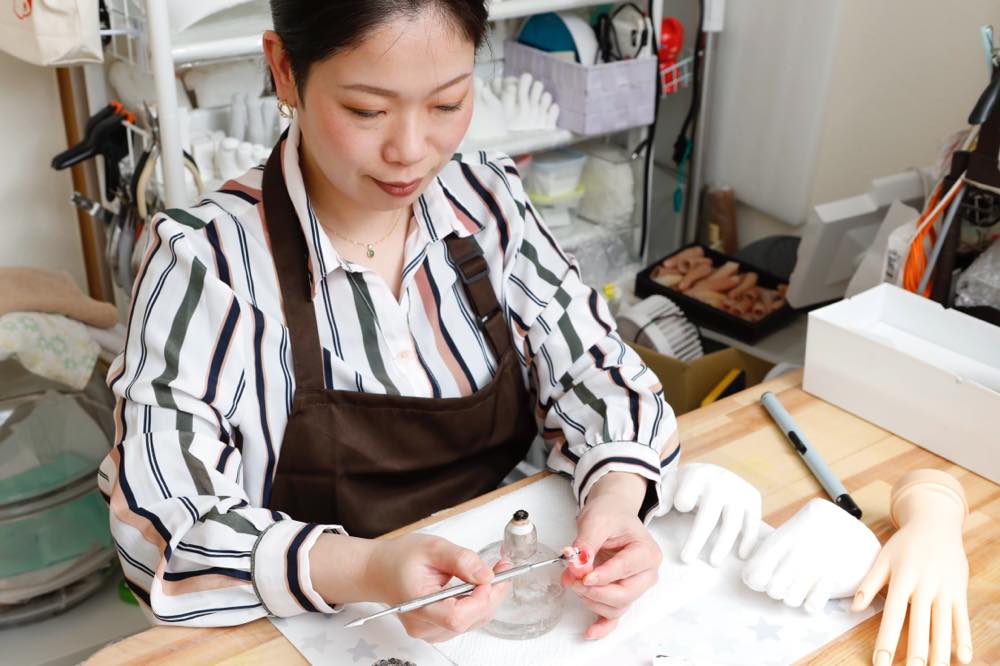
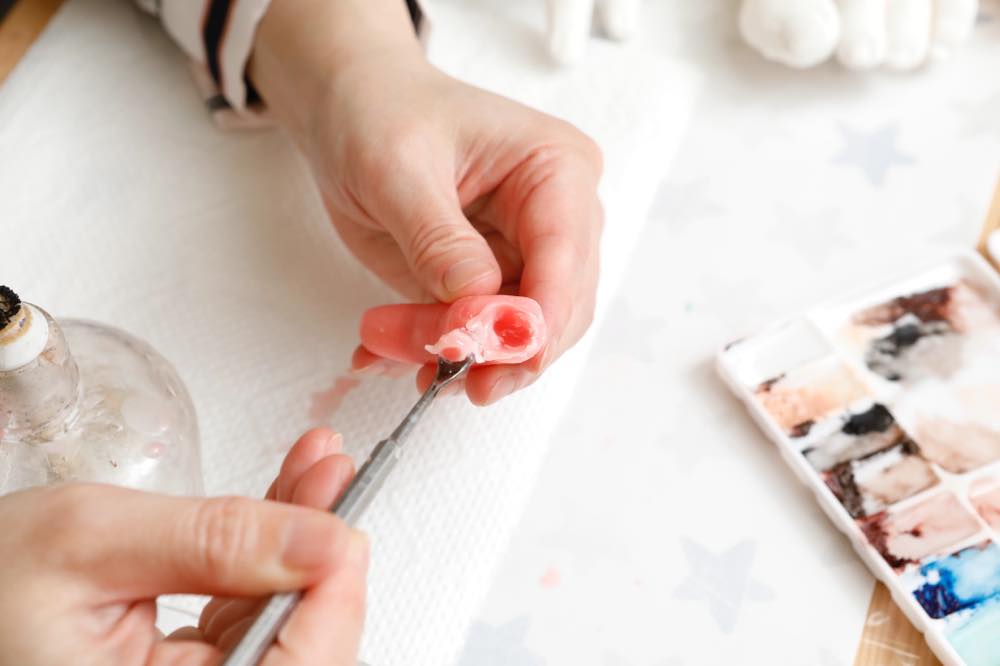
Tamura: Everyone’s body has its own unique characteristics, so I meet in person with customers multiple times not only to learn about their hopes and concerns, but also to check on the exact color of their skin and even the way it wrinkles so that I can make the needed part look natural to them. I also add creative touches to match the way the products will be used. For example, when I made an epithesis for a hula dancer, I straightened out the fingertip to reflect the important role fingers play in the dance. For lecturers who often have to hold mics, I round off the finger tips a little so that they can hold a mic more naturally. Thus, each item is custom-made in line with how the customer wants to use it. These days, around 90 percent of our orders are for fingers or toes, with the rest consisting mainly of ears and breasts. I use medical-use silicon, which is safe and can be washed. The products are also very easy to take off and put back on again.
Reclaiming their appearance allows many to say they have reclaimed themselves: The decisive emphasis on looks
Journal: What kind of concerns do people who want epitheses have?
Tamura: One worry that I often hear is that fingertips are quite visible in everyday life, so people who have lost them tend to worry about appearing in public. For example, a clerk might feel awkward about giving change to customers, an office worker may worry about handing documents to others, people might not want to sign papers in front of others, and some are reluctant to think about love. I’ve also had customers tell me, “The person I was talking to kept looking at my fingers, so it was hard to keep the conversation going.”
Journal: So, the reactions of people around them is a major cause of anxiety. How do customers feel after they have put on their epithesis?
Tamura:Many of my customers who lost a part of their body due to an accident or illness tell me they feel like they have got their former self back. One had tears in her eyes as she told me, “I’m finally able to go out in public.” One who wanted a natural-seeming appearance told me, “This is just what I was looking for.” She was a beautician and was therefore often standing in front of others, so she felt that “being seen” was part of her job. Looking natural was essential to her. This long-term customer told me that there was a set of three things she always made sure she had with her when leaving home: her housekey, her cellphone, and her finger epithesis. There was also one instance in which the person who had an epithesis made told me that he’d been able to approach someone he liked a lot — showing how it had led to a more positive attitude toward love. I think that his epithesis had enhanced his external appearance, allowing him to show his true inner self more confidently.
Journal: So, epitheses improve not only the clients’ appearance, but also their emotional well-being?
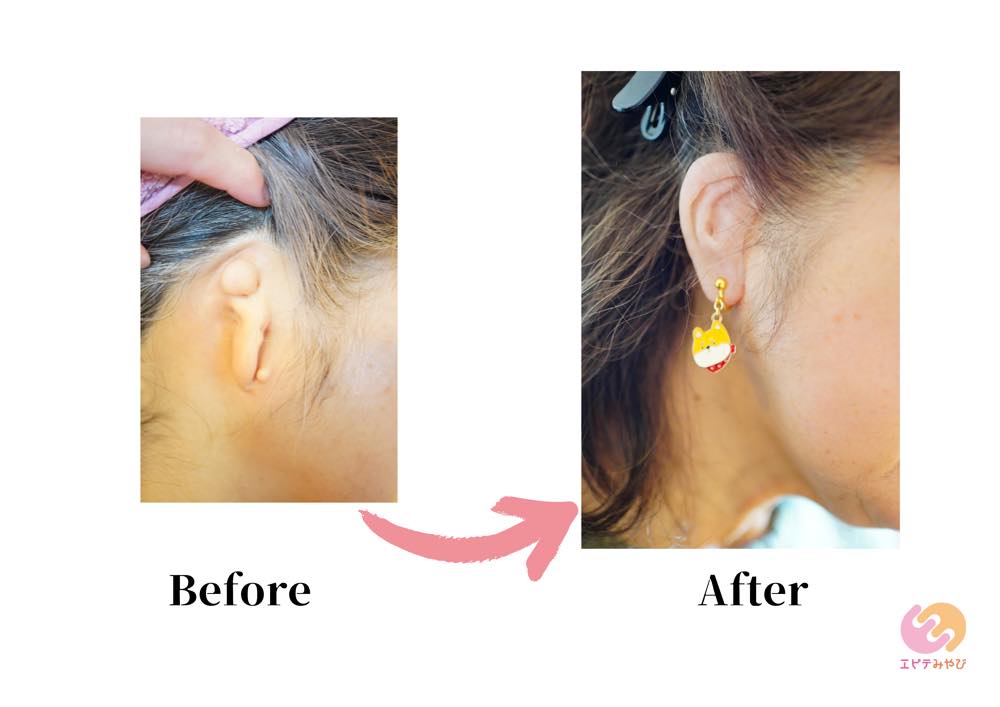
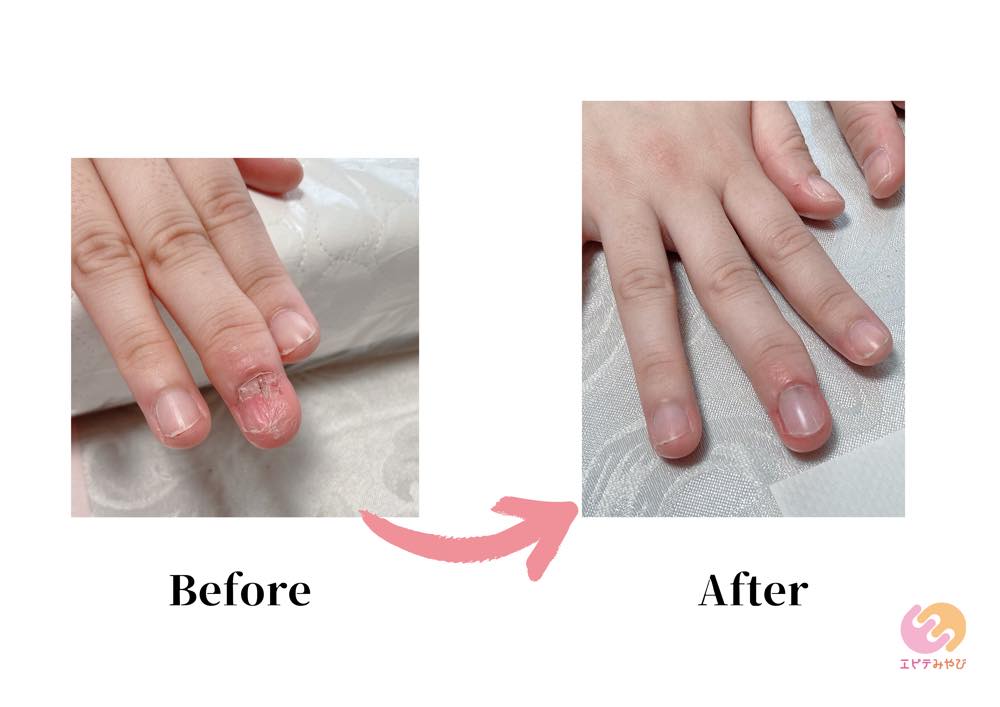
Tamura: Exactly! Another concern I have often heard from clients is that they couldn’t use nail art or pierced earrings. They would compare themselves to those around them and become depressed because they couldn’t enjoy fancy nails, for example. My salon therefore offers nail art epitheses for people who were born without nails or whose nails were deformed in accidents. I also make ear epitheses for people who were born without auricles or with very small external ears. Once I made an ear epithesis for a woman born with anotia so that she could wear pierced earrings she had inherited from her mother.
Tamura: I also offer skin epitheses for people whose skin has been damaged or subsided due to an autoimmune disorder, and for those who wish to hide the scars left after surgery to repair a congenital cleft lip.
Journal: I am amazed at how many concerns can be alleviated by epitheses! I would have never thought about nail art or earrings!
Tamura: These may seem like small things, but they are heart-felt concerns that cannot be resolved by artificial limbs. It takes an epithesis, crafted to enhance appearance, to solve them. That’s why I look at epitheses as items closer to wigs and makeup than medical equipment; they are more closely embedded in everyday life.
Broadening user options through greater recognition
Journal: Awareness and use of epitheses are both low in Japan. Why do you think that is?
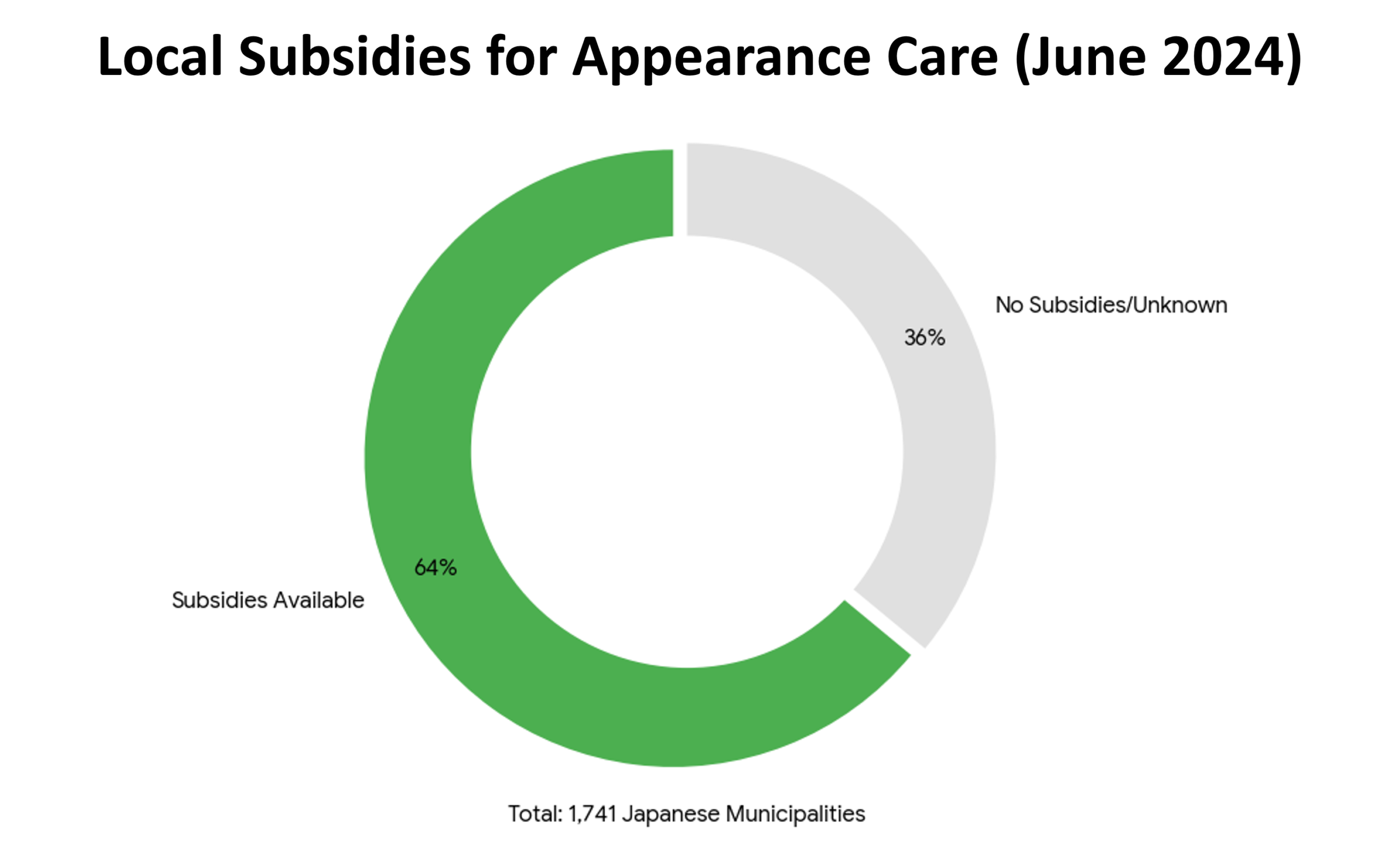
Tamura: If someone who has lost a finger goes to a medical institution, they will usually be met with a suggestion to surgically remove a toe and put it on the hand, or offered a prothesis. Not all patients receive the kind of support they really want. Not many medical institutions offer substantive appearance care to deal with changes in the patient’s looks, so it is hard for people under medical care to even encounter the option of epitheses. I also feel that, while there are many cases of epitheses being offered to enhance appearance after cancer treatment, coverage for people with congenital issues or those who have lost body parts in accidents is still rare. In the past few years, some local governments have started providing subsidies and awareness is spreading, but it is still insufficient around the nation as a whole.
Journal: So, adjustments need to be made to promote greater awareness and use of epitheses.
Tamura: That’s right. Also, many people who do use epitheses do so to hide their loss, so it can be hard for the clients themselves to promote them. I also think it is partly due to a tendency to be circumspect when talking about disabilities. I do think the Paralympics and the media have raised awareness about people who have lost body parts, but in general, most people hesitate to casually touch on something that causes others pain. I think such factors combine to slow down the spread of awareness and use of epitheses.
Journal: What kinds of things are you doing to help more people learn about of epitheses?
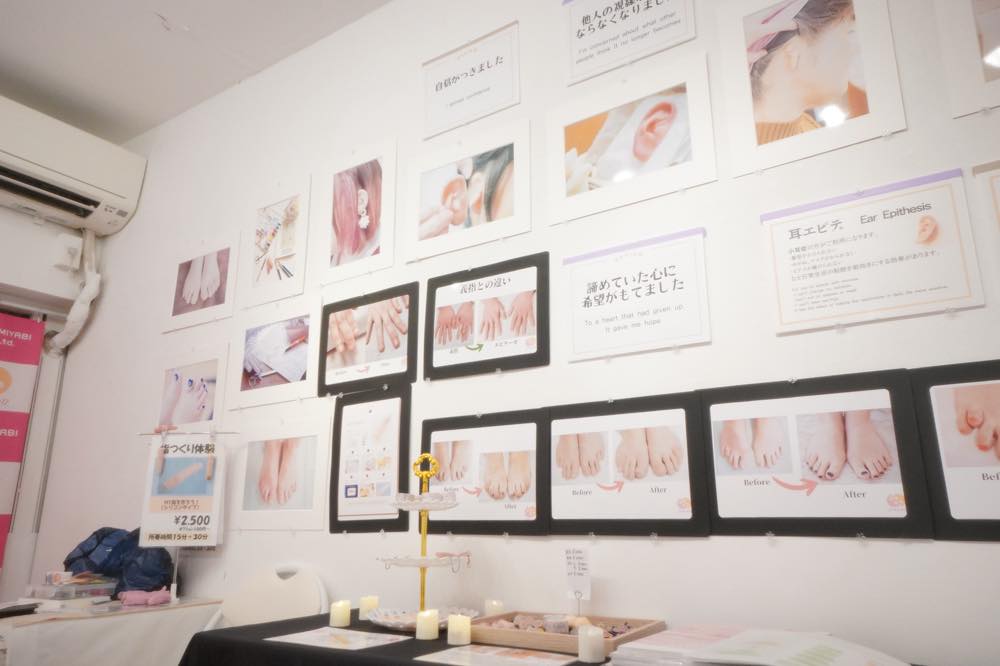
Tamura: I feel that we need to get the word out as widely as possible — and not just to the people who will use them. By increasing the number of people who know about epitheses, we can increase the chance that they will tell people who need them about this option. This is why I am actively setting up exhibitions that are open to all. There, anyone can touch real epitheses and see before and after pictures of them in use. Moreover, since no special certification is needed to make epitheses, if more people become interested in making them, their use will also spread.
Journal: Please tell me what each and every one of us can do to make society more comfortable for people who have lost body parts.
Tamura: First, it is important for people to know that there are people who are suffering because they have lost part of their body and that epitheses are an option for them. By keeping these things in mind, you can offer them strength and the opportunity to mitigate their anxiety. Also, instead of regarding the topic as taboo, I believe it is important to show respect for people who need them, embracing an understanding attitude and refraining from labeling them as “unfortunate” or seeing them as “different.” People tend to have a negative image of those who need epitheses, regarding these items as something that unfortunate people wear, but I look at them as something people who have faced down their complexes use; they put them on to look fashionably beautiful. I hope that someday, people will be able to turn to epitheses as casually as they do to beauty parlors.
Editor’s Note
It is difficult for people who have not suffered the loss of a part of their body to fully understand the worries and complexes they may have. You may want to reach out to them, but end up feeling it would be taboo, so you hesitate. For such people, an epithesis may help ease their anxiety a bit. I decided to do the research for this article because I felt that general awareness of such problems is still quite low. As Ms. Tamura points out, if people know about epitheses, they can swiftly give information about them to those who need them. Rather than treating the topic as a taboo, we need to try to understand people. I believe Ms. Tamura’s activities serve as a big hint for all of us living in society today.
Text: The Nippon Foundation Journal Editing Department
Photo: Emi Enishi