Willing to Work, Even with an Intractable DiseaseRyoiku World’s vision for a society where everyone can thrive
Key Points
- An “intractable disease” is defined as a rare condition of unknown cause, with no established treatment, requiring long-term care. Among these, conditions meeting specific criteria are classified as “designated intractable diseases.”
- Ryoiku World uses the term “persons with intractable diseases” to refer not only to individuals with intractable or designated intractable diseases, but also to those with rare disorders and chronic, hard-to-treat conditions still under research.[1] It provides support for these individuals as well as for persons with disabilities.
- Rather than a narrow focus on the challenges of intractable diseases, we should be asking, “how can we create an environment where everyone can work comfortably?”
- Note 1: Ryoiku World’s own definition. Extending beyond existing frameworks, it encompasses conditions that may lack rarity or clear diagnostic criteria but involve chronic symptoms such as severe pain or fatigue, forcing prolonged treatment, significant restrictions on work and daily life, and social isolation.↩︎
What comes to mind when you hear the term “intractable disease”? Influenced by portrayals in TV dramas and films, many people picture someone bedridden or suffering from an incurable illness.
In reality, intractable diseases range widely from conditions affecting only a few dozen people worldwide to those affecting hundreds of thousands. There are several thousand known disorders, including congenital and acquired conditions, progressive and chronic illnesses, and some that can go into remission, meaning symptoms temporarily or progressively lessen or even disappear. The circumstances of people living with intractable diseases are diverse. Among them are individuals who fall through the gaps in the system, receiving no public assistance, and others who feel compelled to hide their illness in order to keep working.
In 2021, the nonprofit organization Ryoiku World(external link, in Japanese) [2]produced a booklet titled White Paper on Social Participation of Persons with Intractable Diseases (external link to PDF, in Japanese) to promote understanding of intractable diseases and disabilities and promote social inclusion. Ryoiku World continues its awareness-raising activities today. For this article, we spoke with Takayuki Shigemitsu, the organization’s representative and himself a person living with an intractable disease, about what intractable diseases entail, the challenges patients face in employment, and what measures are needed to support their participation in the workforce.
- Note 2: Ryoiku World is an organization that builds bridges between society and persons with disabilities or intractable diseases. It runs two initiatives: “THINK UNIVERSAL,” which connects disability welfare and society, and “THINK POSSIBILITY,” which supports employment and social participation for those affected. Through these efforts, the organization fosters mutual understanding among individuals, supporters, and the general public, aiming to create a society where everyone can live as they wish.↩︎
Awareness and understanding of intractable diseases still lag compared with disabilities
The Nippon Foundation Journal Editing Department: Could you explain “intractable diseases” for us once again?
Takayuki Shigemitsu: Intractable diseases are defined as “rare diseases of which the pathogenic mechanism is not clear and the treatment methods are not established and which require long-term medical treatment having contracted the disease.” Among these, conditions that meet certain criteria – such as having a limited number of patients and established diagnostic standards – qualify as “designated intractable diseases.” Under Japan’s Intractable Diseases Act, these conditions qualify for a medical expense subsidy program, which partially covers treatment costs.
To give you some numbers: as of 2025, there are about 7 million people living with intractable diseases in Japan. Of these, 348 conditions[3] are classified as designated intractable diseases, affecting approximately 1.08 million people. For comparison, in 2023, the combined number of holders of government-issued certifications of physical, intellectual, and mental disabilities in Japan totaled 7.51 million. This is almost the same as the total number of persons with intractable diseases. Of course, some individuals fall into both categories, but overall, we estimate that one in nine Japanese people has some form of disability or intractable disease.
In addition, there are several relatively new illnesses for which no treatment has been established, yet they do not fall under the official definition of “intractable disease.” At Ryoiku World, we use the term “persons with intractable diseases”[4] to include these individuals as well. Our activities focus on awareness-raising and education, advocacy with national and local governments, and expanding options for those affected.
- Note 3: Reference: “Designated Intractable Diseases, Effective April 1, 2025 (Notification Nos. 1-348)” Ministry of Health, Labour and Welfare (external link, in Japanese) ↩︎
- Note 4: In Ryoiku World’s own definition, the term “persons with intractable diseases” encompasses those with intractable diseases, rare disorders, and chronic intractable conditions still under research.↩︎
Journal: Could you tell us how you came to establish Ryoiku World?
Shigemitsu: The roots go back to my experience as a volunteer at a welfare facility for persons with disabilities during my student days. What started as “helping out as a volunteer” turned into a profound learning experience through my interactions with children with disabilities and their caregivers. That inspired me to begin activities aimed at “creating more points of contact between disability welfare and society,” and in 2012, I founded the Ryoiku World organization.
Later, at age 25, I developed an intractable disease called cerebrospinal fluid hypovolemia. For a while after launching Ryoiku World’s activities, I tried to ignore my own illness. But thanks to encouragement from other members, I began to face it head-on.
When I looked into it further, I realized that awareness of intractable diseases is even lower than that of disabilities, and formal systems are far less developed. That experience led me to expand our work to include initiatives that help people learn about various disabilities and intractable diseases, policy advocacy directed at national and local governments, and indirect support programs.
Journal: Tell us about the word “Ryoiku” in the organization’s name. Usually this is written using the characters 療育, usually meaning therapeutic education. Why did you choose the characters 両育 instead?
Shigemitsu: This version of “Ryoiku” is a term I coined when the organization was founded. The use of the character 両, expressing duality or mutuality, is informed by firsthand experience: rather than a one-way relationship of “supporter” and “supported,” it’s about growing together through mutual learning and nurturing.
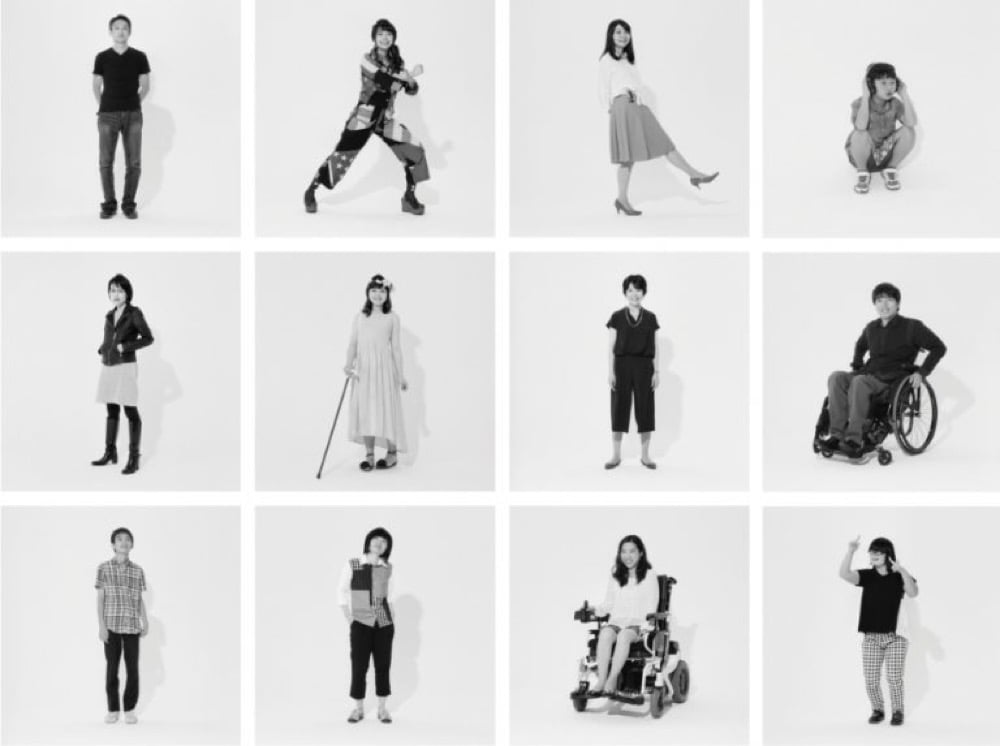
Society is still designed around the assumption that “healthy people work full-time as regular employees”
Journal: How do persons with intractable diseases typically work?
Shigemitsu: Just as an example, one of our staff members has ulcerative colitis*1 and works at a facility supporting persons with disabilities while also helping out at Ryoiku World. When ulcerative colitis was classified as a designated intractable disease in 2013, she became eligible for welfare services, which helped stabilize her health.
Because of the nature of this staff member’s workplace, there is understanding about her condition, and she’s able to work full-time. But not everyone has access to such an environment. Some employers shy away simply because of the term “intractable disease,” and even with the same illness, symptoms can vary greatly from person to person, or even from day to day. The reality is that many people struggle to gain understanding in the workplace.
Shigemitsu: Another staff member developed Crohn’s disease[5]at age 45. Until the condition stabilized, this staff member was repeatedly hospitalized and discharged, and as a result, their position at work was downgraded.
Many people with intractable diseases share similar concerns if their conditions are not outwardly visible: “Will I be demoted?” “Will I cause trouble for my employer?” “Will I lose my place at work altogether?” Because of these fears, many cannot bring themselves to disclose their illness in the workplace.
Listening to the experiences of persons with intractable diseases makes me feel that while shorter hours, remote work, and other flexible work arrangements are becoming more common, society is still fundamentally designed around the assumption that “healthy people work full-time as regular employees.” I believe the underlying issue is that persons with intractable diseases are not included in the disability employment system[6].
- Note 5: Inflammatory bowel disease is the generic term for chronic inflammation or ulcers of the mucosa in the large and small intestines caused by unknown factors. Depending on symptoms, it is classified as ulcerative colitis or Crohn’s disease.↩︎
- Note 6: This system requires companies to employ persons with disabilities (physical, intellectual, and mental) at or above a legally mandated percentage of their total workforce. For further information, see this article: “Why Is Disability Employment Progressing So Slowly? Insights from a Disability Employment Consultant” (opens in a new tab)↩︎
Journal: I imagine your motivation for creating the White Paper on Social Participation of Persons with Intractable Diseases (external link to PDF, in Japanese) was to share the voices of these individuals. What kind of response have you received?
Shigemitsu: We’ve received many comments from persons with intractable diseases saying, “You expressed what we wanted to say.” And while the White Paper wasn’t the only factor, in 2022, an additional resolution[7]attached to five welfare-related bills tabled in the Japanese parliament listed intractable diseases as one of the priority items. Another initiative is Yamanashi Prefectural Government’s launch of a separate regular employee recruitment exam specifically for persons with intractable diseases, beyond the disability employment quota. So I feel the impact is spreading little by little.
- Note 7: A parliamentary resolution stating requests or points of attention when implementing an approved measure. ↩︎
Journal: What kinds of accommodations or initiatives are ordinary private-sector employers making for employees with intractable diseases?
Shigemitsu: I often hear that understanding is growing, especially among major corporations. The adoption of remote work by many employers since the COVID-19 pandemic may have been one catalyst. At one company, for example, they institutionalized flexible working hours for employees who need to attend dialysis sessions, which also made it easier for parents with childcare responsibilities to work.
- For further information, see this article: “Options for Dialysis: Choosing the Treatment That Fits Your Own Way of Life” (opens in a new tab)
Creating a work environment accessible not only for persons with intractable diseases, but for everyone
Journal: What kinds of initiatives are you undertaking to make society more accommodating for workers with intractable diseases?
Shigemitsu: A society where persons with intractable diseases can work comfortably is, in other words, a society where people with various constraints can work comfortably: not only those with intractable diseases, but also people raising children, caring for aging parents, or older adults themselves. There are many people who want to work but cannot because of their circumstances. As the working population in Japan continues to decline, we want to keep pushing toward the goal of creating a society where everyone can work comfortably.
Another point is that I hope people won’t get too caught up in the term “intractable disease.” Especially employers: I’d like them to focus not on the illness itself, but on the person’s motivation and abilities, and consider what kinds of work arrangements could make the most of those abilities. Many of our colleagues with intractable diseases are working creatively and resourcefully precisely because of the constraints they face.
Earlier, I mentioned that one of Ryoiku World’s activities is “indirect support.” We’ve now launched a service that renders visible the situations faced by persons with intractable diseases.
Shigemitsu: Chronic symptoms often cause significant physical and mental stress for persons with intractable diseases. This service aims to reduce stress and stabilize health while improving QOL (Quality of Life) by having users record their daily condition in detail and create their own “instruction manual.”
By sharing this with their workplace, companies can move beyond thinking “this person seems to be struggling because of illness” and instead understand the specific characteristics of the person’s symptoms and what adjustments would enable them to work. We believe that alone can help create a more comfortable environment for both sides.
It’s true that persons with intractable diseases have various physical symptoms that differ from those of healthy people, and adjustments such as flexible working hours and individualized accommodations are necessary. But if those hurdles can be overcome, they absolutely can work.
We want society to know that there are persons with intractable diseases who want to work and are able to work. To spread this message, we coined the term “RD Worker,” with RD standing for “Rare Disease.” The term refers to new work styles – combining flexible hours, remote work, and other arrangements – that make employment possible for persons with intractable diseases who cannot fit into rigid work patterns. It also refers to these individuals as pioneers of a society where everyone can work comfortably.
Shigemitsu: Understanding what work style suits your condition is the first step toward starting or continuing work without strain. By identifying your employment type, you can choose a work style that fits you.
If both employers and employees learn about intractable diseases and focus on “when and for how many hours a given individual can work,” I believe employment for persons with intractable diseases will change significantly.
What each of us can do to help create a society where persons with intractable diseases can work comfortably
- Eliminate unconscious assumptions about persons with intractable diseases, such as “They must have a hard time” or “They probably can’t move much.”
- Remember that “intractable disease” is a broad term: symptoms and physical condition vary greatly from person to person. Creative adjustments to provide an environment suited to each individual are essential.
- If persons with intractable diseases have their own “instruction manual” summarizing their characteristics, communication can become much smoother.
I visited Ryoiku World for this interview after I became aware that the term “intractable disease,” which I had been using casually, actually has a precise definition – and that there is a gap between that definition and common interpretations.
Through our conversation, I came to understand that persons with intractable diseases are closer to us than we think. I also learned that many struggle with concerns about working.
This interview reinforced the importance of asking ourselves: “What can I do to help the people around me work in a better environment?” – not only for persons with intractable diseases, but for everyone.