Akira Morioka Dedicates Himself to Developing Assistive EquipmentInspired from taking care of a friend with ALS
Key Points
- Akira Morioka is a professor emeritus at Tohoku University who develops assistive equipment on his own. He started when taking care of a sick friend.
- His development activities are rooted in a commitment to reduce barriers for persons with disabilities and the burden on caregivers.
- When helping those with disabilities, it is important to consider their personality and feelings and to honor their dignity.
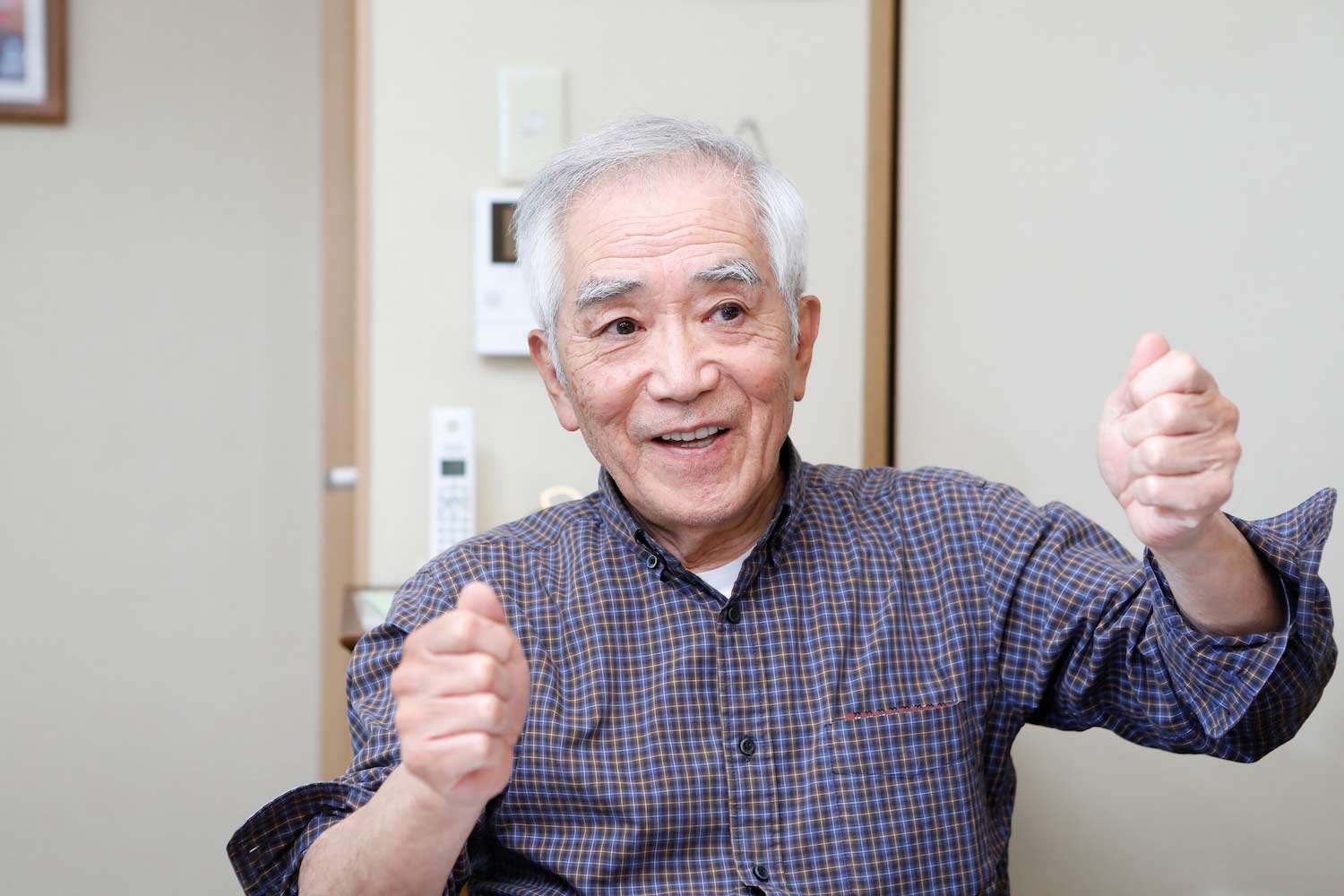
In the city of Sendai, Miyagi Prefecture, there is a person who develops assistive equipment to help persons with disabilities on his own. His name is Akira Morioka, professor emeritus at Tohoku University. Formerly a science professor and researcher, Mr. Morioka has been developing a variety of assistive equipment for wheelchair users and others with mobility issues since he retired.
When working on his inventions, Mr. Morioka prioritizes developing things anyone can build by making the structure as simple as possible and using materials readily available at home improvement centers and big-box stores. He posts what he does on YouTube, and while some viewers ask to buy his equipment, he charges only for the cost of materials because the main reason he does it is to help those with physical disabilities.
He started developing assistive equipment when a friend of his was diagnosed with ALS (amyotrophic lateral sclerosis) in December 2011. ALS is a disease that causes the gradual degeneration of muscles in the limbs, throat, tongue, and those required for breathing. In Japan, an estimated 10,000 people are affected. Every year, an average of 2.2 out of 100,000 people develop the disease.[1]
His friend lived only a year and a half after coming down with the disease, but Mr. Morioka continues to devote himself to developing assistive equipment. We talked with him about his thoughts on his work and the development process.
- Reference : Japan Intractable Diseases Information Center, Japan Intractable Diseases Research Foundation↩︎
Assistive equipment created from the desire to help a friend with ALS
The Nippon Foundation Journal Editing Department: What made you start developing assistive equipment?
Akira Morioka: About 13 years ago, a friend who was in the mountaineering club with me in high school developed ALS. We were in the mountaineering club together at university, too. After graduating, we remained friends and would occasionally get together to go ski mountaineering or out for drinks.
When it was discovered that he had ALS, the other former mountaineering club members and I immediately formed a group to help him. Sometimes we would take him out to go for a walk or a drive, sometimes we would watch sports or go on a trip together. During that time, I tried to think of ways he could maintain his mobility and quality of life, if even a little. This led me to start making equipment by hand that would help him in his daily life.
Journal: What was your friend’s reaction?
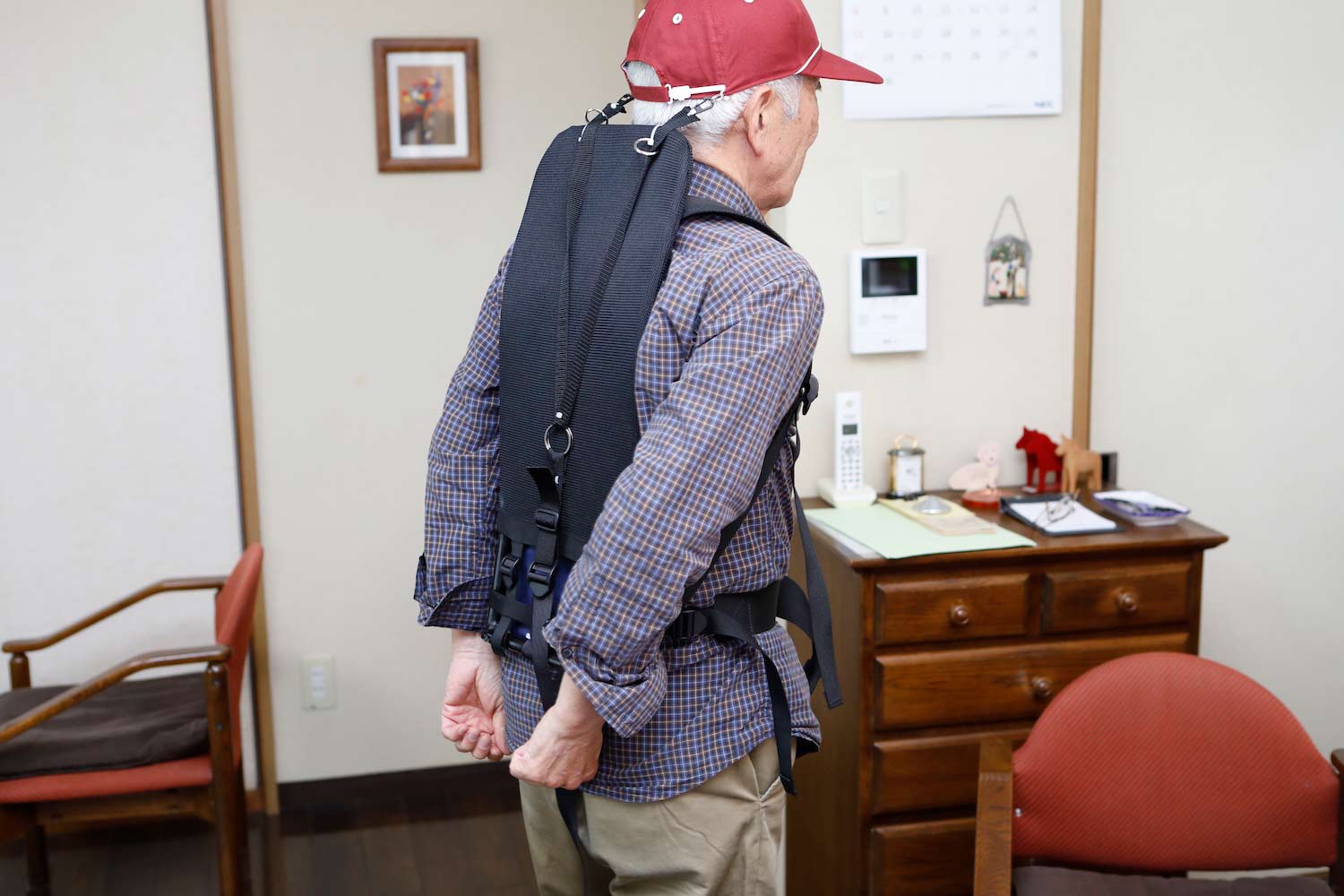
Morioka: ALS had weakened his neck muscles, making it hard for him to support his head on his own. So, I developed something I call a “Head Fixer” to support his head. I attached a pack frame[2] for mountaineering to a hat. When you put it on, it automatically supports your head.
The first time I put a prototype on him, he smiled from ear to ear. I think it was the first time seeing him smile brightly since he got sick. I still remember it clearly. His reaction encouraged me to keep inventing.
Journal: How do you come up with ideas for assistive equipment?
Morioka: I usually get ideas when I see someone with a disability inconvenienced, or a caregiver having difficulties. Then I go back to my room to work on turning the idea into reality through trial and error. I only use materials I can get at a home improvement center or order online.
For example, let’s say there is a person whose arm muscles have deteriorated, making it difficult for them to bring a cup to their mouth. They may actually want to drink hot coffee, but they have to ask their caregiver for it, and the caregiver gives them cold coffee with a spoon. Or even though the person may want to gulp down a beer, they have to sip it with a straw.
It must be really frustrating, since although their muscles have deteriorated, their brain and mind remain the same. So, I developed the “Banshaku (evening drink) Arm.” If you gently press the attached cup to your lips, the cup tilts and only the amount you want goes into your mouth. This way you can gulp down beer or slowly sip sake.
- Note 2: A pack frame is a frame worn on the back used to transport a load by fastening it to the frame.↩︎
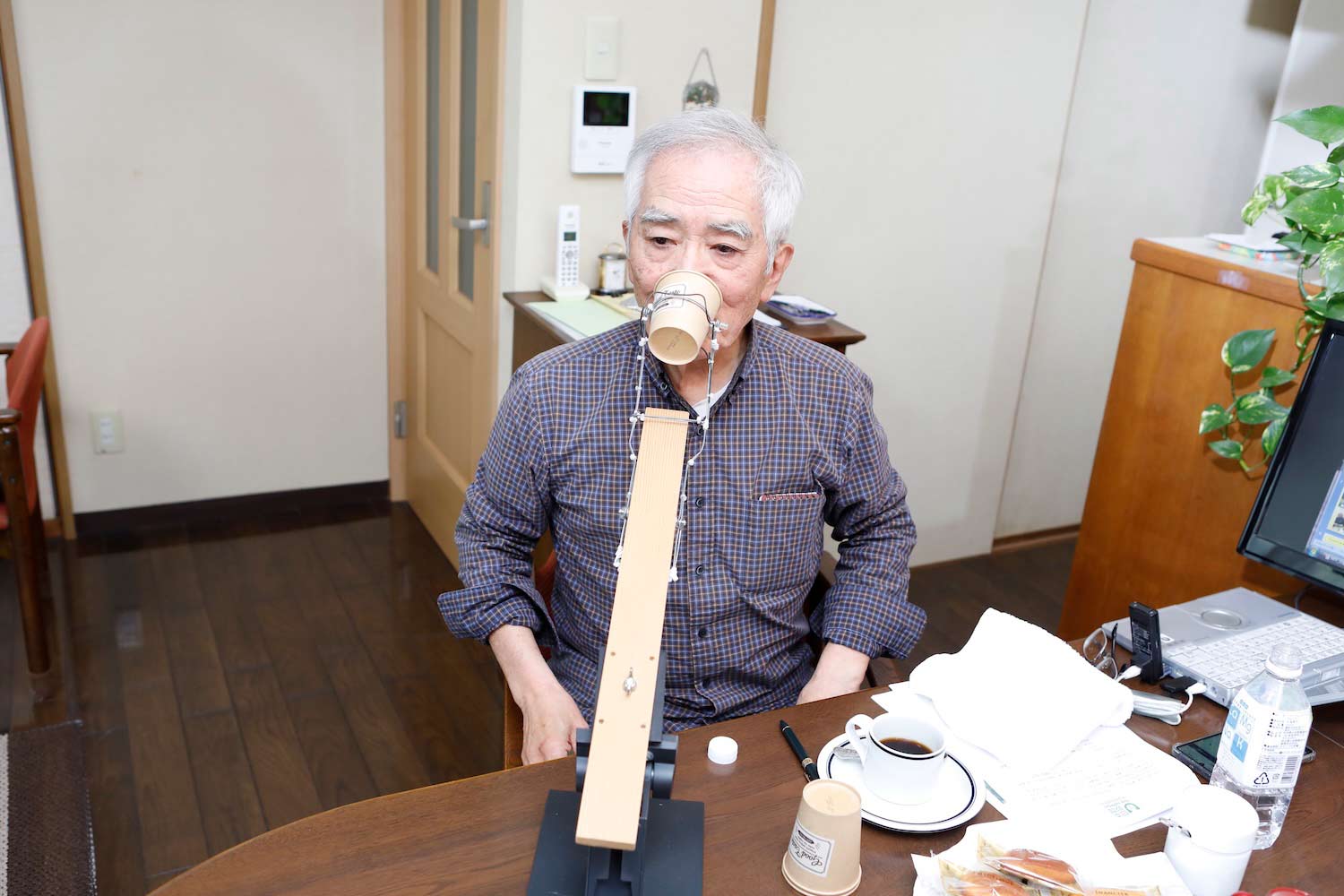
Lessening the burden on caregivers leads to improving the QOL of persons with disabilities
Journal: Being able to drink what you really want, as much as you want, is an essential activity for an enriching life, isn’t it?
Morioka: It is. And, as I mentioned earlier, I also wanted to help caregivers, so I developed several pieces of equipment for that too, like the “Abt Lift Aid.” Going out is an extremely big job for people who use wheelchairs. It is especially difficult for an older person who takes care of another older person — like in the case of an older married couple. They have to install a wheelchair ramp at the entryway and carefully push the wheelchair up and down the ramp. It’s very hard work.
But refraining from going out is not the answer either. I want people with physical disabilities to be able to go out often, breath in the fresh air, and enjoy life.
With the “Abt Lift Aid,” you can push a wheelchair up or down a slope in small increments. This allows older people to take frequent breaks while pushing a wheelchair, which I think will make it easier for them to go out.
Journal: I can see how lessening the burden on caregivers leads to improving the QOL for persons with disabilities.
Morioka: It does. Lessening the burden on caregivers contributes to the well-being of persons with disabilities. Another issue with wheelchairs is that after going out, you have to wipe the tires off before going back inside.
This is more work than you might think. If that’s the case, then maybe there should be slippers you could cover the tires with, I thought, and came up with the “Tire Slipper.”
Journal: What a great gadget! It is such a simple design. I think it would help many people.
Morioka: More than a few people with disabilities and their caregivers just lose heart. They think, “It’s a struggle, but what can I do?” I identify problems and try to come up with out-of-the-box solutions.
Journal: I see that you post videos about the assistive equipment you develop on YouTube.
Morioka: I do. There are two reasons why. One is for those with disabilities and their caregivers to see my inventions and think of using or making them themselves. Another is that if I post videos on YouTube, if someone were to develop something similar, it would be difficult for them to get it patented.[3] It also prevents exclusive sales. My hope is that if my assistive equipment ideas spread, someday they will be produced and sold by a manufacturer. Then they will be available to more people at low cost.
- Note 3: With certain exceptions, as a rule, you cannot get an invention patented if it has been shown at a trade show, on the news, or the internet before the patent was applied for—even if you invented it yourself. Reference: Japan Patent Office: Beginners↩︎
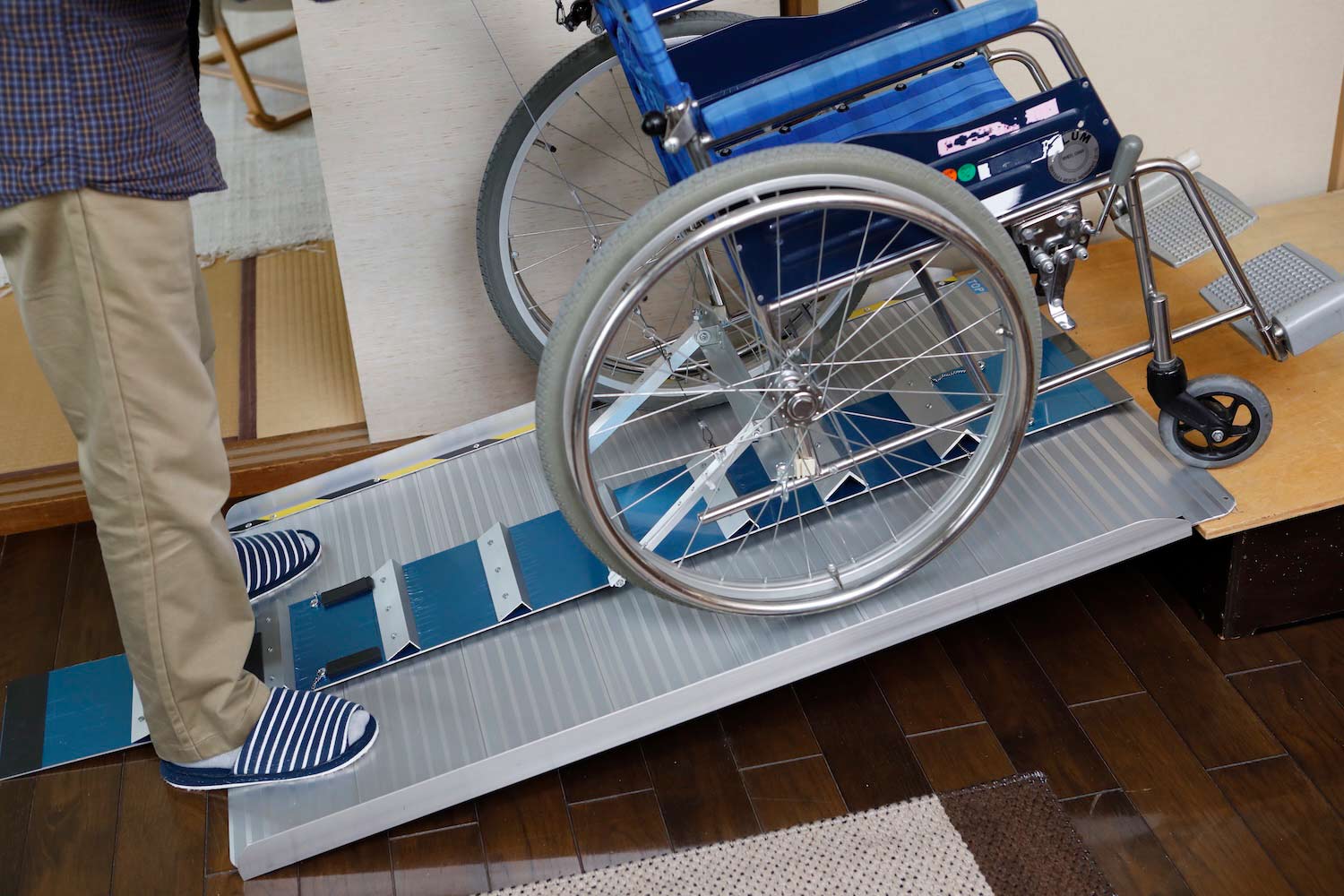
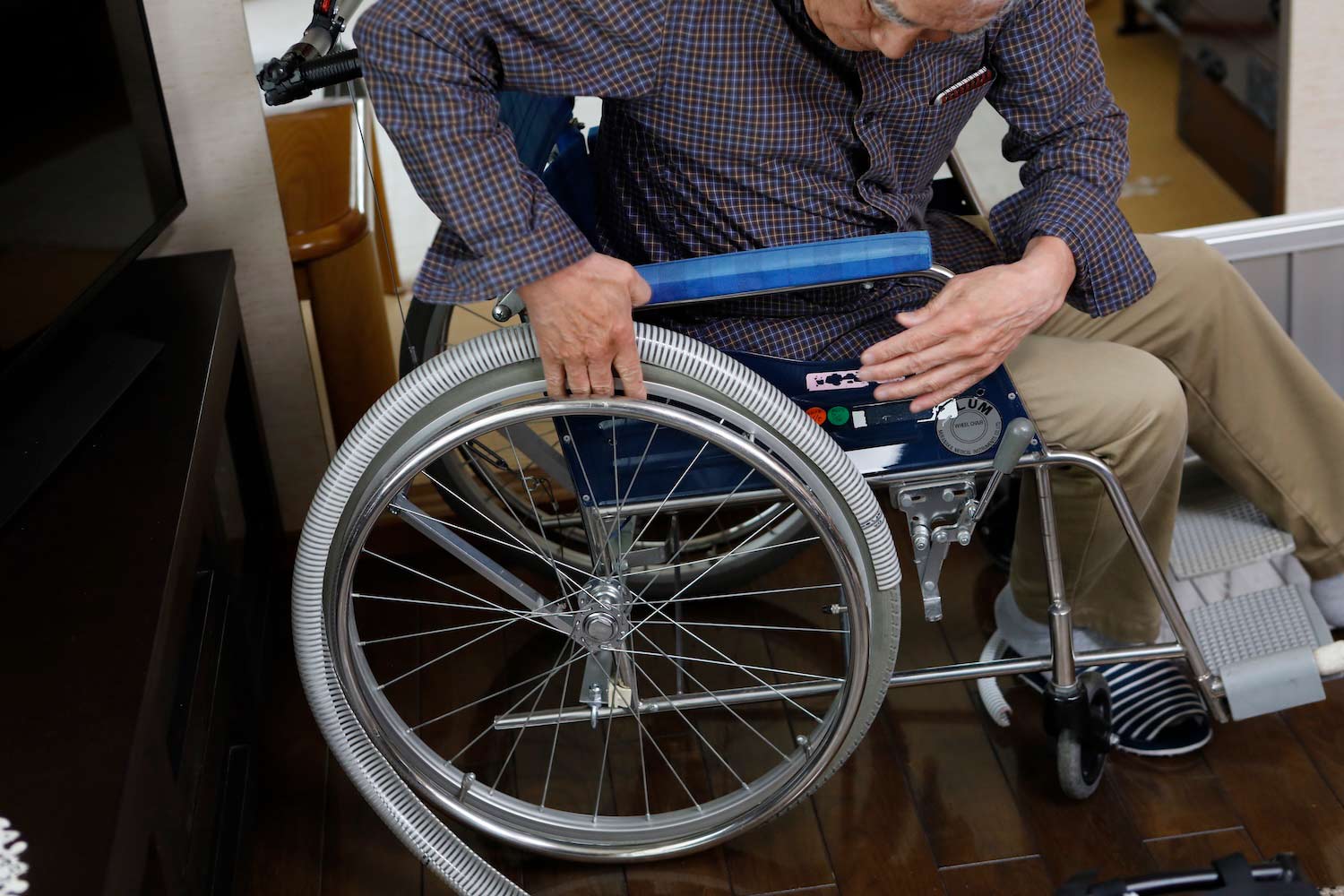
Enabling persons with disabilities to feel free to go out
Journal: You mentioned that what led you to develop a variety of assistive equipment was your friend getting ALS, but has the experience also made you realize what is lacking in society today?
Morioka: I think Japan has a very strong welfare system. Because ALS is considered a “designated intractable disease,” my friend received information on how to get nursing care assistance and benefit payments soon after he was diagnosed. He said it made him feel reassured.
On the other hand, when someone with ALS is treated at home, caring for them is a heavy burden on the family. Support systems vary widely by local government, and they are far from sufficient.[4] I hope that the government will take the lead in creating a system to solve this problem.
Also, assistive equipment to cover the inconvenience of persons with disabilities is lacking both in variety and quantity. Right now, the only ones developing assistive equipment with ingenuity are individuals like me, small workshops, and social service organizations.
To solve this problem, I think we need to match inventors with manufacturers and create a system to market and sell equipment that is based on the inventors’ ideas. But manufacturers don’t think equipment like this will be profitable. I think the government should take measures to compensate them.
Journal: Is there anything we individuals who live in this society can do while we wait and hope for the government to take action?
Morioka: Definitely. The total population of Japan is 123.78 million (as of April 2025) and wheelchair users make up 2 million of the population. In other words, about three out of every 200 people are wheelchair users.
But when you go out, you rarely see anyone in a wheelchair. Why is that? It is probably because wheelchair users refrain from going out and shut themselves in their homes.
That’s why we need to create opportunities that will make it easy for them to go out. If there is someone near you who uses a wheelchair, don’t hesitate to invite them out. It may motivate them to actively go out more. But when you do, you have to honor the dignity of those with disabilities. Proactively helping out of kindness could actually end up hurting their feelings. You mustn’t forget to consider the person’s personality and feelings.
Another issue is that the Nankai Trough earthquake is expected to strike in the near future. Japan is a country with many natural disasters. I think that more than a few persons with disabilities worry about whether they can escape when the unforeseen happens.
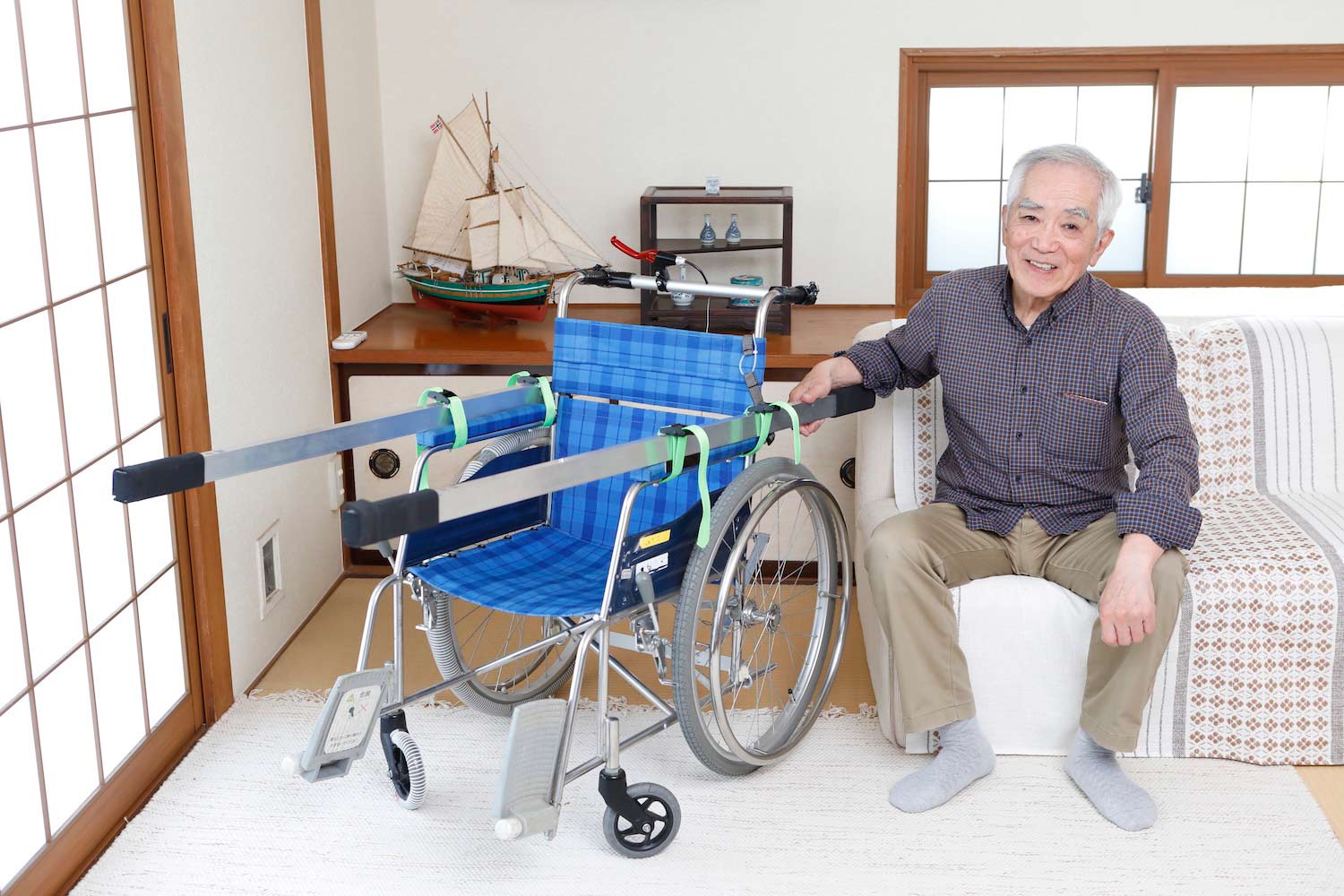
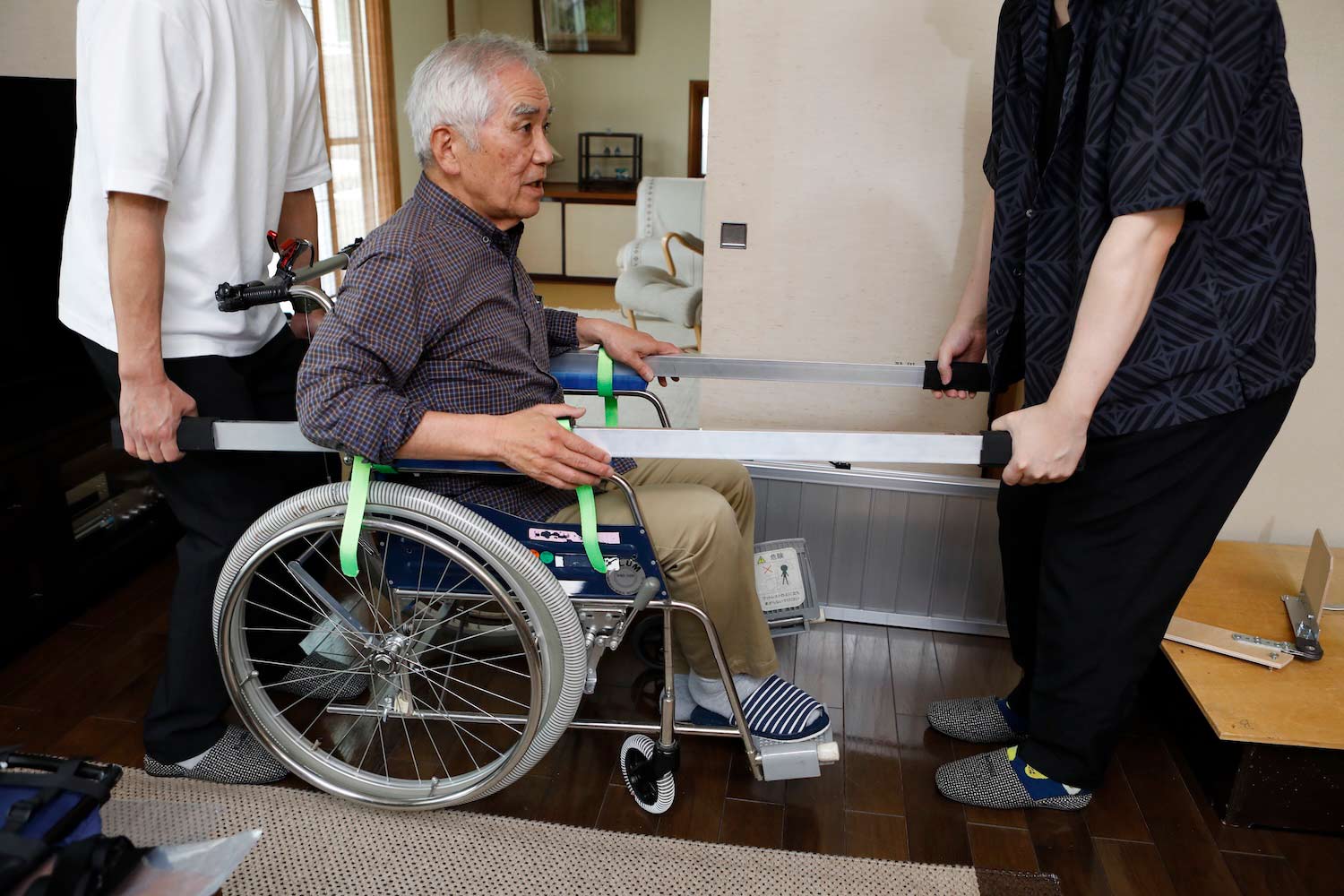
Hoping to alleviate that worry to at least some extent, I developed the “Yojimbo (guard pole).” It is a tool to make it easier to carry a wheelchair in an emergency like a fire, an earthquake, or other disaster. Attach the two poles to a wheelchair, and it can be easily carried by just two people. The “Yojimbo” lets you easily get over stairs, uneven paths, and rubble.
Morioka: It can even be used in normal times. If they were placed at train stations that don’t have elevators, perhaps they could help station staff carry people in wheelchairs. If equipment like this were placed everywhere, I think it could alleviate the concerns of wheelchair users.
- Note 4: In Japan, persons with severe physical, intellectual, or mental disabilities can use a public nursing care service called “visiting care for persons with severe disabilities.” They can receive support in the form of long-term nursing care, but there are many problems, such as a shortage of service providers and wide variation in the duration of benefits between local governments.↩︎
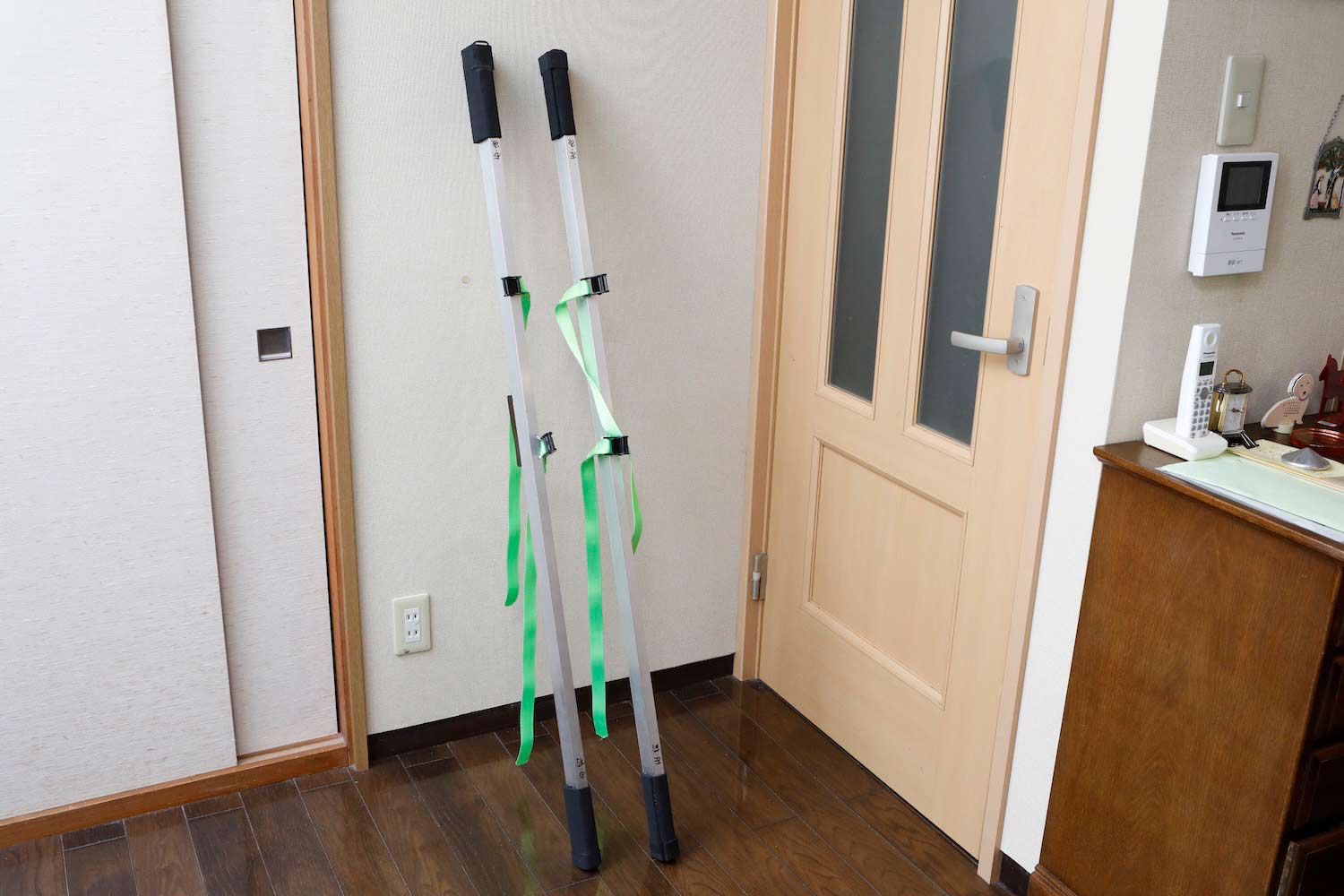
What surrounding individuals and communities can do so that persons with physical disabilities can live safely and comfortably
- Watch Akira Morioka’s YouTube channel and try making and offering other assistive equipment.
- Rather than helping without being asked, it is important to first consider the person’s personality and feelings.
- Build relationships where you can communicate with each other regularly and help them evacuate in an emergency.
Mr. Morioka answered our interview team’s questions and kindly showed how to operate each piece of assistive equipment. What came across in the interview was his commitment to eliminate the barriers and burden for as many persons with disabilities and caregivers as possible.
We hope that assistive equipment based on Mr. Morioka’s ideas are turned into products and become widespread in the near future. We believe this will bring joy to a great many persons with disabilities and their caregivers.
Text: The Nippon Foundation Journal Editing Department
Photo: Emi Enishi
Akira Morioka
Professor emeritus at Tohoku University, Akira Morioka worked as a science professor and researcher for many years. After retiring from university, he has devoted himself to developing assistive equipment. Mr. Morioka has a YouTube channel called Fukushi kiki kozaiku jii (Old Man Assistive Equipment Maker), where he conveys the benefits of the assistive equipment he develops and explains how to use them.