A Better Environment for Everyone‘Barrier-Free Schools’ from a Child’s Perspective
Key Points
- Workshop held to have elementary school students think by themselves about how to make schools that are barrier-free and comfortable for everyone
- Many fun and safe ideas emerged that would benefit everyone, not just those with disabilities
- Having children interact with various people and gain diverse values can lead to a more inclusive society
There are children who cannot attend regular schools or classes* due to disabilities or intractable diseases. However, there is an effort to promote “inclusive education” in order to change that situation.
- This refers to general schools. It is an expression often used in contrast to “special needs schools” that focus on education to enable children with disabilities to become independent in the future.
The idea is to allow all children, regardless of disability or disease, to learn together in one place. Through interaction with diverse people from childhood, it fosters a mindset that accepts personalities and values that are different from one’s own and promotes the realization of an inclusive society where everyone can participate.
However, inclusive education has not made much headway in Japan. To overcome this situation, The Nippon Foundation and Yokohama National University (YNU) (external link, in Japanese) are working together on the “Project to Promote an Inclusive Educational Environment through Industry-Academia-Government Collaboration.”
The goal of this project is to develop the next generation of human resources who can take the lead in creating an “inclusive society.” To do so, we are cultivating support staff with a high level of expertise, developing assistive technologies, and occasionally verifying the effectiveness of “inclusive education.”
As part of this effort, three workshops were held in September–October 2023 for 4th and 5th graders at the Yokohama Elementary School Affiliated College of Education, YNU (Yokohama Elementary School). The theme was “Imagining a School Where Everyone Feels Comfortable.”
This was an initiative where the children themselves were asked to analyze the environment of the school they attend and think about what kinds of “improvements = barrier-free” would be helpful to allow them to learn together with children who need some kind of consideration, including those with disabilities.
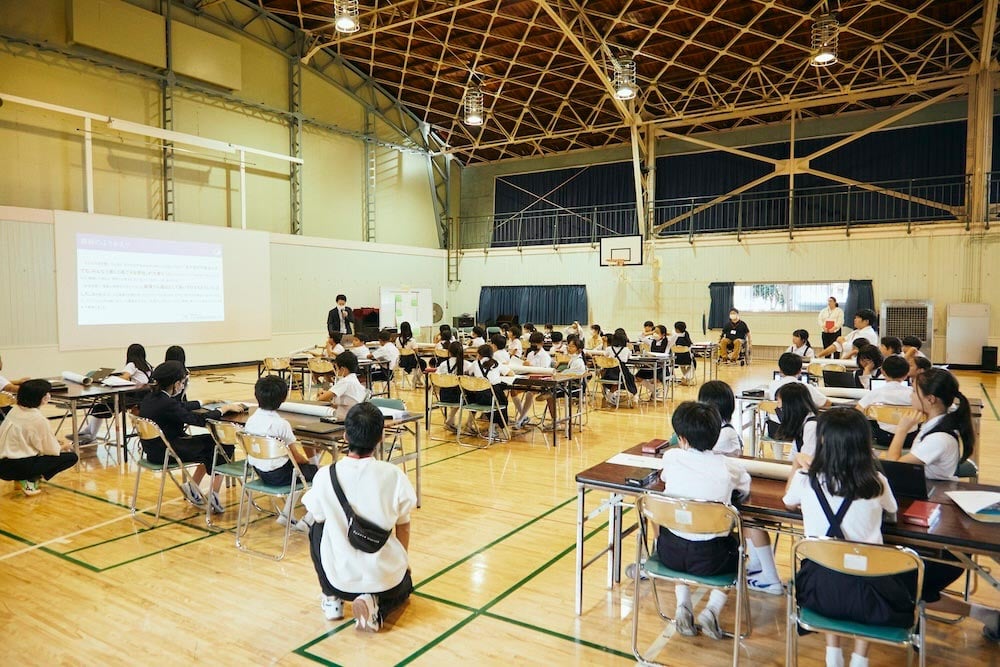
Children’s diverse ways of thinking that emerged from the workshop
The children’s discussions were supported by some of the adults who lead the project, such as Osamu Goshima, Yosuke Takano, and Chikaho Naka of the Education and Research Center for Diversity and Inclusion (D&I) at YNU (opens in a new tab).
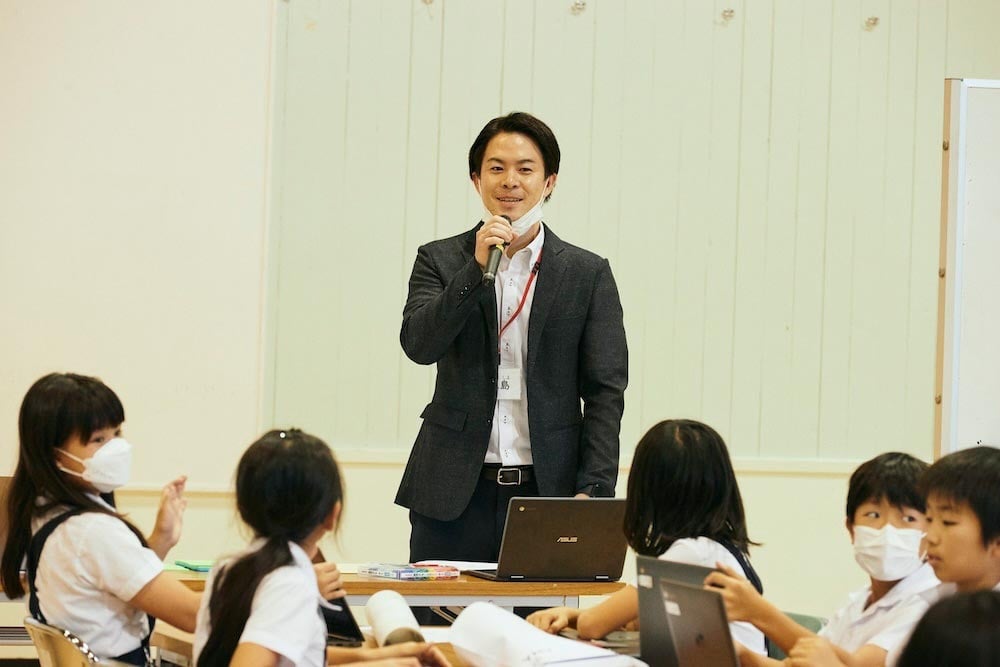
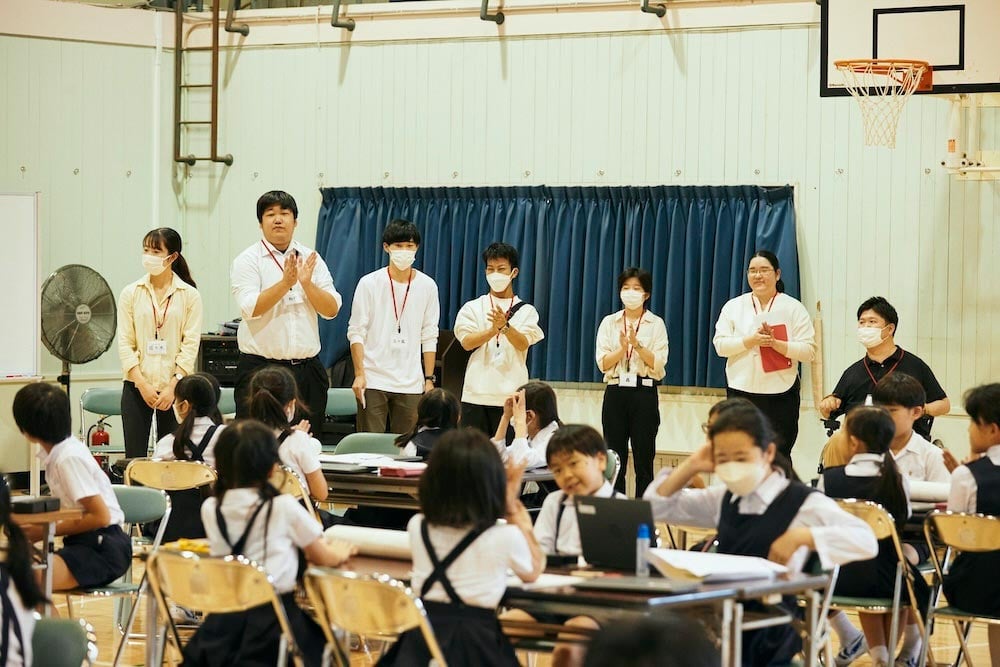
Mr. Takano uses a wheelchair and gave his opinions from the perspective of someone directly concerned with these issues. While explaining what disability is and what diversity is, he asked the children to think about “a school where everyone feels comfortable.”
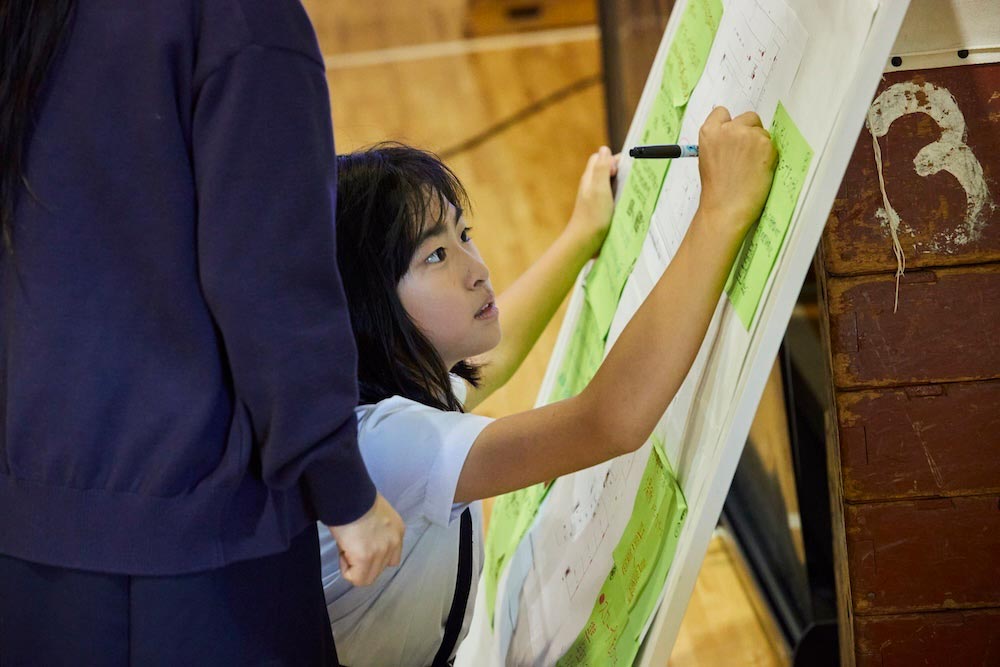
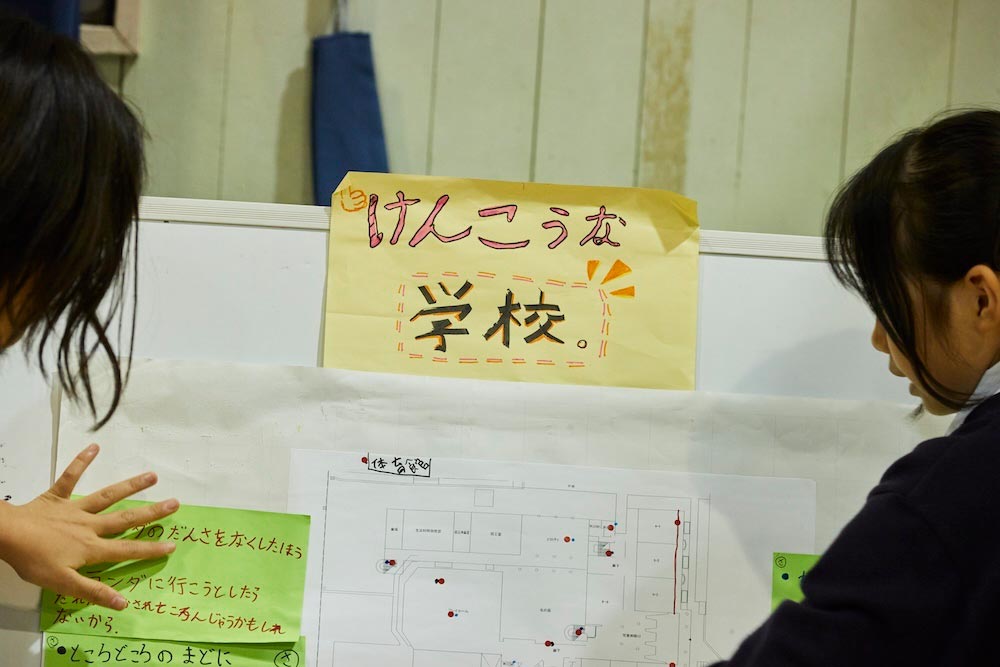
In the first session, the students looked around the school to find areas for improvement, and in the second session, they were divided into multiple teams and came up with ideas about what kind of school they wanted to be.
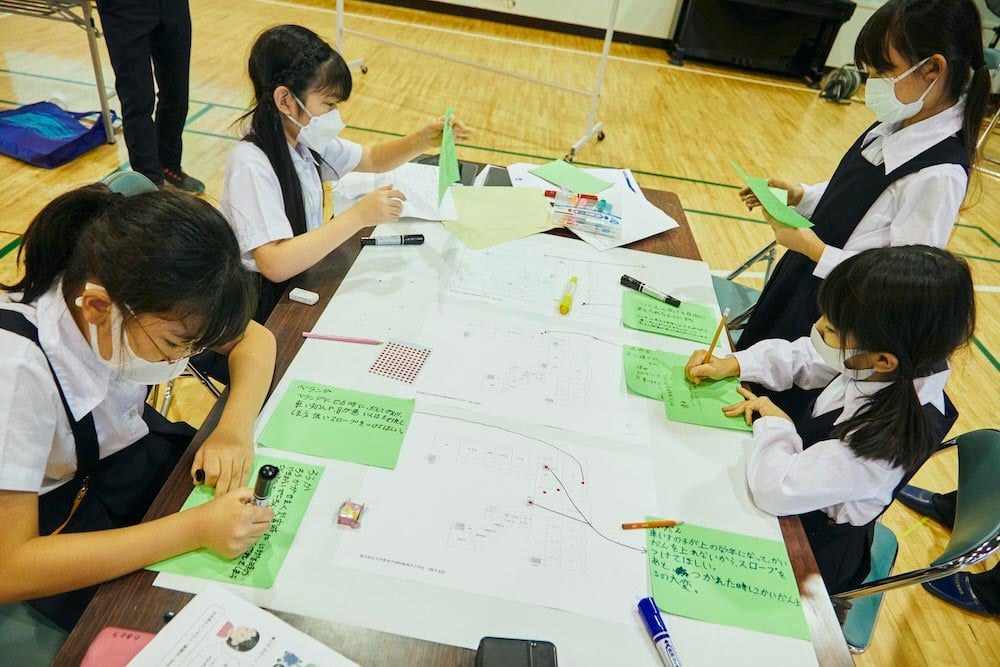
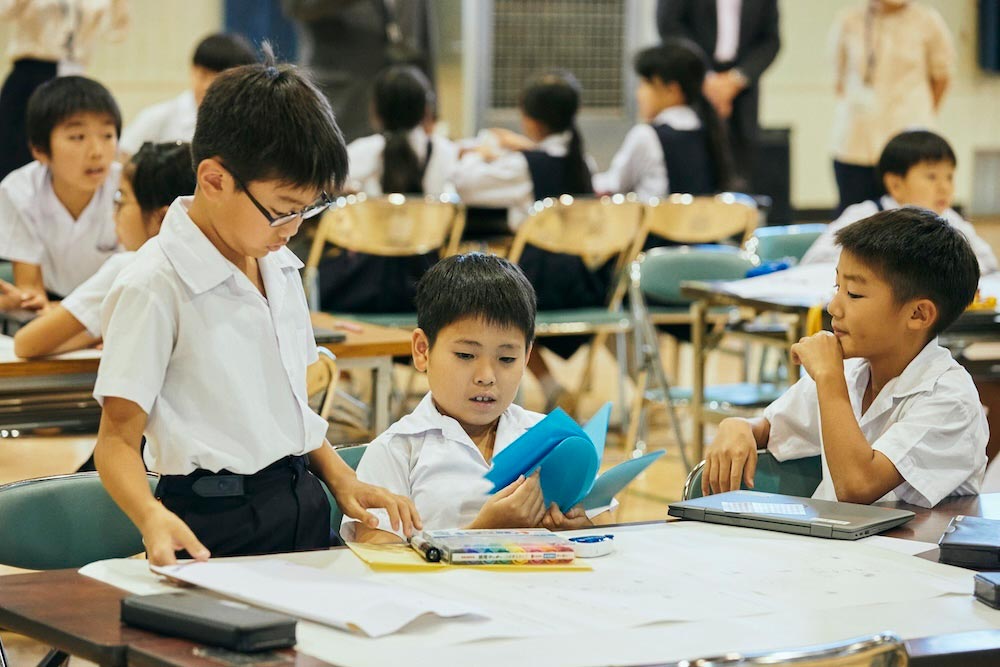
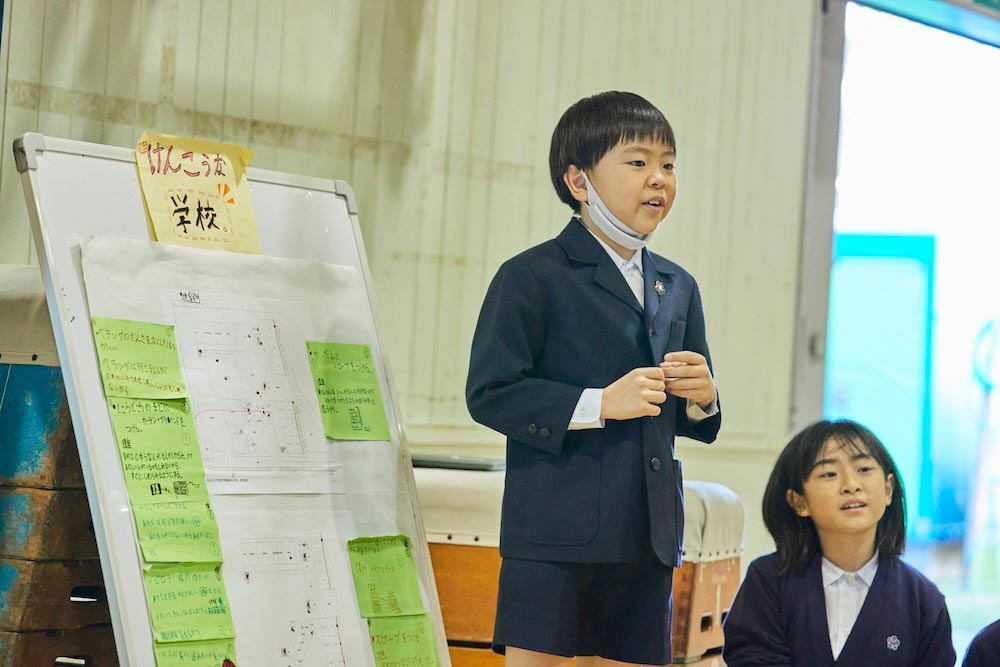
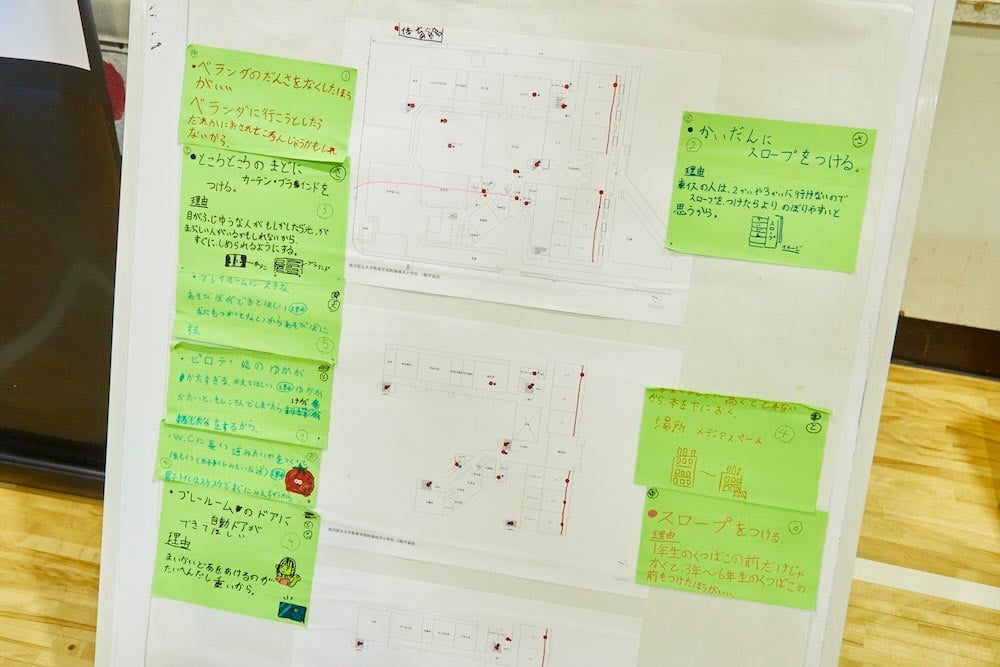
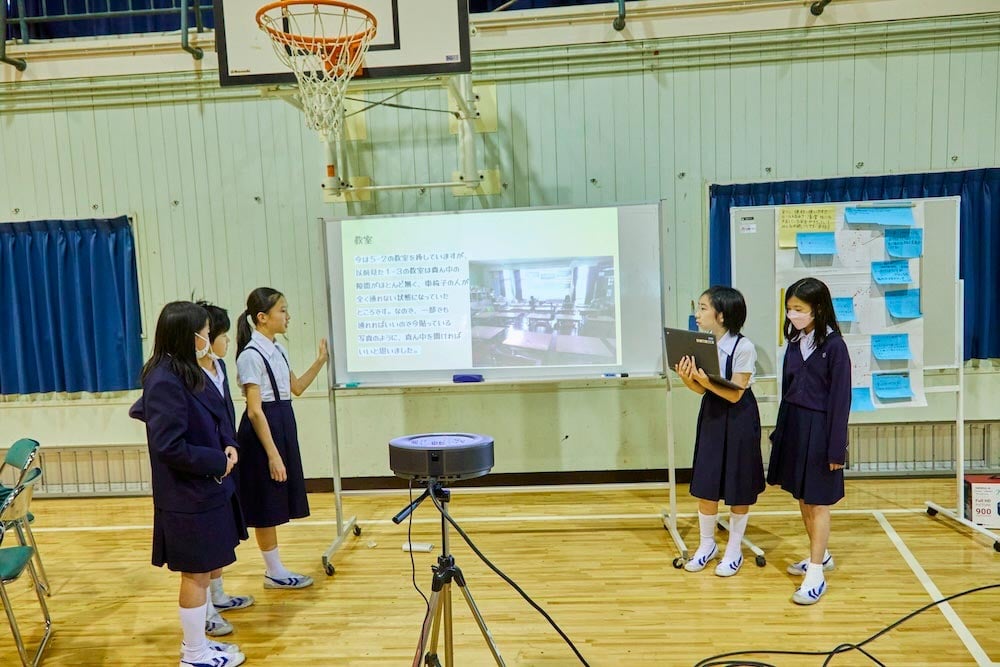
Finally, in the third session, each group presented their suggestions in front of everyone, offering ideas for making the school barrier-free such as “attach a ramp to the stairs,” “turn half of the stairs into a slide,” “eliminate the steps on the balcony,” “create a dedicated room for free study and for scientific or other exhibits,” and “attach mirrors (to prevent collisions) at the corners of stairs and corridors,” . . .
There was a real variety of opinions from each group. What was impressive was that it reflected the perspective of ideas that were “for everyone” — they did not just think about those with disabilities, but how they themselves could be safe and happy as well.
It seems that through the workshop the children gained the perspective necessary for the realization of an “inclusive society.” YNU Education and Research Center for D&I was reviewing the children’s ideas for a “school that is comfortable for everyone” with the goal of implementing some of those ideas from the 2024 school year.
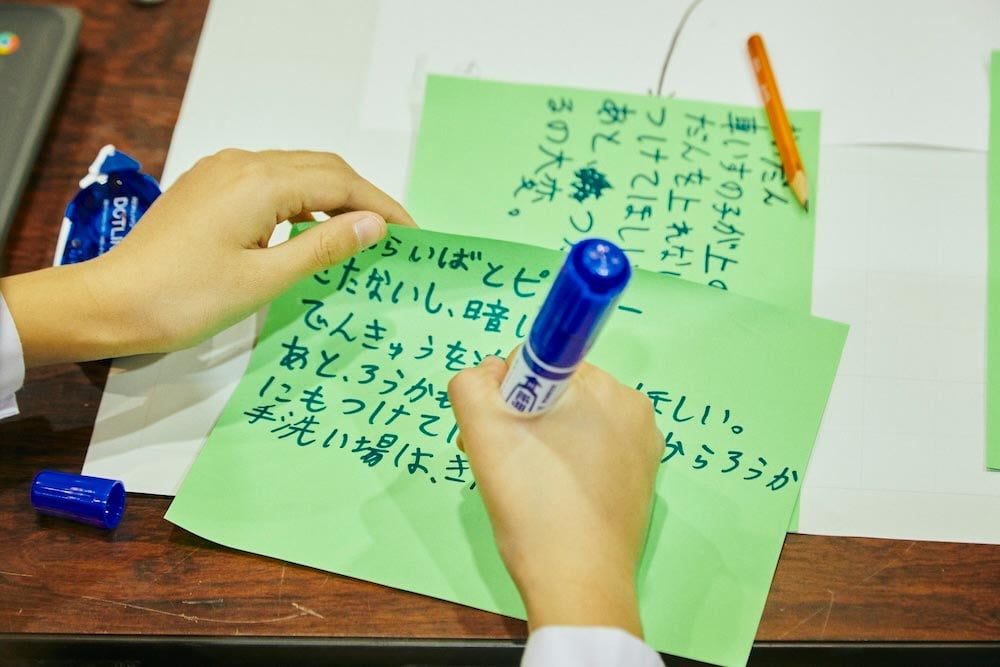
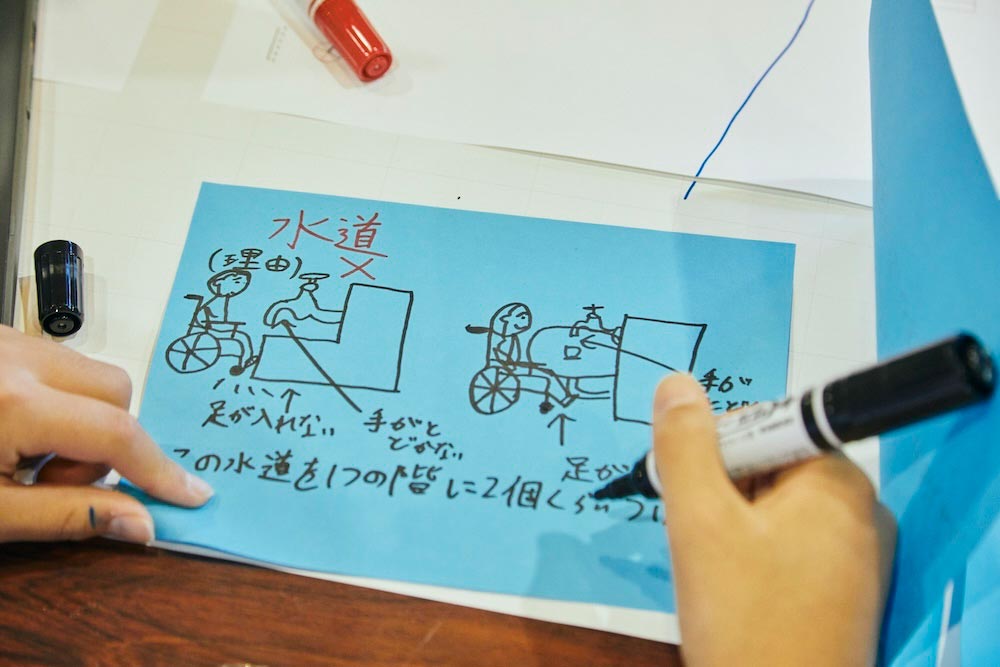
The importance of putting oneself in the shoes of persons with disabilities
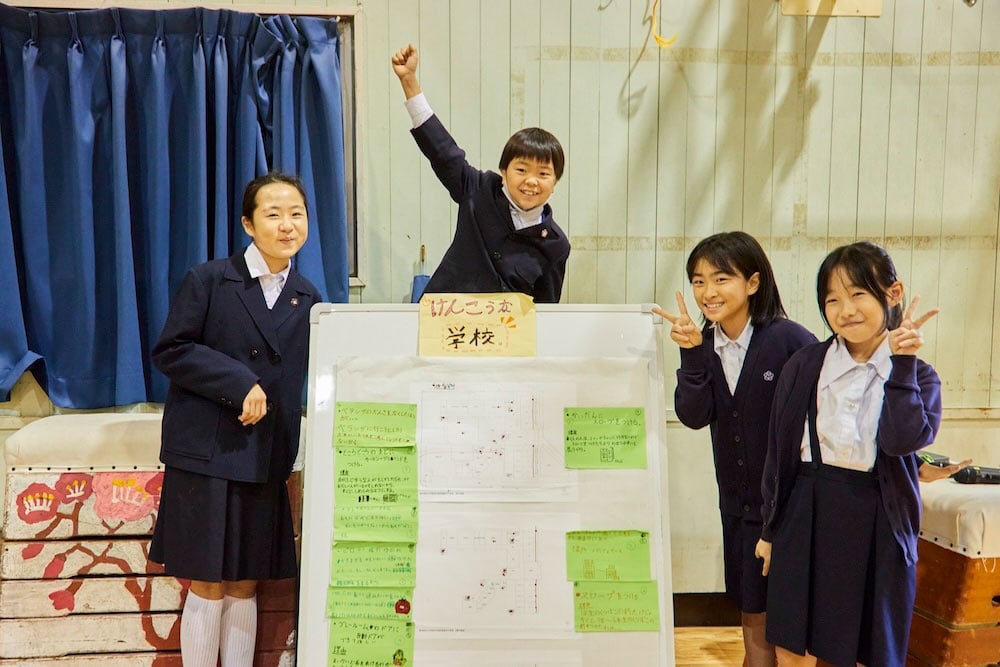
We spoke with one group of children who presented their barrier-free plans.
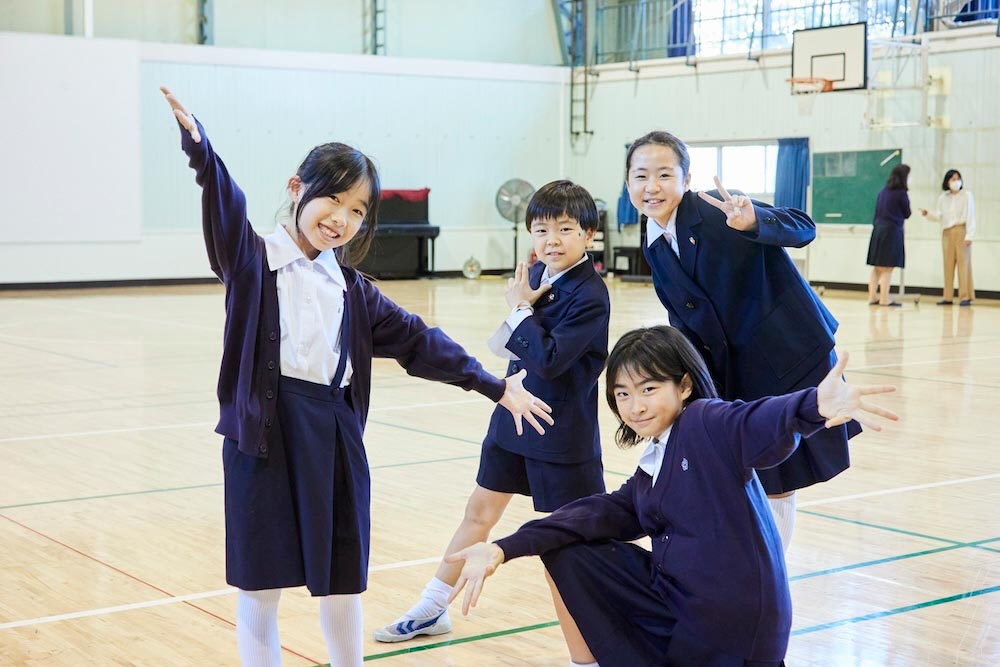
The Nippon Foundation Journal Editing Department: Please tell us about your ideas for a “school where everyone feels comfortable.”
Child 1: I want the school to create a big playground in the playroom. Also, I want it to be easier for wheelchair users to enter the bathrooms.
Child 2: The playroom door is heavy and difficult to open, so I’d like it to be changed to an automatic door. It’s also difficult for wheelchair users to get to the second or third floors, so I also thought that there should be a ramp added to the stairs.
Child 3: The books in the media space (library) are too high to reach, so I thought it would be better to put them in a lower spot. I’d also like the floor of the entryway to be softer. It’s too hard now, so if someone falls, they could get hurt.
Child 4: I think it would be better to eliminate the steps on the balcony and entrance. Someone might get pushed, and it would be dangerous for people in wheelchairs or who are blind. I think there should be a slope instead.
Journal: How did you feel when you participated in the workshop?
Child 1: I realized that there are many different kinds of people in the world. Also, I think this experience has made it easier than before for me to imagine the feelings of people with disabilities. If there is another workshop, I’d definitely like to join.
Child 2: I have a deaf friend, so I was thinking about that person while I was attending the workshop. I haven’t really thought much about the lives of people with disabilities before, but I would like to think about it from now on. I hope that even if a person has a disability, they can live safely.
Child 3: I don’t have a disability myself, but when I thought about how to improve the school, I was conscious of trying to consider how someone with a disability feels. I want to start by doing those things that are doable. I want to create a school where people with or without disabilities can enjoy doing the same things.
Child 4: I learned that there are things that only those who are living with disabilities would think of or notice. Thanks to this workshop, I realized that and I think I was able to learn a lot.
Nurturing imagination through interaction with diverse people
Children who participated in the workshop became more aware of other people’s perspectives—not only those with disabilities but more generally people other than themselves. We asked the staff from the YNU Education and Research Center for D&I who supported the workshop for their impressions of this change.
Journal: How do you feel after doing the workshop three times now?
Osamu Goshima: After the first session, one of the children told me, “The other day, I saw a person in a wheelchair on the train station platform, and I was wondering how they would get on the train, but then the station staff helped them.”
There were probably persons with disabilities around that child before, but they hadn’t paid attention. I was very happy to see that this workshop led that child to notice the existence of such people.
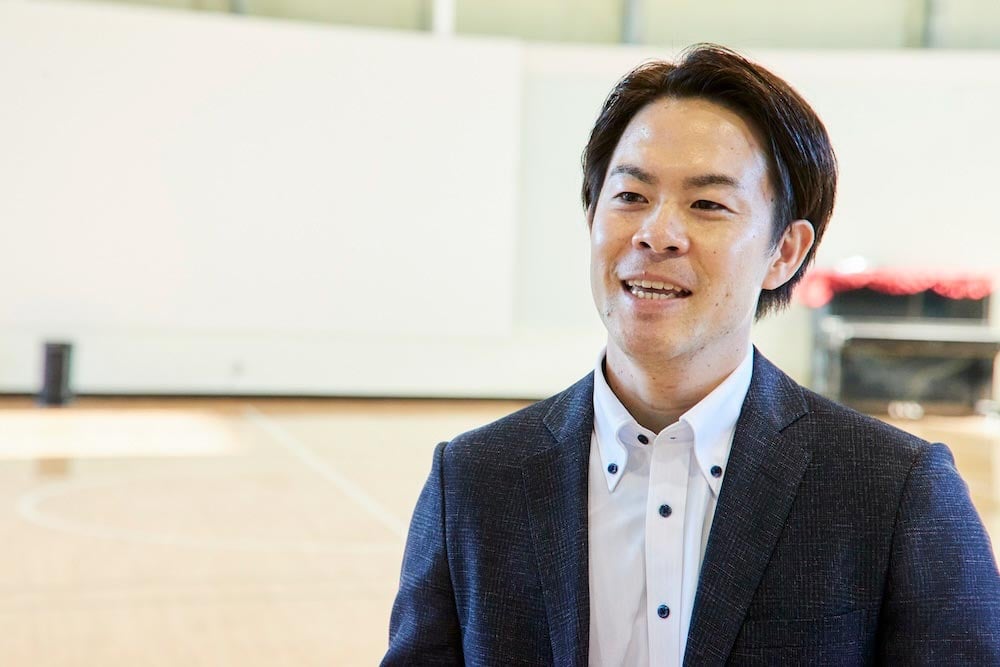
Chikaho Naka: It was also good that the number of children who tried to help someone in need outside of school increased. I think the workshops helped to foster the perspective that there are diverse people in society.
Yosuke Takano: Yeah, at first, I was a little worried, but once we began, I found that the children were seeing and thinking about a lot more things than I had imagined.
As a person with a disability, I naturally have certain problems, and I think that it’s difficult to notice those issues unless they affect you personally. However, the children who participated in the workshop realized that. I thought that was amazing and it made me feel the potential of children.
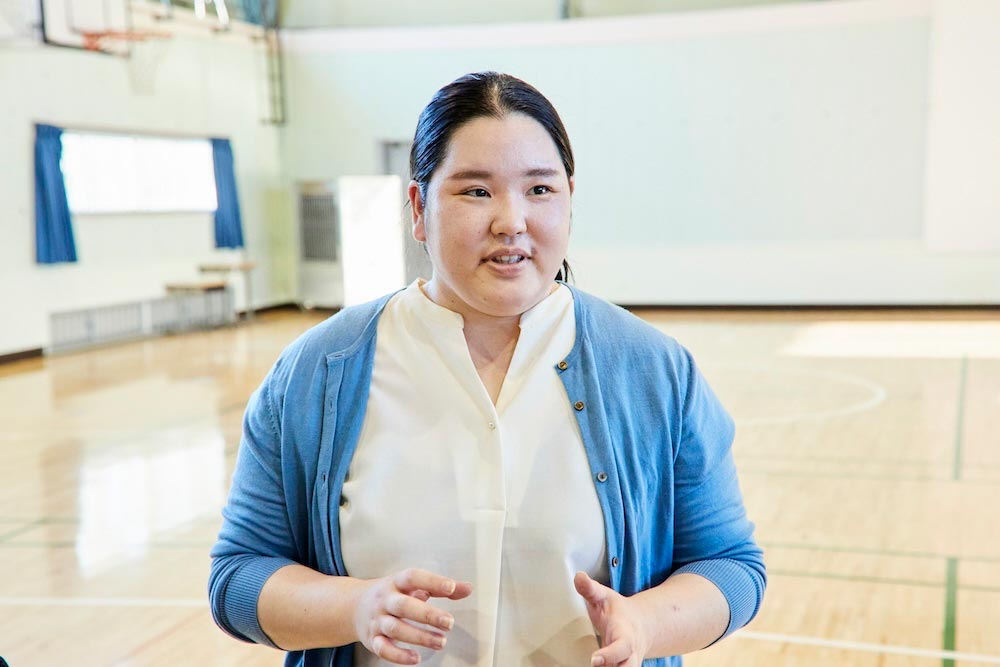
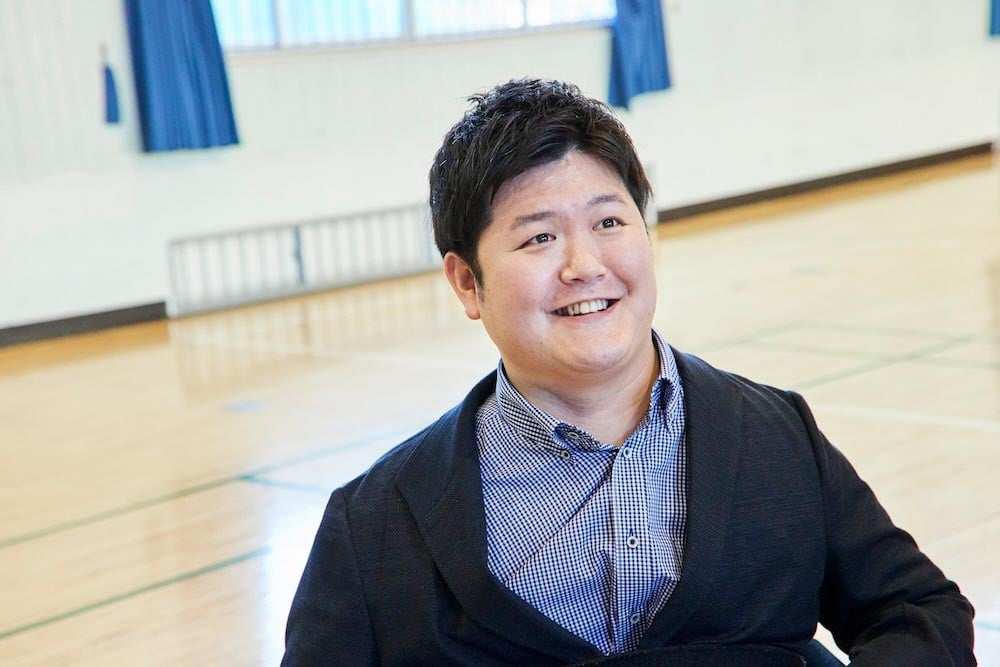
Naka: There were also certain things that only children would realize. There was one suggestion that spoke about where things are placed – “It’s difficult for short children to reach those things, so I want them to be placed in a lower spot. If you do that, it will be more convenient for people in wheelchairs.” I felt how interesting a child’s unique perspective is.
Takano: Children look at things from their own life perspective and view their problems as one of the barriers, and I think that’s a mindset that’s difficult even for adults.
Journal: I think that many of the children realized the importance of “imagining” through the workshop.
Goshima: “Barrier-free” measures are often cited as an important factor in achieving an inclusive society. If we look at why barriers exist, it’s because many societies are designed for able-bodied people. That’s why I’m trying my best to promote the concept of “barrier-free.”
Also, if we had become a society that was easily accessible to both able-bodied and persons with disabilities from the beginning, the word barrier-free wouldn’t have existed in the first place. However, it’s very difficult for people without disabilities to imagine this. That’s why I want to stress the importance of imagining. I hope that perspective will not be forgotten in the future.
Takano: In the first place, I think there are many things you wouldn’t know if you don’t have many opportunities to interact with persons with disabilities. In fact, even during the workshop, the children who interacted with me seemed to be questioning, “How much can I ask him?”
But as the workshops went on, they started to say what was on their minds without hesitation, and I could see how flexible they had become after just three meetings. What will happen when such children grow up? I want to pursue that.
Naka: They may think that things they don’t know are scary or difficult to approach, but we want them to actively engage with those things.
Goshima: For that reason, we want them first to become people who do not create barriers. Of course, there is the question of compatibility with others, and some people may want to keep their distance. But anyway, until they get to that point, I hope that they will not create barriers and will get involved. I hope that through this project, we can produce many such children.
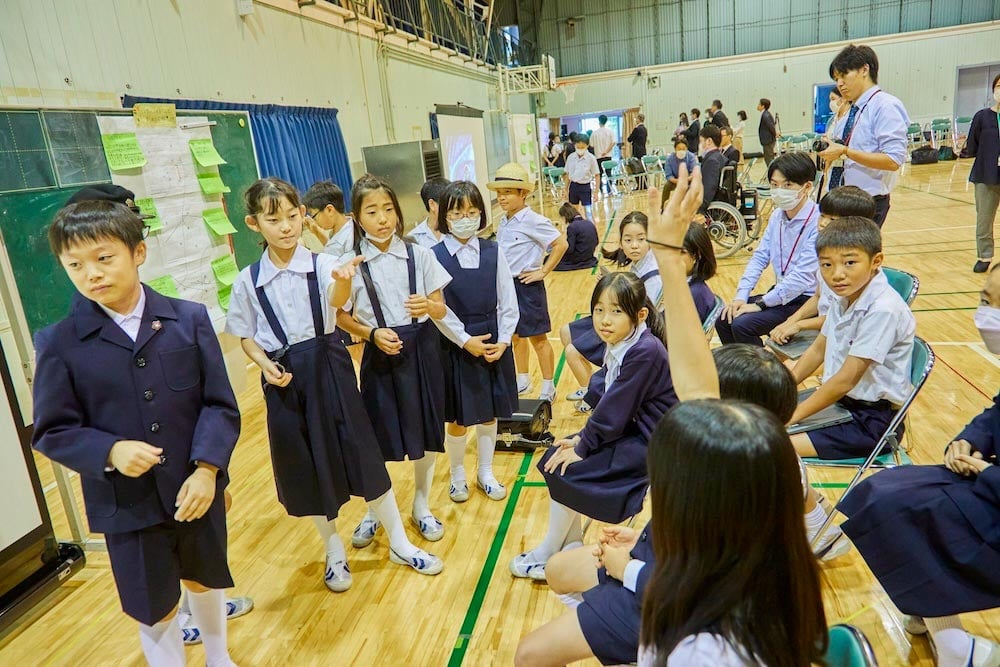
Journal: While you look forward to seeing what the children achieve, is there anything that the adults around them can do?
Goshima: In many cases, children still don’t know how to interact with diverse people. That’s why I think it would be good if the adults around them could lead by example and show children how they interact with such people.
Takano: I also think it’s important to create opportunities for children to encounter unfamiliar situations. It’s scary to interact with diverse people, and prejudices arise because of that fear. That’s why inclusiveness doesn’t progress. Instead, you need to interact with various people without preconceived notions. I think it would be good for the adults to help children in that regard.
Editor’s Note:
There are diverse people in this society, and thinking about the ease of life of such people is also connected to our own ease of life and comfort. That should be obvious, but when we become adults, we tend to forget it.
For that reason, it may be important to think about diversity in this way starting from childhood. You can develop diverse values while your way of thinking is still flexible. When children who grow up in this way become adults, I think society will move in a better direction.
While watching over such children, we adults also need to think about ways to foster a diverse society, which we tend to overlook.
Text: The Nippon Foundation Journal Editing Department
Photo: Eizaburo Sogo