An ‘Inclusive Education’ Where Diverse Children Learn TogetherWhy Do Children Need This Now?
Key Points
- The number of children who worry about having difficulty attending regular schools or classes[1] is 50% higher than 10 years ago
- “Inclusive education” is not about forcing anyone to put up with something, but rather stresses the importance of creating an environment where everyone can be at ease and learn
- Cultivating a perspective that allows you to respect both others and yourself while interacting with diverse people is critical for achieving an inclusive society
- Note 1: This refers to general schools. It is an expression often used in contrast to “special needs schools” that focus on education to enable children with disabilities to become independent in the future.↩︎
In 2022, the United Nations recommended that Japan stop providing segregated education.
“Segregated education” refers to a system that separates children with intractable diseases or disabilities from other children, educating them in separate environments. The UN issued its recommendation because that system can deprive children with disabilities of opportunities for life experiences, relationships, and social experiences.
Therefore, a new way of thinking is being introduced: “inclusive education,” in which all children learn together in the same environment, transcending differences and issues such as disability or disease, nationality, race, religion, and gender. Diverse children attend their local schools and spend time together. By doing so, it cultivates a mindset that accepts individuality and values that are different from one’s own and promotes the realization of an inclusive society where everyone can play an active role.
However, the fact is that there are still a number of challenges to achieving inclusive education. The Nippon Foundation and Yokohama National University (YNU) (external link, in Japanese) are working together to address this problem through the “Project to Promote an Inclusive Educational Environment through Industry-Academia-Government Collaboration.”
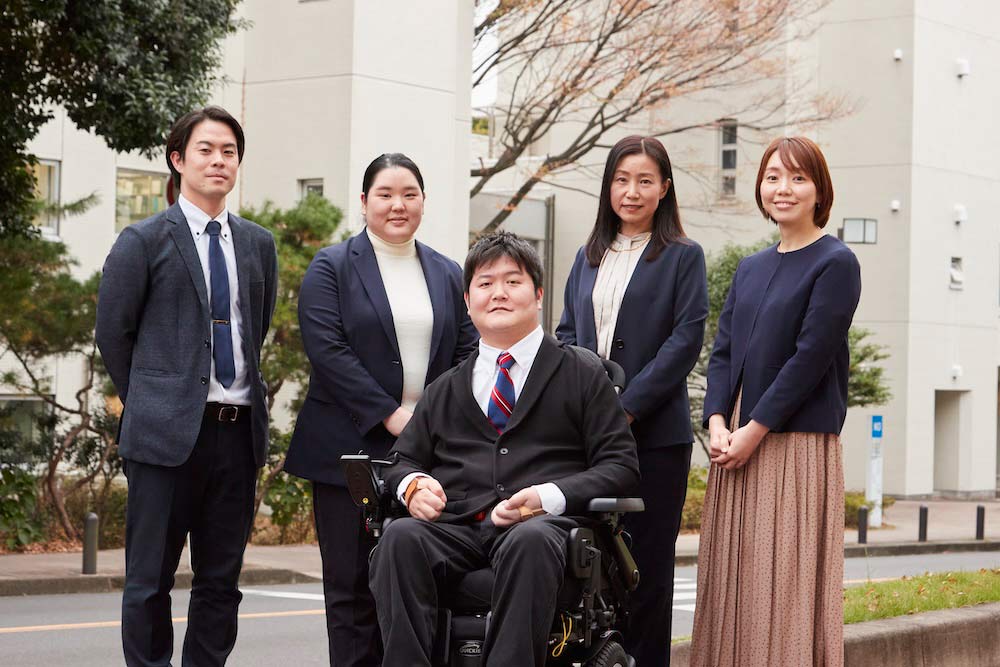
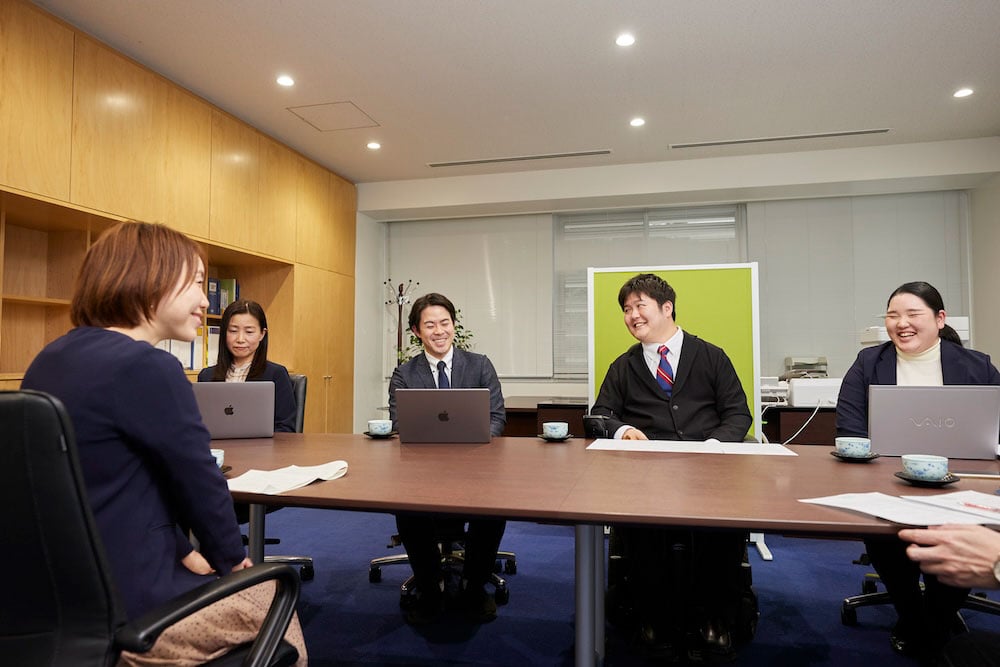
What is the goal of this project? What can each of us do to help? Yasue Nakano, a staff member of The Nippon Foundation in charge of this project, posed those questions to Mayuko Izumi, Osamu Goshima, Yosuke Takano, and Chikaho Naka of the Education and Research Center for D&I at YNU, who are leading the project.
Inclusive education is not currently spreading in Japan
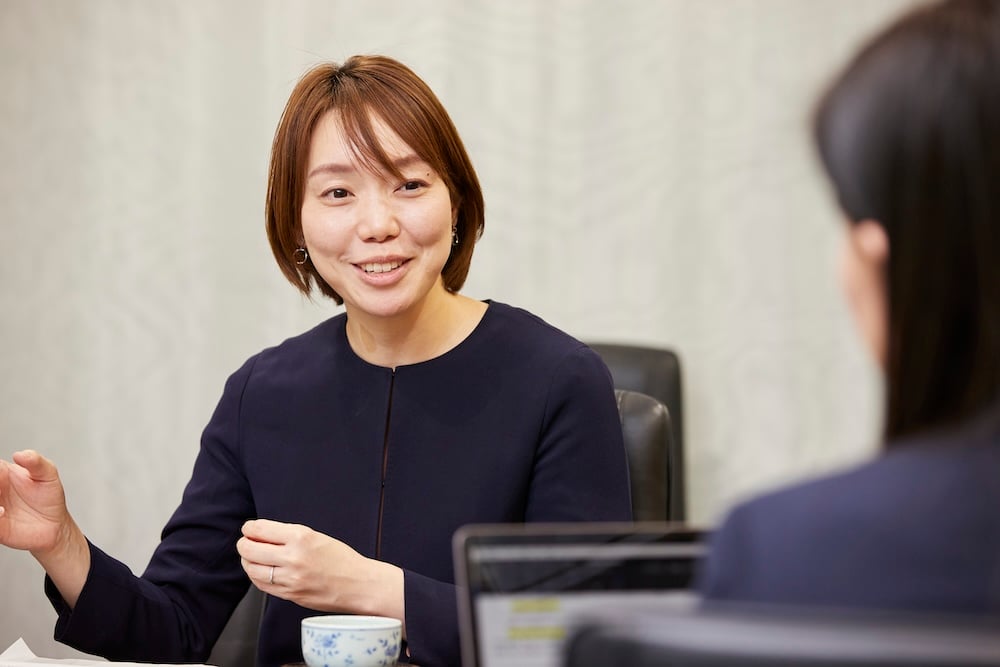
Nakano: To start, could you please tell us about the current status of inclusive education in Japan?
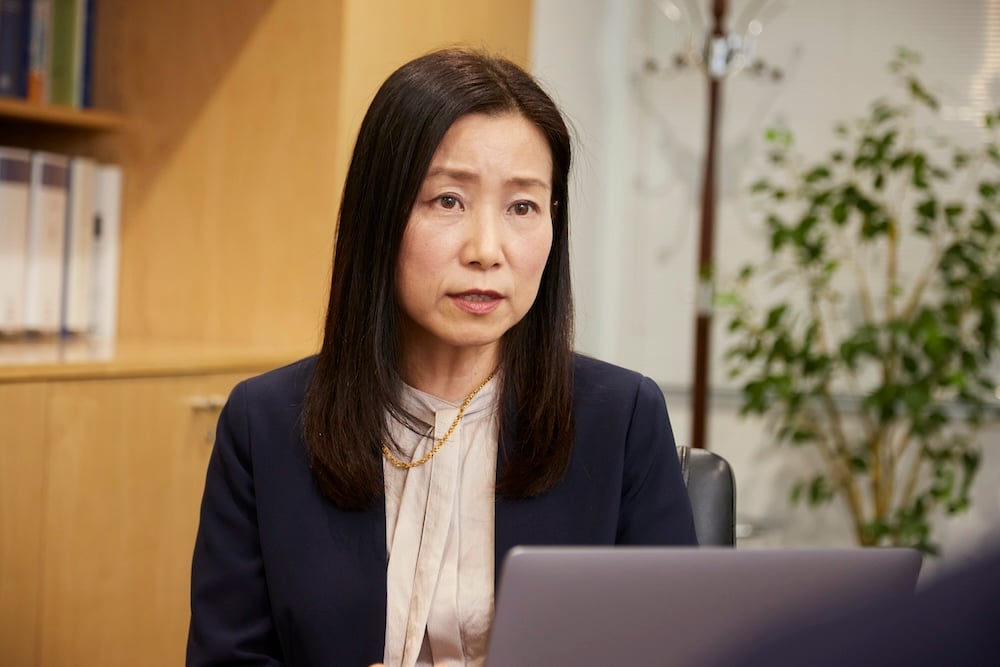
Izumi: In September 2022, the UN Committee on the Rights of Persons with Disabilities issued recommendations on the status of Japan’s implementation of the Convention on the Rights of Persons with Disabilities.[2] They expressed concerns about the large number of children with disabilities who are not involved in regular education.
Right around that time, we also received data from the Yokohama City Board of Education on the implementation status of inclusive education in schools in Yokohama City and we conducted a survey. Through that, we found that the number of consultations about going to regular schools and classes had increased by about 40 percent compared to a decade earlier.
When we checked the details of the consultations, we realized that about 50 percent were for children who did not have delays in intellectual development, so there were many children who were having difficulty adapting to school due to some other reason, including physical disabilities or developmental disabilities, and they had no place to go.
School education in Japan and the United States is said to be “egalitarian.” In the United States, equal opportunities are guaranteed, and the result depends on the hard work of the person. On the other hand, in Japan, we seek equality in the results themselves. In other words, no matter what kind of child it is, they should reach the “same destination.”
However, there will be differences in individual abilities, such as in doing calculations or writing kanji. That’s unavoidable, and yet if children learn together and can’t produce the same results, it winds up being viewed as an educational failure. Because people are so concerned about that, diverse children are deprived of opportunities to learn together. I feel that this is the reason why inclusive education is not making progress in Japan.
- Note 2: The Convention stipulates measures for the realization of the rights of persons with disabilities. Its objective is to ensure the human rights and fundamental freedoms of persons with disabilities and promote respect for their inherent dignity. It was adopted by the UN General Assembly in 2006 and entered into force in 2008. As of April 2023, the number of countries, regions, and institutions that have ratified the Convention is 186; Japan ratified it in 2014.↩︎
Nakano: What specific problems are occurring on-site at schools?
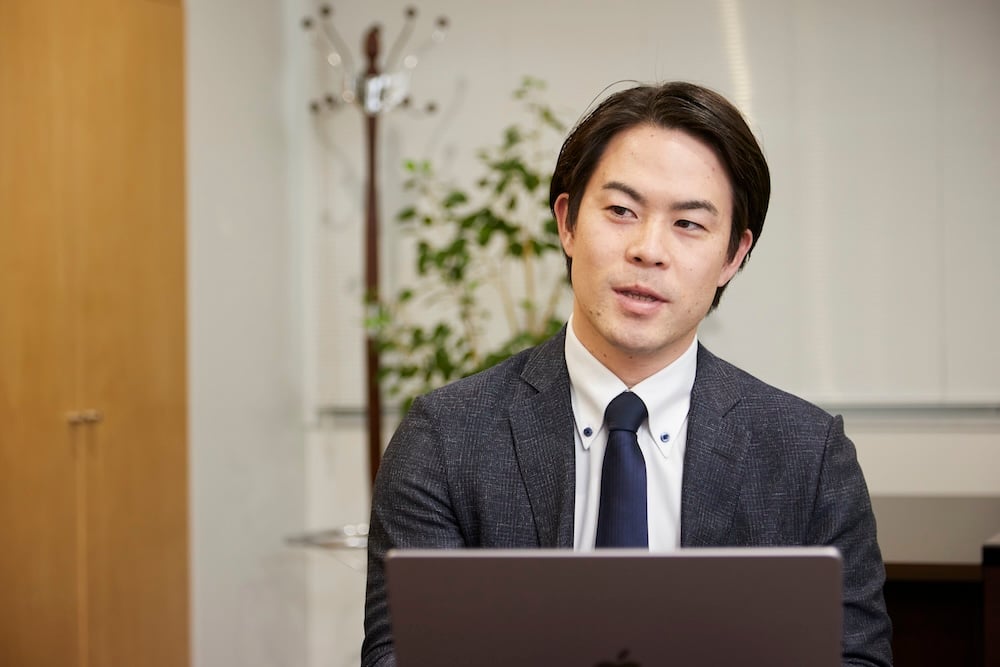
Takano: Speaking as a person with a physical disability, I think one problem is that school facilities are not yet properly equipped, as represented by barrier-free measures. As a result, schoolteachers are confused about whether it’s okay to accept children with various disabilities even though the facilities for them are not in place.
In addition, even if the facilities are adequate, there are still issues such as who will support the child while they are at school, or there is the risk of supporting them more than necessary.
At the same time, I think it’s also necessary for children with disabilities to develop the ability to seek appropriate support when they are placed in an inclusive environment. When it comes to inclusive education, there’s a tendency to ask only able-bodied people to do their best, but it’s important for persons with disabilities to make efforts as well. However, the lack of guidance for that is one issue I see at the moment.
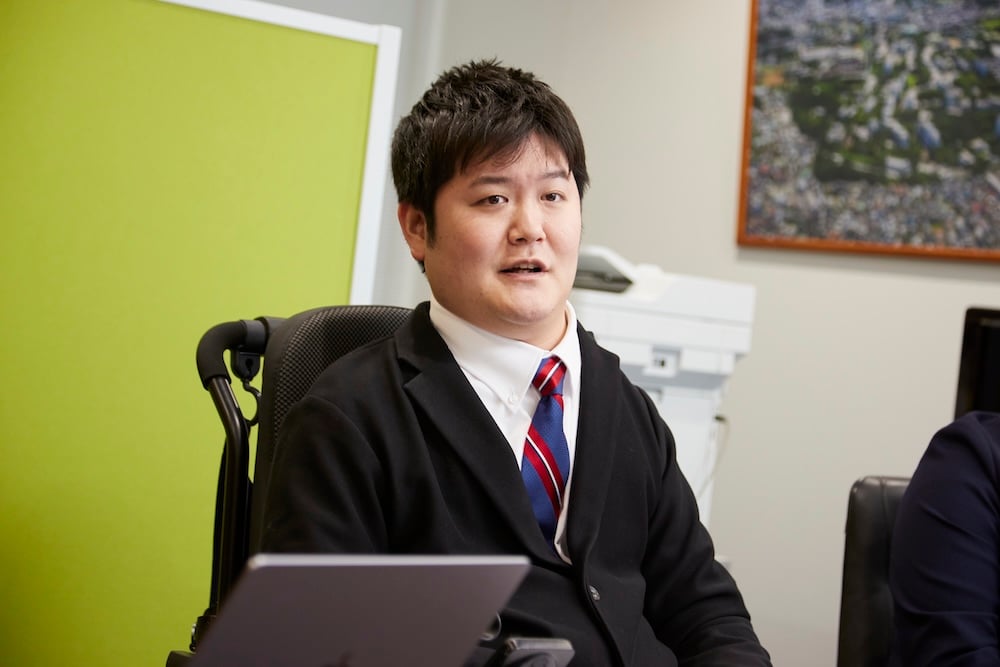
Naka: There seems to be a tendency toward a division between times when students are able to receive adequate human support and times when they cannot. When that happens, both the child with a disability and their parents have worries about what to do when they cannot receive support. I wish there were more options, but…
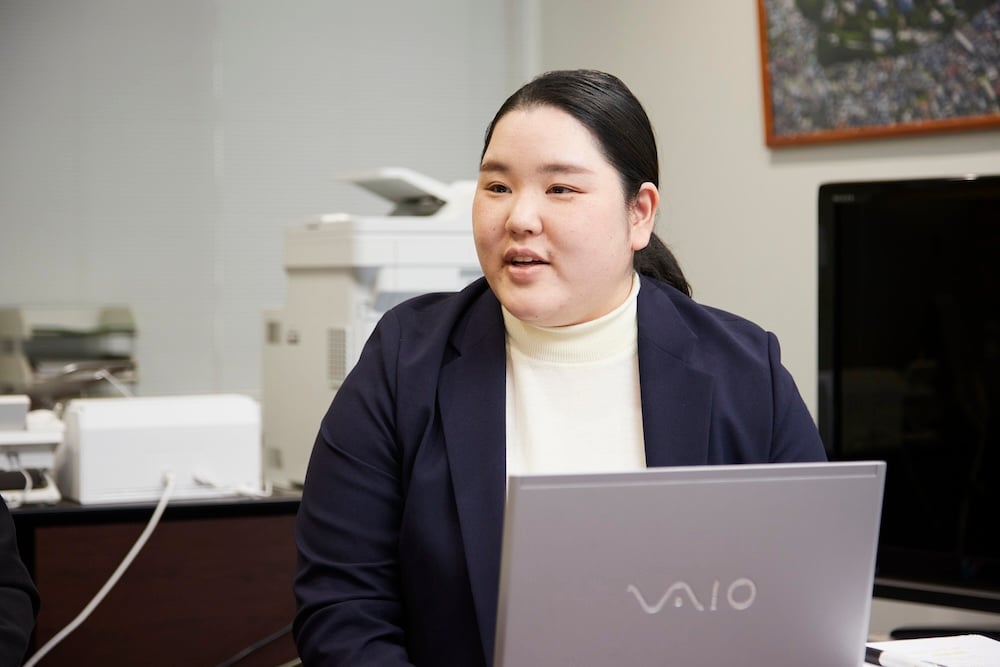
Goshima: Essentially, the current educational scene is premised on the idea of a separate education, so there are problems with the structure of education, and I think that there’s a conscious assumption on the part of teachers that “healthy children and children with disabilities are to be educated separately.”
But that way of thinking deviates from “inclusive education.” Given that background, I feel that inclusive education is not progressing well in Japan.
Gradually reducing the need to “put up with something”
Nakano: In light of those remaining problems, what is your objective in carrying out the Project to Promote an Inclusive Educational Environment through Industry-Academia-Government Collaboration?
Takano: Our objective is twofold. One is to allow any child, regardless of what kind of disability they have, to learn in the same environment as children without disabilities as much as possible, so that they can learn how to interact with various people, gain academic ability, and through that, be able to work when they are older. Through inclusive education, we want to develop them as people who can play an active role in society.
And the other objective is to have some impact not only on children with disabilities but also on those children and teachers without disabilities who spend time with them.
When you go out into society, you have to interact with a wide variety of people, right? I would like to train people so that they don’t feel resistance under those circumstances, that they have the “ability to be inclusive” and to flexibly relate to diverse people.
Izumi: Exactly. Those are the two main objectives. The current state of inclusive education consists of someone putting up with something. But instead, we should aim to figure out how we can achieve an educational environment that’s safe and secure for everyone, where they can learn and live together.
To that end, our work is a process of trial and error.
Nakano: Can you speak a bit more about that idea of “putting up with something”?
Izumi: I think there are various opinions depending on a person’s position. For example, from the teacher’s point of view, if there is a child with a disability in their class, they may feel stress and a need for patience if they feel they must give that one child all their attention and are unable to take care of the other children.
Or, from the perspective of a child with a disability, they may really prefer to proceed at their own pace, but they don’t want to be called out by the children around them for falling behind. On the other hand, children without disabilities may be dissatisfied about the fact that the progress of the lessons inevitably slows down when there are children with disabilities in the same class. In this way, each person is forced to have patience and put up with something. Our hope is that we can get rid of that.
Nakano: It would be nice if everyone could think together about how to overcome the problems in front of them.
Takano: To that end, we must begin by establishing a specialized support system. But first, we are thinking about “what is expertise?” It’s still unclear what kind of expertise and skills are needed to support diverse children.
Therefore, we’ve begun to investigate the needs of schoolteachers and support staff and to create a curriculum based on current issues they face.
Izumi: The way that these so-called “support staff” are trained varies greatly depending on the local government. That’s why I think training is necessary.
Basically, there are no required qualifications, so for example, there are about 2,000 support staff in Yokohama City, but only about 50 people participate in the training sessions on special needs education and inclusive education that are held several times a year at YNU. There are a decent number of people, but to be honest, I don’t know how many of them can provide sufficient support.
Nakano: So that’s why you want to create a proper curriculum for training support staff in this project and eventually make it a national initiative.
Izumi: That’s right. If a system is established for training specialized support staff, I think it will be easier for each local government to introduce it.
Helping people understand that there are many different people in society
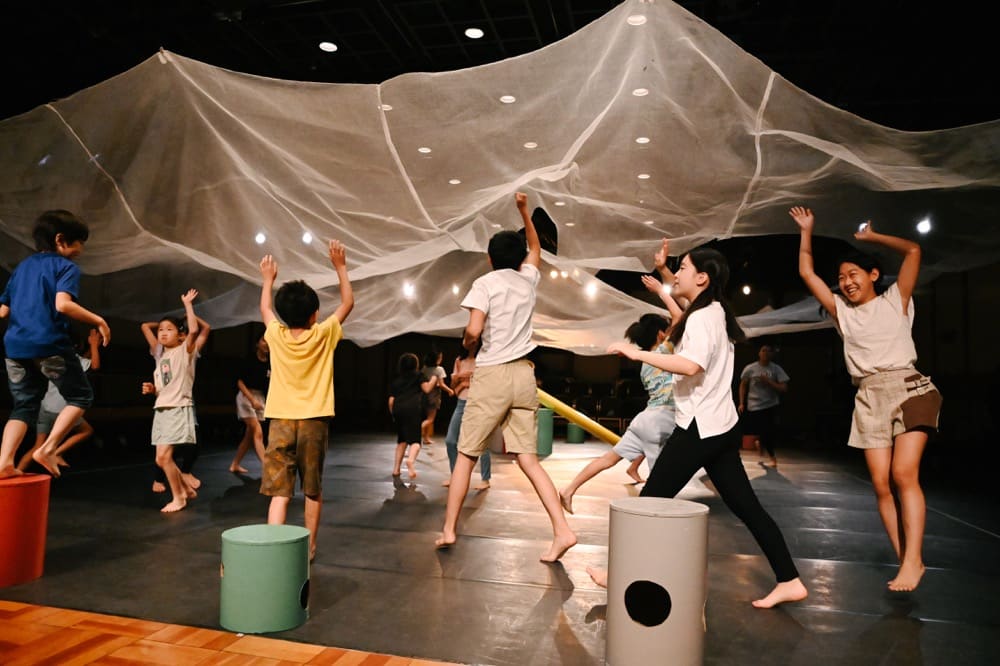
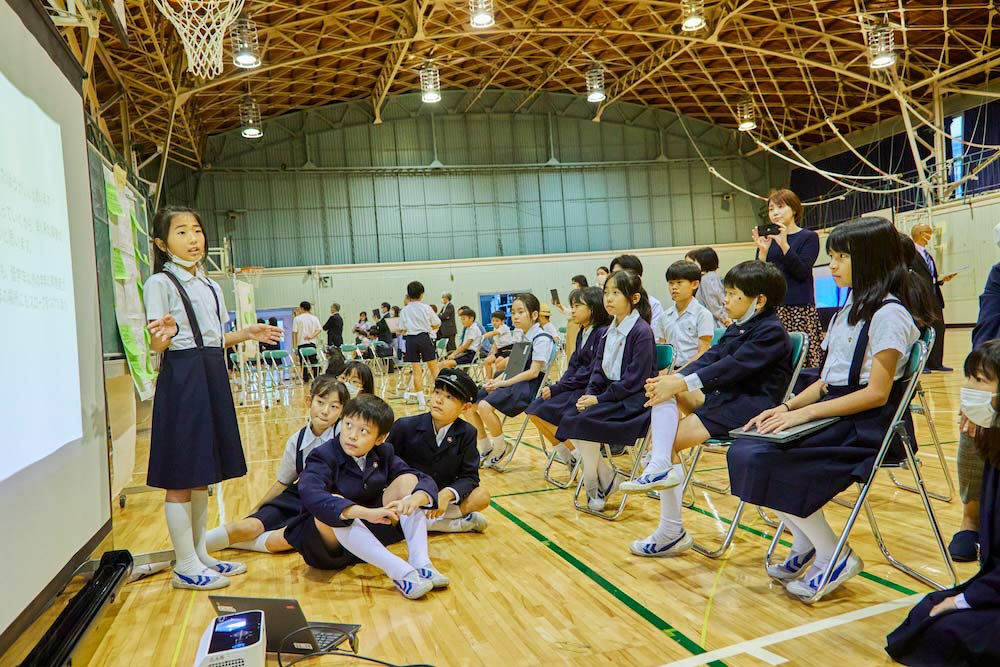
Nakano: In September and October 2023, a workshop was held for children at the Yokohama Elementary School Affiliated College of Education, YNU, on the theme of “Imagining a School Where Everyone Feels Comfortable” (opens in a new tab).
Goshima: I think that the children who participated were able to realize that there are various types of people in this society. For example, some of them mentioned that they had seen people in wheelchairs before, but they became more aware of them through the workshop.
Naka: Some children did not have a clear understanding of the words “diversity” and “inclusion.” But as the workshops went on, they seemed to realize that they were also included in those words In order to think about a space that’s easy for someone to live in, you need to include yourself in that image as well. It was nice to see how that type of consciousness sprouted little by little.
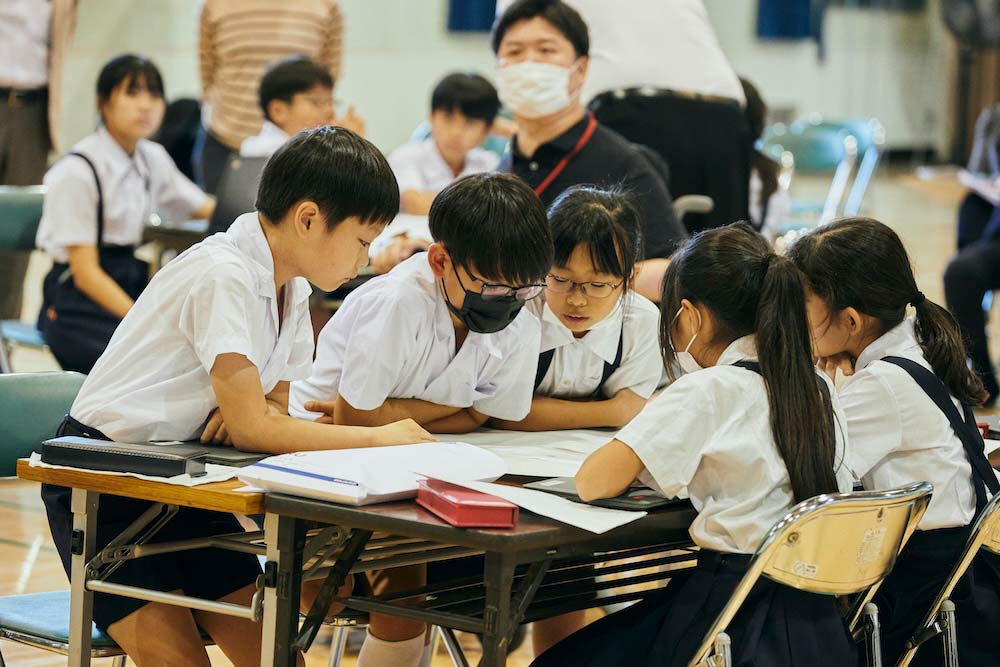
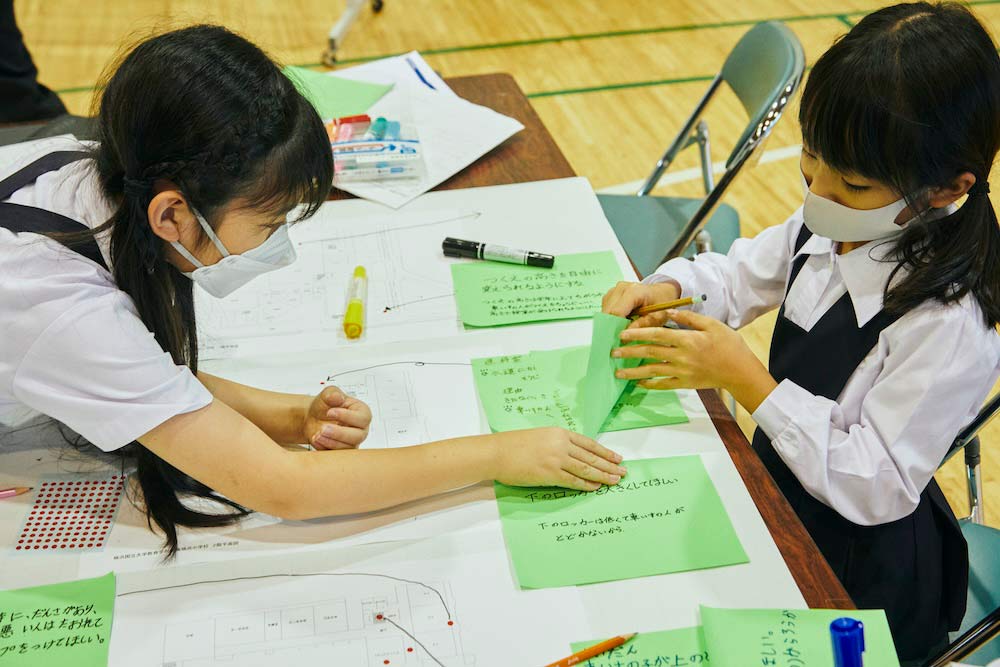
Takano: When I had an opportunity to look around the classrooms with the fourth graders, they said, “For people in wheelchairs to pass by, we need to leave more space between desks, but we can use them as usual.” I felt a sense of satisfaction in their attitude of being able to think about both the other person and themselves.
Izumi: That’s right. If you think that you have to unilaterally adapt to someone else, you’ll inevitably feel burdened. Instead, it’s important that neither you nor the other person feel that you have to put up with too much. If you think about how to compromise, I think you can continue the relationship for a long time.
Nakano: It’s wonderful to think about such diversity from childhood. On the other hand, is there anything that each of us can do when we are already adults?
Izumi: The younger the children are, the more frank they are with each other. They’ll say things like, “I want to do this, but you can’t do it, because you can’t walk.” This is what you keep to yourself when you become an adult. We become afraid of conflict with people who have different opinions and values than our own or avoid communication more than necessary for fear of hurting the other person.
However, I think that by honestly expressing opinions while respecting the other person and yourself, you can find a more moderate compromise. In addition, I hope that more people can think about things based on the assumption that there are various people in society who are different from them.
In recent years, junior high school entrance exams have become popular in urban areas, but if you want to pass them, you’ll inevitably spend a lot of time from childhood on among people who are similar to you. These children reach puberty, adolescence, and adulthood while remaining within that homogeneous group. Even if such a person becomes a leader in society, I think it would be difficult for them to imagine someone who has different characteristics and values from their own.
Instead, we need to develop people who can think about the fact that there are a wide variety of people in society, and who can welcome the existence of those diverse people. I would be happy if this project could be an opportunity to do so.
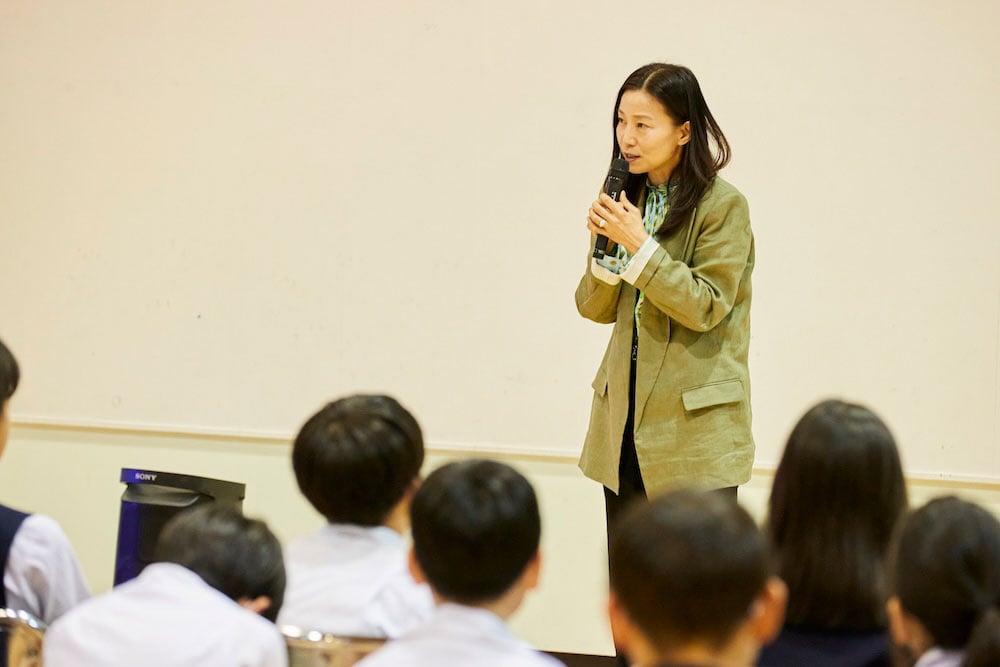
Goshima: Building on that, if we’re talking about something that we could do right away, from tomorrow for example, there are everyday types of things like if a branch falls on a wheelchair ramp, pick it up, or if there’s a bicycle on a braille block, move it off. If you are conscious of those types of things, you’ll notice just how much society is designed for able-bodied people and that there is a variety of support for those who have difficulties because of this.
Naka: “Noticing things” in that way is very important. The concept of “inclusivity” is a big-level discussion, so there’s a limit to what one person can do. However, you can start by first being conscious of increasing the options, such as learning and work environments that are suitable to different people’s characteristics.
Takano: Beyond that, the ideal may be the expansion of environments like our own workplace. The members of this project have a really non-hierarchical relationship, and even when talking to me, someone who is in a wheelchair, they’ll joke and say things like, “Time to go home soon. If you’re in a wheelchair, you can stay here.” [laughs]. I can say the same kind of thing back to them, so that kind of relationship has been established, but I think it’s a very good relationship when you can joke with each other that much.
If you don’t have knowledge about persons with disabilities, you inevitably have unconscious assumptions. This leads to biases and makes it hard to approach people on equal footing. That’s why I want people to come into contact with and get involved with as many different types of people as possible, regardless of whether they have a disability or not. The environment, facilities, and equipment won’t change immediately, but when it comes to your own “consciousness,” that’s something you can change quickly by yourself.
Editor’s Note:
Don’t spend time only with people who are similar to you; interact with a variety of individuals. If people are placed in that type of environment from childhood on, they may naturally acquire a diverse perspective. And if children who grow up in this way become the leaders of society when they are adults, I think this society will move in a better direction.
However, we can’t simply leave it to the next generation of children. There are many things that we adults can do. We need to imagine what kind of people are facing difficulties in this society that is designed for able-bodied people and help eliminate those difficulties one by one.
Children growing up with an inclusive education and the adults who watch over them – this interview made me feel how important it is to pay attention to both sides of that equation in order to change this society into a place “where everyone can live comfortably.”
Text: The Nippon Foundation Journal Editing Department
Photo: Eizaburo Sogo