The Social Goals of the Japan College of FishJapan’s first trade school dedicated to the comprehensive study of fish
Key Points
- Japan’s fishing industry is facing major problems, including a lack of people to carry on the trade and changes in the kind and number of fish that can be caught.
- The Japan College of Fish focuses on field work as it trains all-round fish specialists.
- Marine and fishery challenges cannot be solved overnight. Continued concern for the ocean by each individual is vital.
Demand for fish is rising around the world. Not only is fish an integral part of the Japanese diet, but also, fresh raw fish is used to make sushi, which has become a major food type around the world, consumed by people of many different nationalities as a healthy source of nutrition.
Yet the number of people engaged in the marine products industry in Japan, starting with the fishers who catch the fish, is steadily declining.
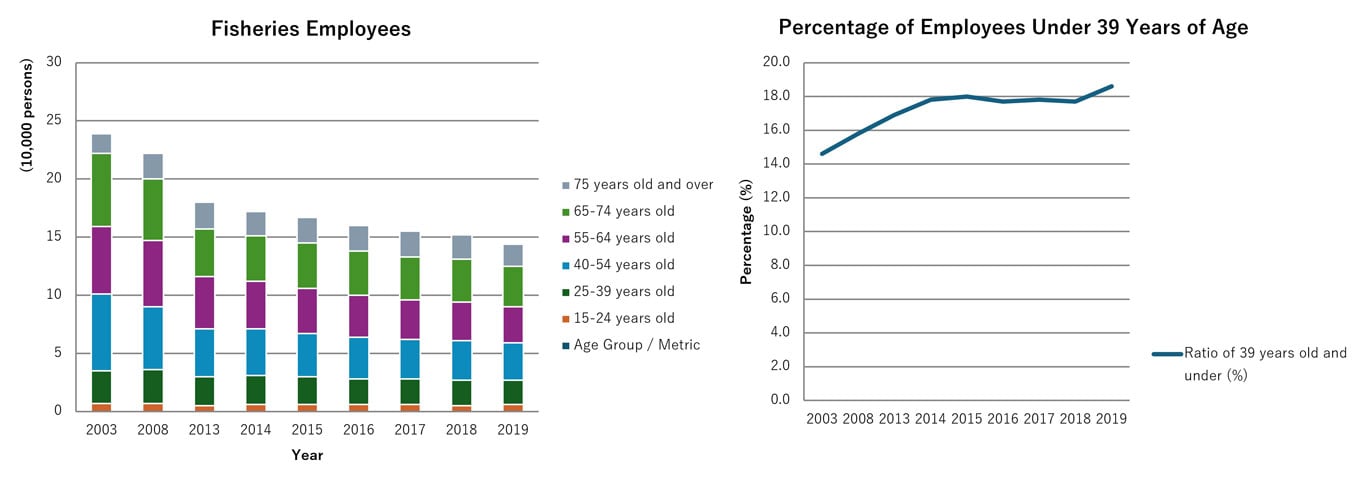
Source: Labor Trends in the Fishing Industry: Fisheries Agency (external link, in Japanese)
A dwindling labor force is not the only problem the fishing industry is facing. In 2006, a paper published in the American journal Science reporting research by a group of marine ecologists and economists led by a Canadian professor predicted that by 2048, global warming and the pollution of the oceans will lead to the complete collapse of global populations of edible ocean fish. (This is now known as “the 2048 problem”). The paper sent shockwaves around the world.
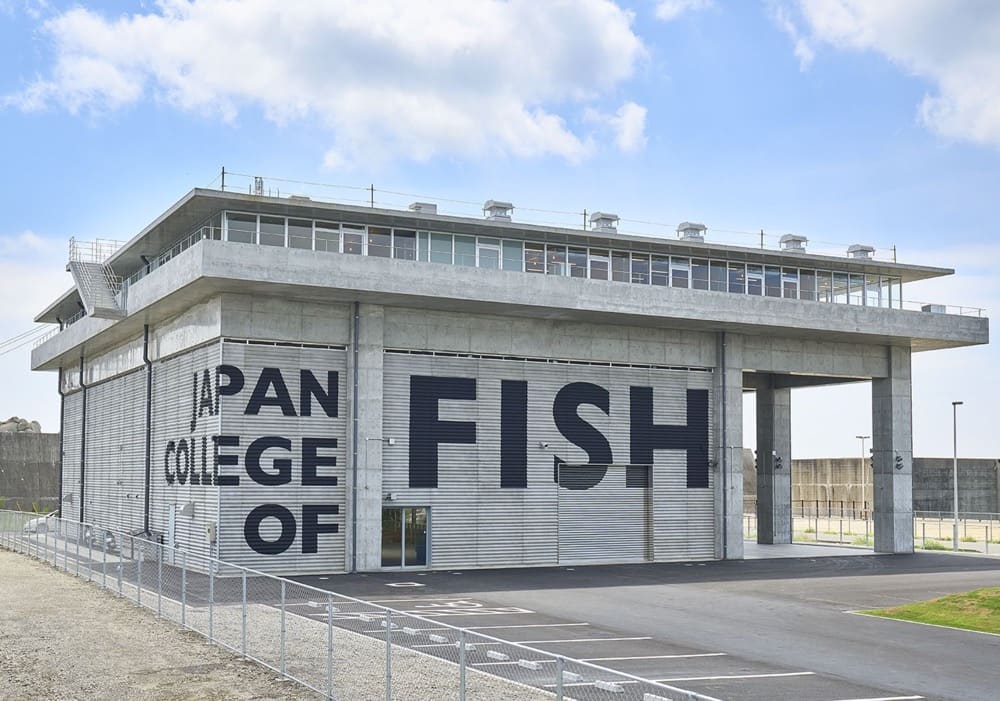
In an effort to mitigate these problems even a little bit, the Japan College of Fish (external link, in Japanese) was established in the city of Miura in Kanagawa Prefecture. Operating as one branch of the Mizuno Gakuen (external link, in Japanese) group of educational institutions, this newly founded college is Japan’s first trade school dedicated to the study of fish, as its name implies.
In this issue, we interviewed the chief of the college’s academic affairs section, Hidetaka Nakamura, who was involved in establishing the college.
The many problems assailing the fishing industry, from shortages of workers to carry on the trade, to changes in the volume and variety of catches
The Nippon Foundation Journal Editing Department: We hear that the problems facing the fishing industry are getting increasingly serious.
Hidetaka Nakamura: They certainly are. First, there is a shortage of dedicated fishers to carry on the trade. In order to become a fisher, you need to obtain fishing rights, but many people have no idea even how to go about doing this.
In addition, Japan’s population of fishers is aging, and not enough has been done to encourage young people to seek employment in this field. The fishing industry has been actively organizing recruiting fairs recently, but they are still not widely known.
In addition, there are a number of other factors behind the shortage of workers to carry on the trade. These include the fact that global warming is causing ocean temperatures to rise, catch volumes to drop, and the kind of fish that can be caught in each season to change. This means that the old ways cannot be maintained. In the past, fishers’ children often followed in their parents’ footsteps, but now, they often go off into other types of work.
Journal: So, changes in water temperatures also lead to changes in the volume of marine life and their habitats.
Nakamura: They do. For example, around the Miura Peninsula, where the college is located, the number of tropical fish has increased substantially. Because of the higher water temperatures, fish from southern oceans that used to ride in on the Kuroshio black tides as seasonal visitors now stay on, while those that traditionally came in winter no longer show up.
If the locals cannot catch saury, squid, salmon, and other varieties that are big sources of income in the area, they face financial instability, so we sometimes hear from the fishers who are working now that they cannot force their children to take over their business.
In recent years, we have started to hear people saying that “fish are a finite resource.” I therefore feel that it’s important to put more emphasis on aquaculture.
Learning all about fish to become fish specialists
Journal: We heard that the Japan College of Fish is the first school in Japan in which students learn all about fish. Can you please explain how it got started?
Nakamura: One of the schools in the Mizuno Gakuen group is the Tokyo College of Sushi & Washoku (external link), and I heard from some of their chefs and wholesalers that the number of people engaged in the marine products industry as a whole was declining. This made me think that research into the current situation in the marine products industry as a whole was needed, so I began conducting a number of studies.
My research made me realize that the issue is not just about fish as food, but is also related to various aspects of daily life, including ornamental fish for aquariums and people who breed them, leisure activities like fishing, and also environmental concerns.
This led us to decide that the school’s policy should be to have students learn everything related to fish. We opened the Japan College of Fish in April 2023 and currently have 78 first-year students and 72 second-year students enrolled.
Journal: Why did you choose to establish the college on the Miura Peninsula?
Nakamura: We chose Miura because we strongly felt that it was a town in which people and fish coexist harmoniously. The area is also ideal for fieldwork: close to the school there is a fisheries technology center as well as a fish market run by the city, plus Jogashima, a spot famous for its superb fishing conditions.
It is also situated on Sagami Bay, which is known to have the greatest variety of fish in Japan, and it’s not too far to Tokyo Bay from here, where you can do research on fish from another habitat. I also feel that it is blessed with geographic features well-suited to the overall study of fish.
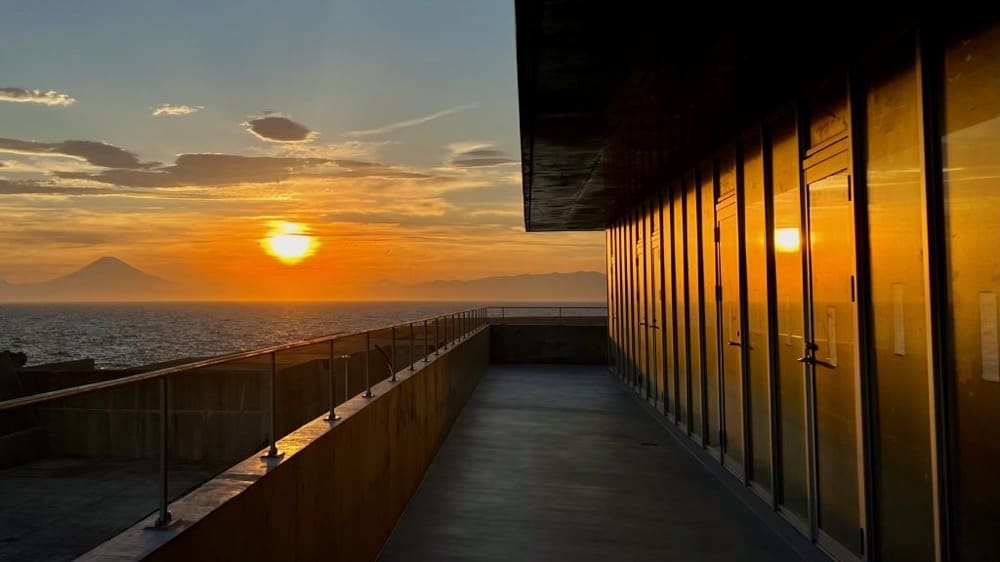
Journal: How wonderful that your students can study in such a beautiful natural environment! Can you please explain your curriculum?
Nakamura: We emphasize a comprehensive study of fish. As I mentioned earlier, fish have a role in many aspects of people’s daily lives. We want our students to get a renewed understanding of this fact through deeper studies from a broad perspective.
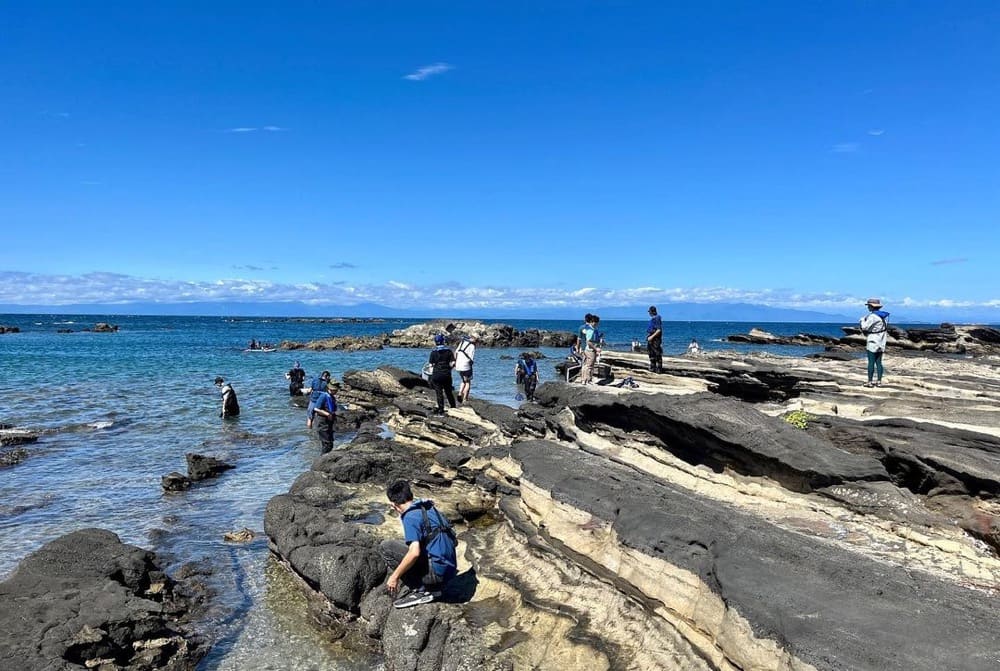
To this end, we offer cooking workshops and classes dealing with environmental issues, as well a wide range of other courses, including tourism and leisure studies. Another feature of our curriculum is that about 70% of all classes involve fieldwork.
Journal: 70% fieldwork! That’s amazing!
Nakamura: Of course, students still learn the most important basic knowledge through classroom study. But that alone is hard to translate into real know-how.
This is especially true of environmental issues. They are hard to notice unless you see them with your own eyes. But if, for example, students can view the actual state of the ocean with their own eyes using an underwater drone, it will feel more real to them than what they learn in a classroom.
After graduation, not all of our students will go on to work in the fishing industry; some will work as specialists in aquaculture, distribution, aquariums, farming and sales of ornamental fish, and other fields. If our graduates have had a wide range of experiences through fieldwork during their time at school, they are sure to have opportunities to recall concrete memories of things they learned then and will undoubtedly make use of these experiences in their work. This is another reason why as a school, we emphasize experiential knowledge and learning.
Journal: Since you are Japan’s first fish trade school, I imagine you have received a variety of feedback from your students.
Nakamura: We have. Many say they are pleased to have made friends with others with whom they can talk so much about fish. Our students have a variety of interests: some like fishing, some like aquariums, but their common language is fish. When they were in junior high and high school, they couldn’t get others enthusiastic about this topic, but now they are thrilled to be able to talk about it all they want. One student commutes to school all the way from Numazu, and when I ask him if the commute is tough, he happily says it’s fun!
The students are probably motivated to come to school not only by the chance to deepen their knowledge of fish, but also by the opportunity to make friends with others who have the same interests.
Journal: I hear that you also have put effort into offering clubs and other activities to enhance student life.
Nakamura: At present, we have three clubs: the natural history club, the aquarium club, and the fishing club. All three are student-run.
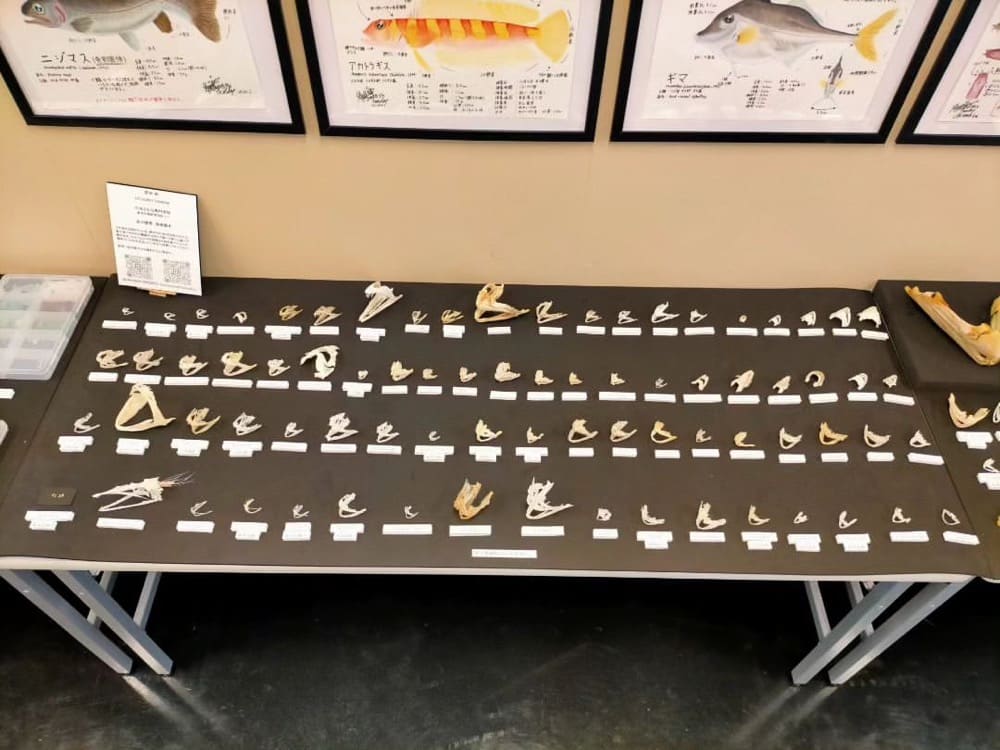
There is a student in the natural history club who likes fish jawbones, and in one year he prepared specimens of 100 fish species. It was an amazing project, so we decided to create a space for him to present them and arranged to have the specimens displayed in the gallery of the Mizuno Gakuen’s College of Jewelry. The fact that this display attracted the attention of people who originally had no interest in fish seemed to be really encouraging to this student.
Also, the fishing club recently caught an unusual species of shark during a study excursion to the southern island of Amami Oshima, and they are now preparing to make a presentation about their catch at an academic conference.
The importance of small actions to care for the sea and prevent pollution
Journal: The marine ecosystem is facing increasing challenges around the world. What kind of actions is the Japan College of Fish in a particular position to take to solve these problems?
Nakamura: We can take advantage of our location in Miura to undertake sustainable environmental measures. There are many things we can do, like developing spawning grounds for big-fin reef squid and working with the members of the local fishers’ cooperative to revitalize seaweed beds. I believe that as an educational institution, we could possibly be involved in these activities on a permanent basis.
Environmental problems are not issues that can be quickly solved. Since it’s important to sustain efforts over the long term, the Japan College of Fish hopes to continue to strive to mitigate them.
Journal: It is reassuring to be able to deal with such issues as an institution, but can you tell me what individuals can do to help solve the problems of the marine ecosystem and the fishing industry?
Nakamura: I think the first step is to learn more about the ocean, fish, and fishing industry. There are aquariums that have water tanks that always have clear plastic bags floating in them as a way to raise awareness of how such bags impact the world’s oceans. If such installations can prompt people who see them to think about how the bags they throw away might end up floating in the ocean, where fish might mistake them for food and eat them, visitors might start trying to learn about ways to solve this problem on their own.
Of course, even if individuals learn about such problems, there is a limit to what they can do on their own. Nonetheless, it is important for individuals to begin thinking about these problems as their own and continually take small actions to mitigate them. For example, people whose hobby is sea fishing should be sure to collect all the lines they use and take them home with them; those who go swimming in the ocean should be sure not to leave trash on the beach, and if they find litter left by others, they should pick it up and take it home.
I believe that such small actions by individuals can be of some help in solving the problems faced by the oceans and the living creatures they house, and will also help relieve the challenges the fishing industry is facing.
Editor’s Note
We were unable to hide our surprise at learning how serious the problems of the ocean’s ecosystem have become — serious enough to transform marine life habitats.
There is a new phase in Japanese that means “moving away from the sea,” and it suggests that Japanese people have fewer opportunities to become interested in fish. This is why the interview with Mr. Nakamura made us feel that if even one more young person becomes truly interested in the sea, it may result in their efforts to solve the problems of the marine ecosystem and the fishing industry.
We look forward to hearing more about the activities of the students of the Japan College of Fish.
Text: The Nippon Foundation Journal Editing Department
Related Themes
Related Links
Related Articles
From Streets to the Sea: How The Nippon Foundation Turns Cleanup into a National Movement
Field Notes