Six Months After the Noto Peninsula EarthquakeCommitment of firefighters who participated in a disaster zone rescue workshop
Key Points
- A rescue training workshop for firefighters was held on June 10, 2024, in Suzu City, Ishikawa Prefecture
- Hands-on training using collapsed wooden houses was conducted to apply the lessons learned from the Noto Peninsula earthquake
- Building connections among firefighters and with disaster volunteers can save many lives
The 2024 Noto Peninsula earthquake struck the Noto Peninsula on January 1, 2024. This massive disaster, which registered a maximum seismic intensity of 7, caused devastating damage to the affected areas, with residential damage reaching 125,976 structures including 8,408 completely destroyed homes, and claiming 260 precious lives including disaster-related deaths.[1]
The Nippon Foundation has been continuously providing disaster relief (opens in new tab) in the affected areas since the earthquake occurred.
In particular, the Foundation has strengthened its partnership with the technical volunteer organization DRT-JAPAN (external link), deploying wide-ranging support including road clearance,[2] response to secondary disasters from collapsed buildings, and searches for missing persons.
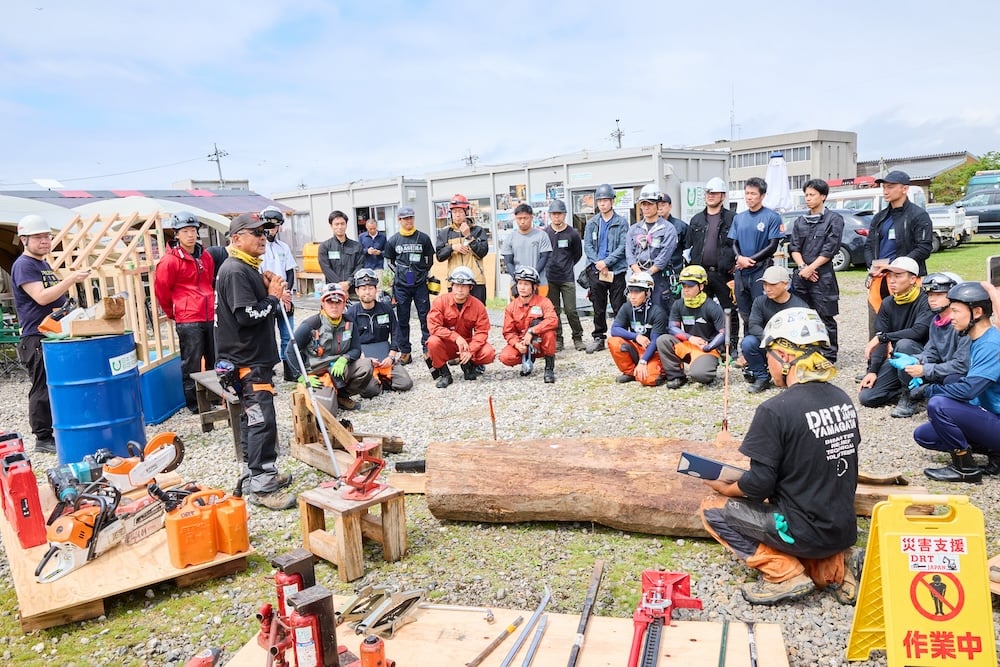
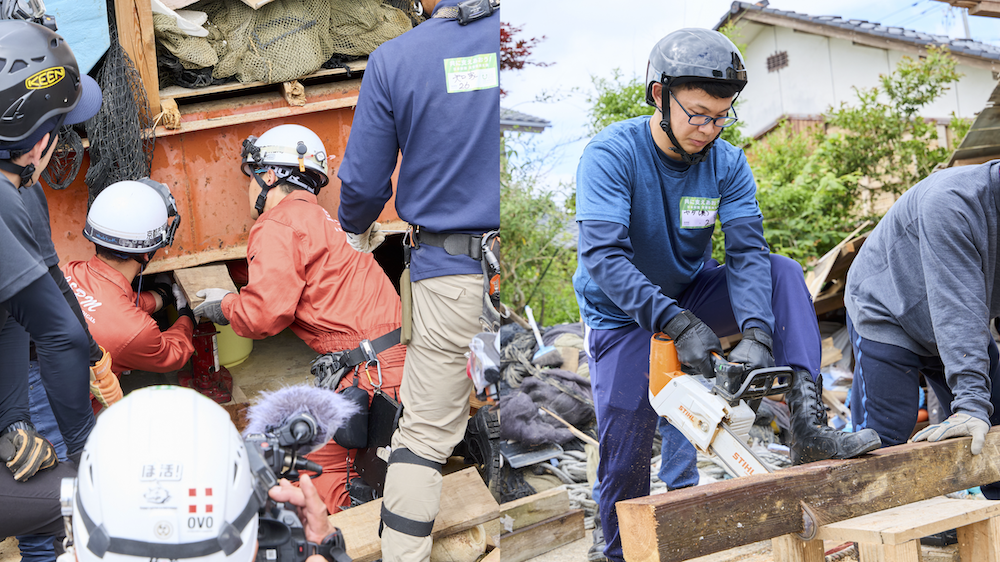
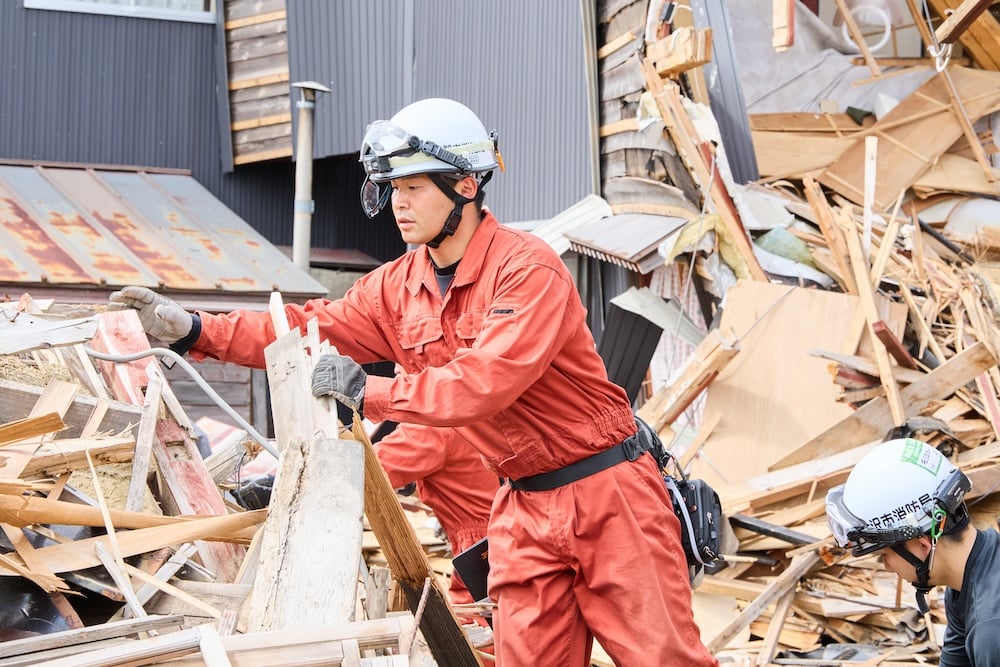
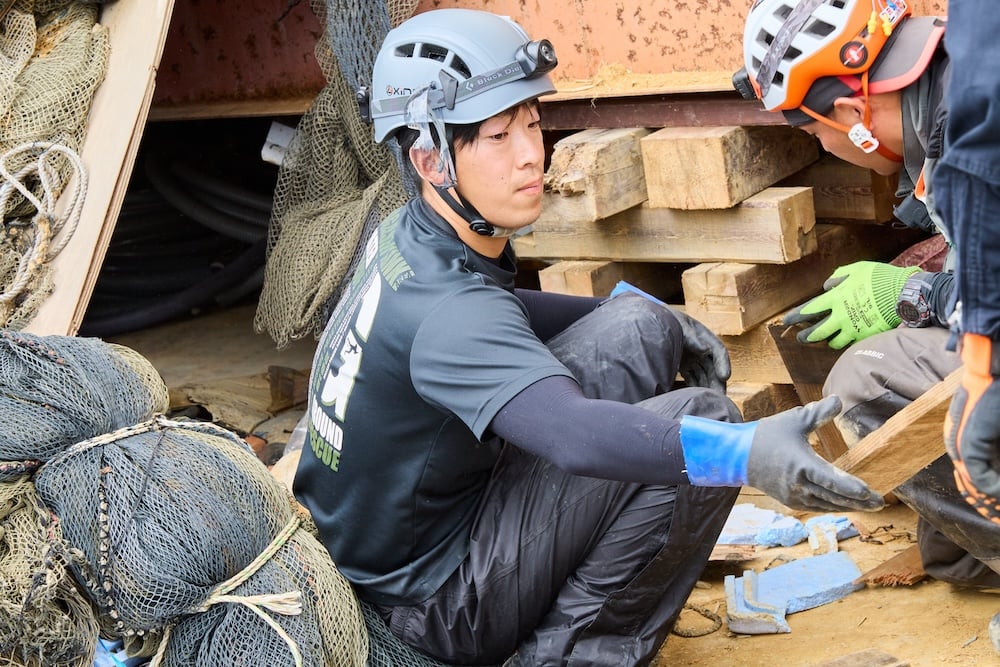
On June 10 and 11, the Foundation held a rescue training workshop for firefighters from across the country, simulating the immediate aftermath of a disaster. With the permission of the property owners, hands-on training was conducted using collapsed wooden houses to save lives as quickly as possible.
In this article, we share scenes from the workshop along with the individual perspectives and commitment to disaster prevention of the firefighters who participated.
- Note 1: Figures as of June 25, 2024. Source: “Status of Damage Related to the 2024 Noto Peninsula Earthquake,” Major Disaster Management Headquarters, Cabinet Office, Government of Japan (external link, Japanese only / PDF)↩︎
- Note 2: In large-scale disasters, this refers to rapidly carrying out minimum debris removal and simple surface leveling to open emergency access routes for emergency vehicles and other responders.↩︎
Practical learning that helps save lives at disaster sites
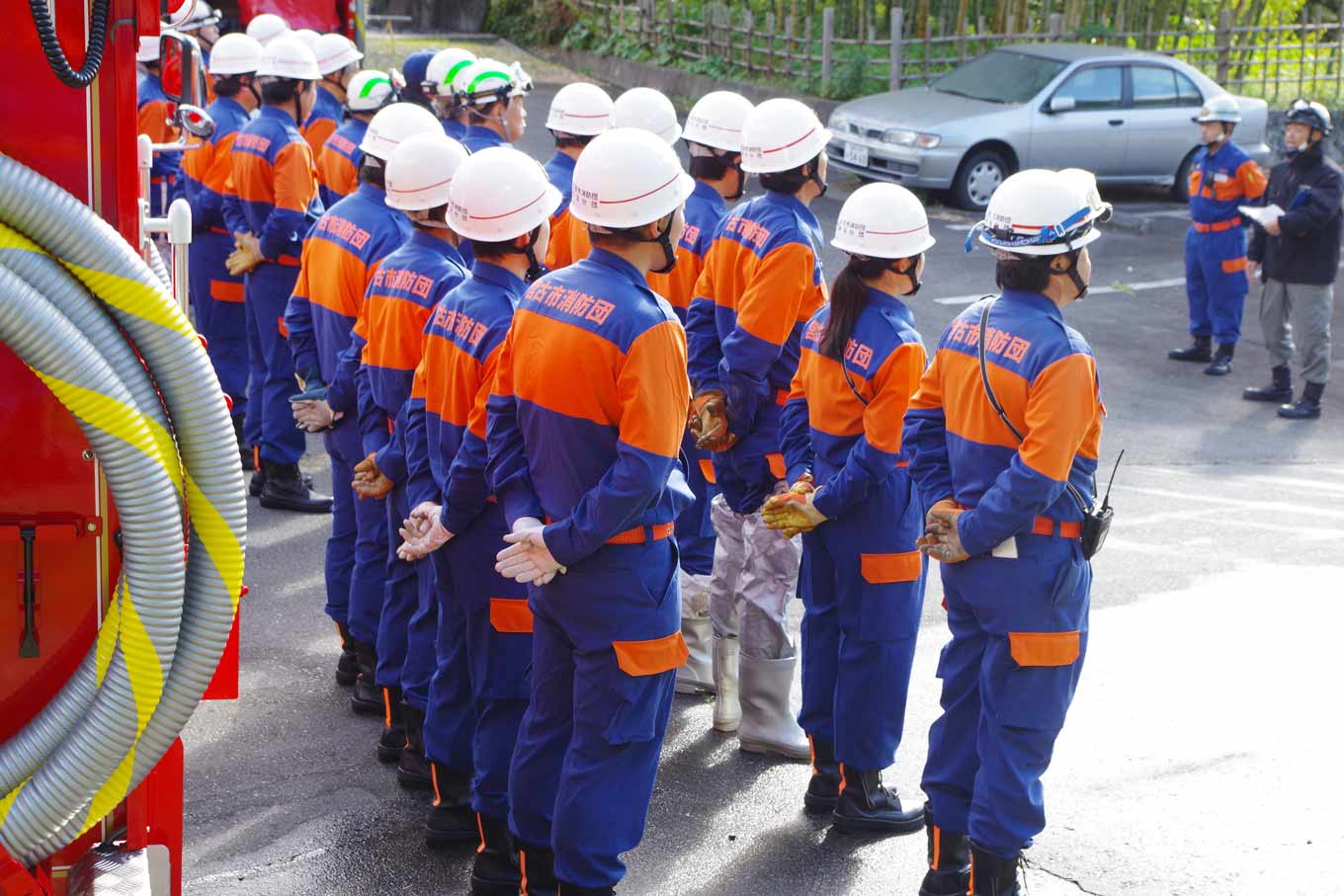
On the early morning of June 10, nearly 40 firefighters gathered at Takojima Fishing Port in Suzu City, Ishikawa Prefecture, to participate in a rescue training workshop hosted by DRT-JAPAN and The Nippon Foundation.
Participants that day ranged from local firefighters working in the Noto Peninsula to firefighters active in western Japan including Toyama, Aichi, Kyoto, and Osaka. What they all had in common was their desire to save the lives of disaster victims. To that end, each and every one of them came with a strong commitment to acquire live rescue skills that would be useful when disasters strike.
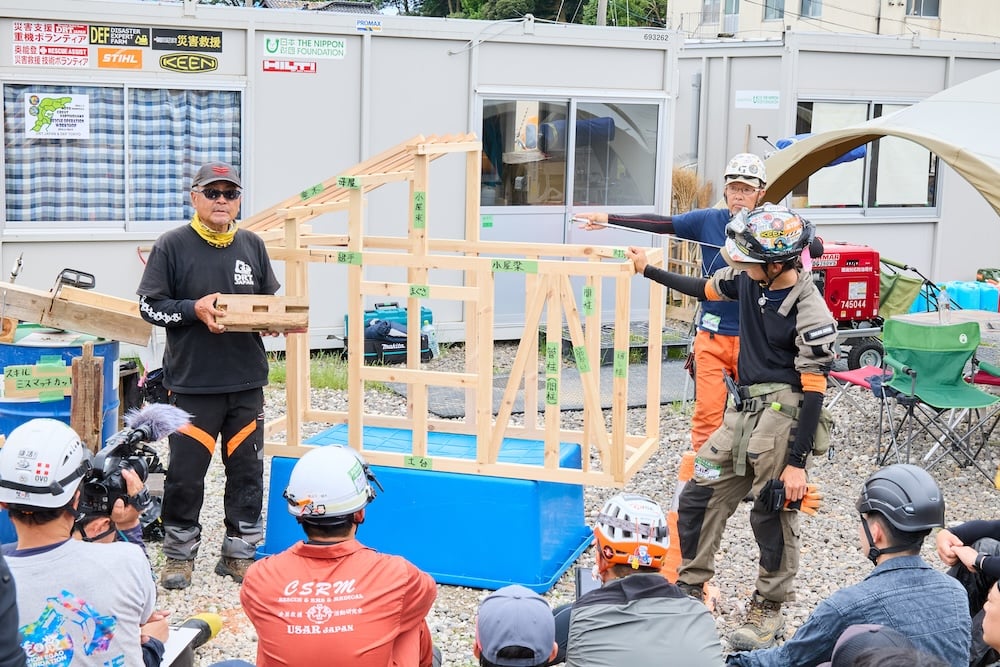
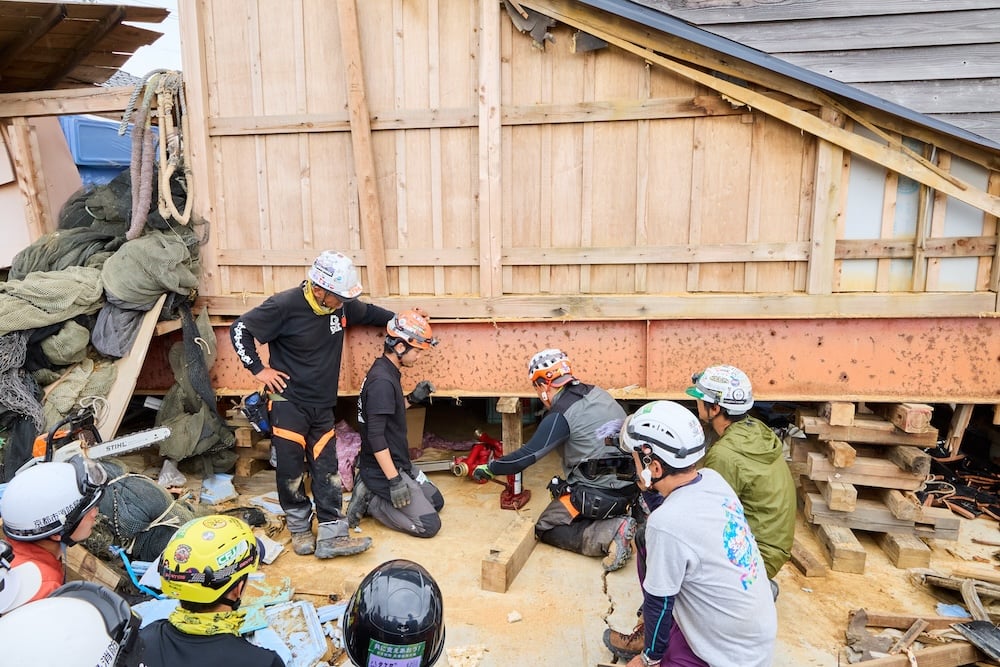
What communities can do before firefighters arrive
In this section, we hear from the firefighters who participated in the workshop.
First, we spoke with Mr. Masada, Mr. Yamashita, and Mr. Yoda, who belong to the Okunoto Wide Area Association Fire Department in Wajima City, one of the hardest-hit cities.
The Nippon Foundation Journal Editing Department: From your perspective as people conducting rescue operations in the disaster zone, what issues were brought to light this time?
Masada: When the earthquake struck, I happened to be off duty, so I was with my family. After the tremendous shaking, I checked on my family’s safety and immediately decided to head to the fire station.
But there were so many severed roads that I couldn’t get to my assigned fire station, so I decided to go to the nearest station instead. In the end, I wasn’t able to reach my own station until several days later. I ran right into the problem of road severance making travel difficult.
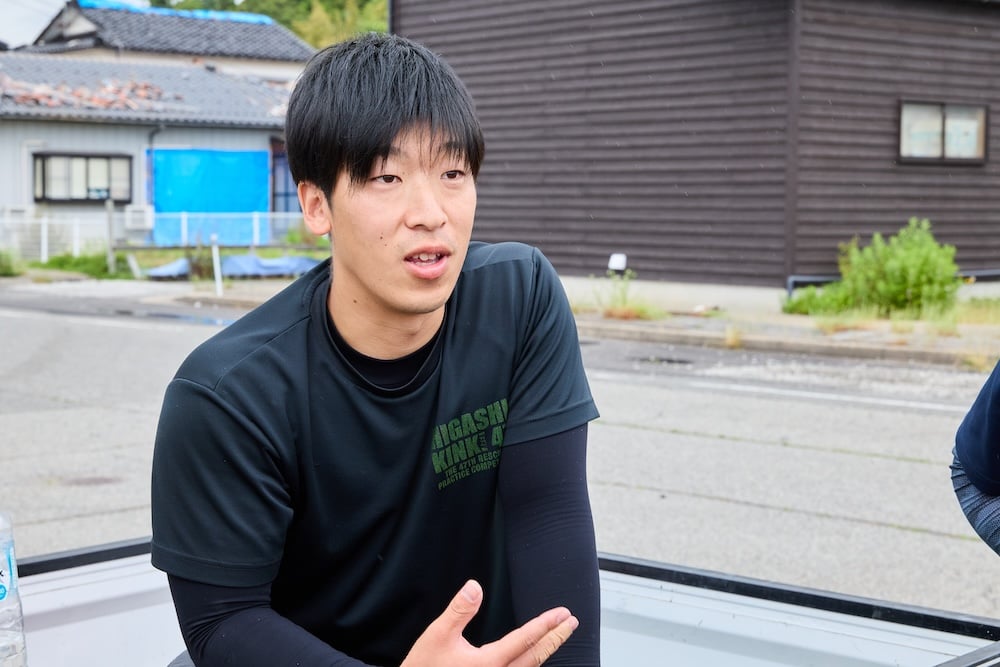
Yamashita: In November 2023, training for the Chubu Emergency Fire Response Team was held in Noto. But the actual road conditions were considerably worse than what we had anticipated in that training. Of course, there were aspects where we could apply what we had trained for, but I experienced firsthand that disasters inevitably bring damage beyond what we expected.
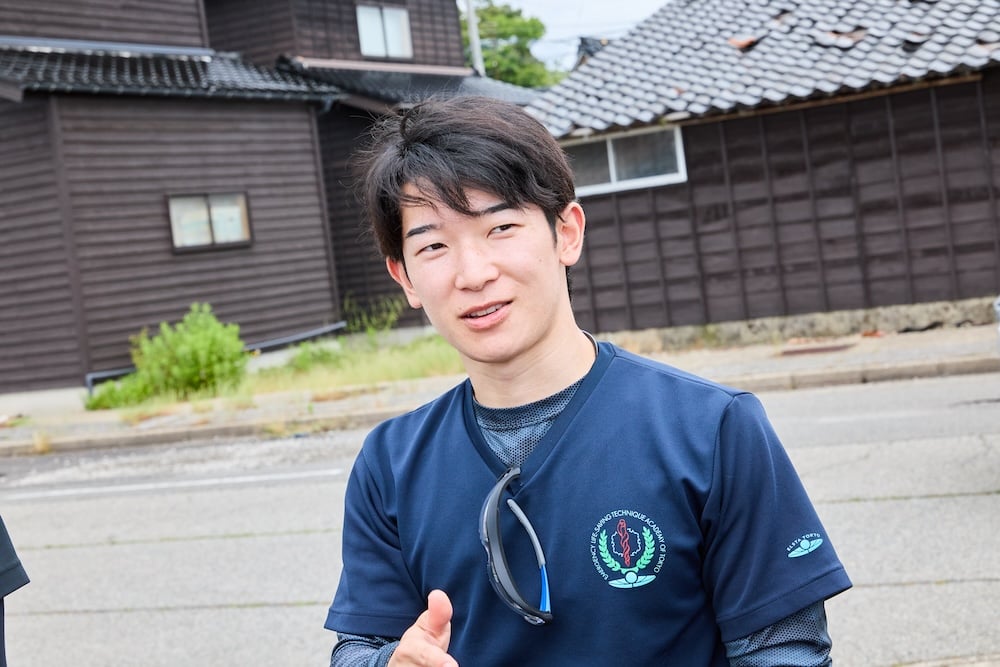
Journal: How did you find participating in this workshop?
Masada: This is actually my second time participating in this type of hands-on workshop. After realizing the importance of practical training simulating disaster conditions the first time, I decided to join again. I want to share what kinds of equipment are truly needed during a disaster within our fire station as well.
Yoda: There are many things that are difficult to learn in regular training, and being able to train like this using actual damaged buildings is extremely educational.
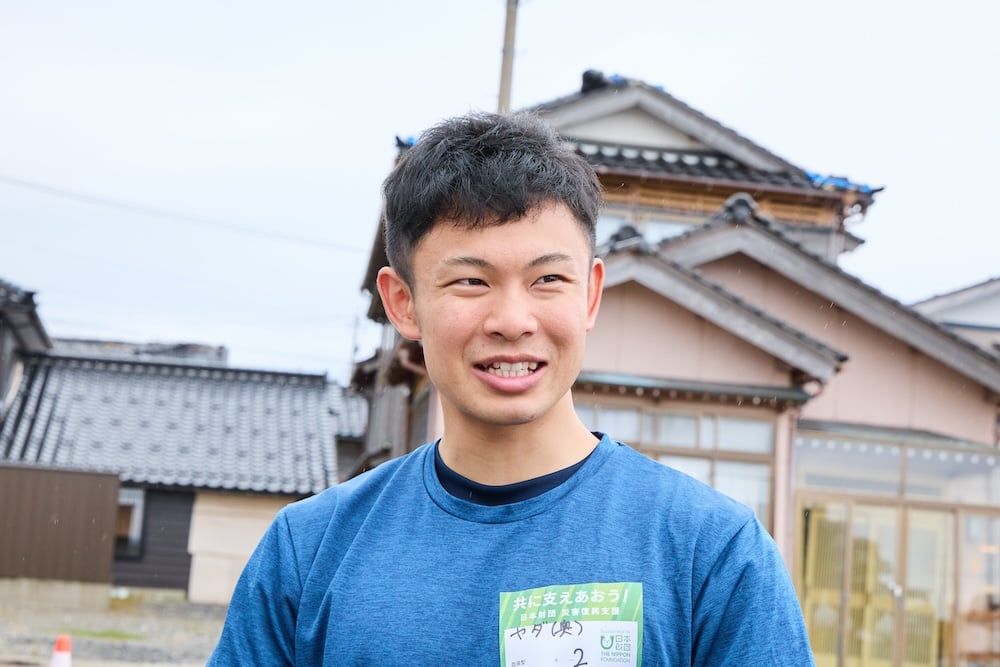
Yamashita: Of course, it would be best if a large-scale disaster like the Noto Peninsula earthquake never happened, but by accumulating experience like this, I want to be thoroughly prepared for the next disaster.
Japan still has many wooden houses, so I also felt the need to properly relearn their structure.
Journal: From your position as a firefighter working in the Noto Peninsula earthquake disaster zone, is there anything you would like to convey to readers?
Masada: I think even ordinary people should acquire basic rescue knowledge — it certainly wouldn’t hurt. Of course, we want people to rely on public institutions like us during disasters. But at the same time, I hope individuals learn what they can do themselves to create an environment where people can help each other in times of emergency.
Yoda: In the area under our jurisdiction, there were many collapsed buildings, and residents actually cooperated with each other and conducted rescue activities. I think that is extremely important.
If people think about what they themselves can do before we firefighters arrive on the scene, more lives should be saved.
Updating knowledge and skills to strengthen organizational response
Next, we spoke with firefighters who traveled from outside the prefecture: Mr. Ueki and Mr. Kitazawa, who work at the Kyoto City Fire Department.
Journal: Could you tell us why you two participated in this workshop?
Ueki: About two weeks after the Noto Peninsula earthquake occurred, I was dispatched to respond to landslide disasters in the affected area. But when I actually saw the collapsed houses, I found myself wondering, if someone needing rescue had been left behind here right now, what could I have done?
I had done little training for earthquakes up to that point, and I realized that my own experience and knowledge alone would not be enough to respond. To change that, I participated in this workshop.
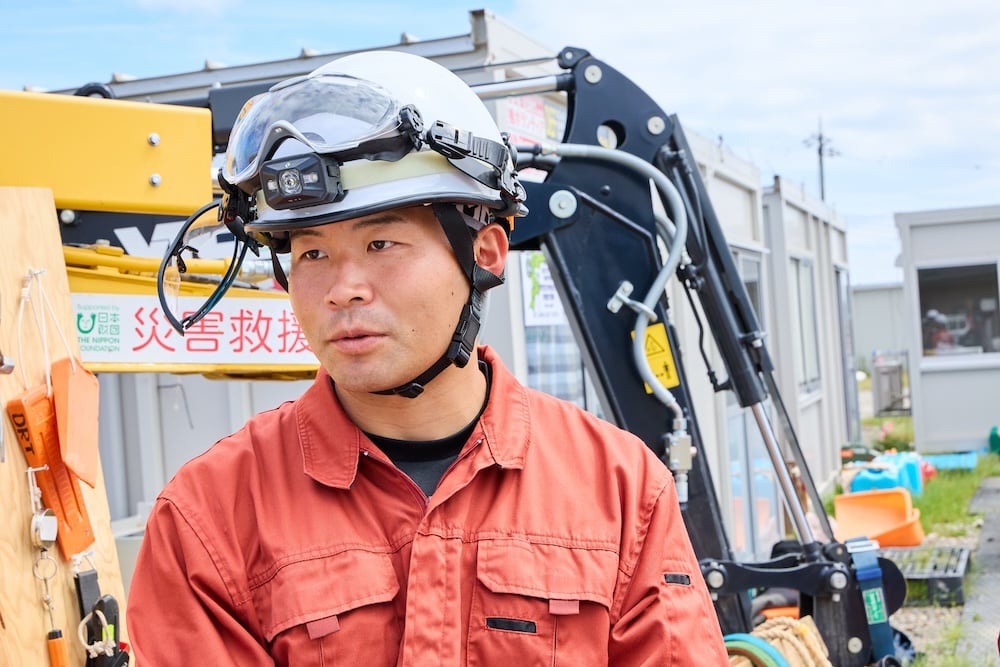
Kitazawa: I feel the same way. With warnings that major earthquakes may occur in the future, when I asked myself whether I could actually conduct rescue operations using equipment, I couldn’t clearly picture it.
So this time, I participated hoping to absorb whatever I could.
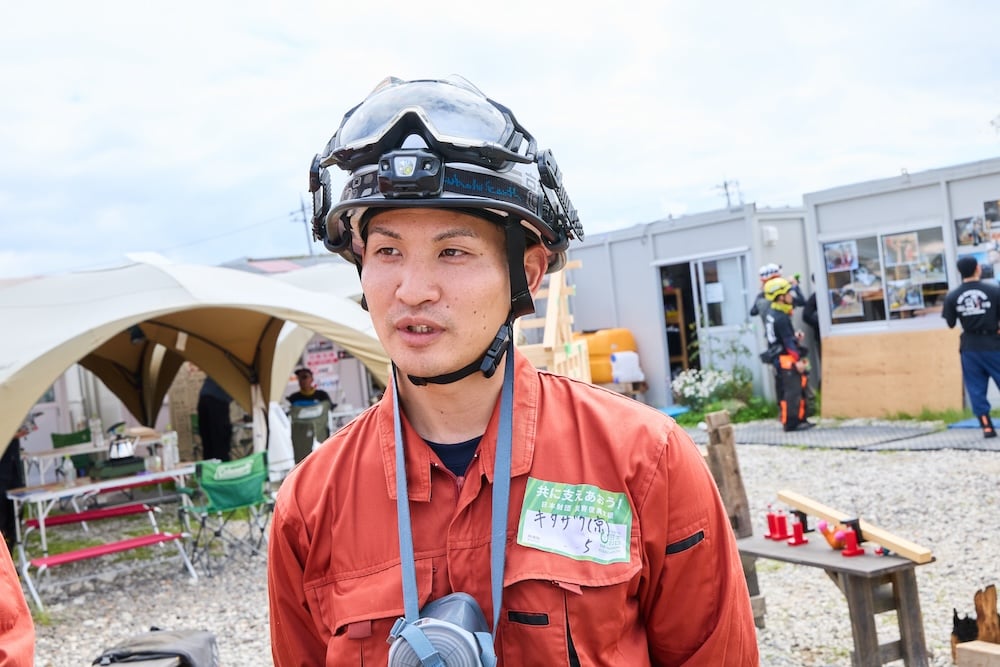
Journal: How was it actually participating?
Ueki: Even just in terms of how to use equipment, it was good to realize that my previous methods had been mistaken.
Kitazawa: Within our narrow world, there were aspects where I had always assumed what my seniors taught me was correct. But by participating in an external workshop like this, I was able to realize that we must constantly update our skills.
Ueki: I don’t think disaster response skills improve from just attending one workshop, so I want to continue participating. In addition, I want to share this knowledge with fellow firefighters who couldn’t participate this time, and work to improve the response capability of the entire organization.
Kitazawa: Continuously inputting knowledge and skills and giving back to our own organization —I feel that is important as we work as firefighters protecting lives.
The importance of technical volunteers and firefighters working together
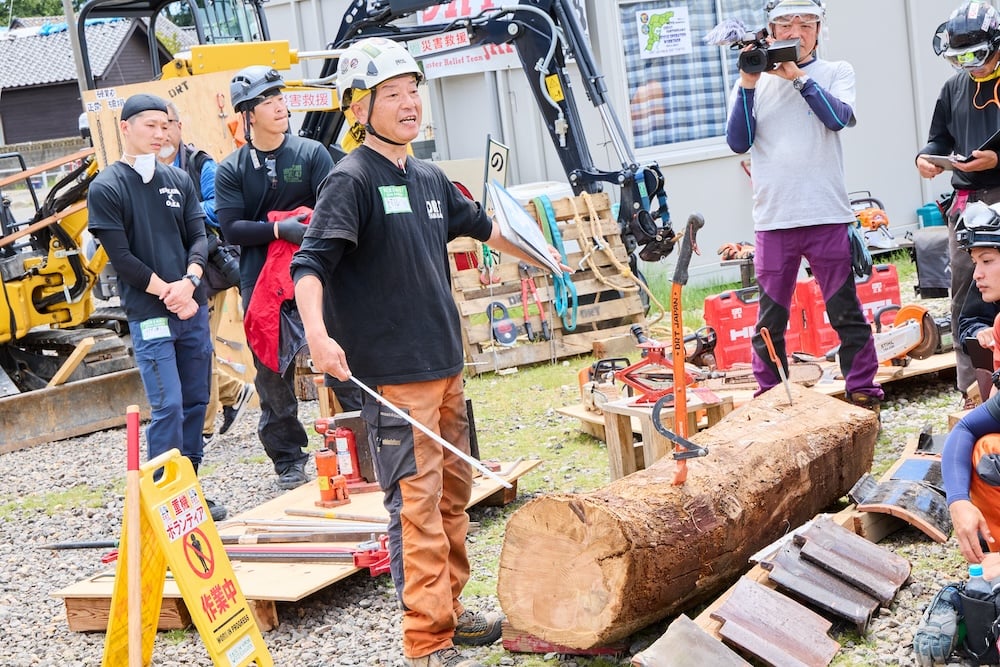
Finally, we also spoke with Mr. Kato from DRT-JAPAN, who led this workshop. Mr. Kato entered the affected area immediately after the Noto Peninsula earthquake struck and has since played a leadership role at relief sites.
Journal: Could you tell us why you held this workshop?
Kato: As I work as a disaster volunteer as part of DRT-JAPAN, I strongly feel how vital the presence of firefighters is at disaster sites. At the same time, I sense the firefighters’ desire to improve their own skills.
By holding workshops like this for firefighters, one of our goals is to make it easier for us to collaborate during disasters. That way, the scope of relief activities will expand, and above all, the number of lives that can be saved will increase.
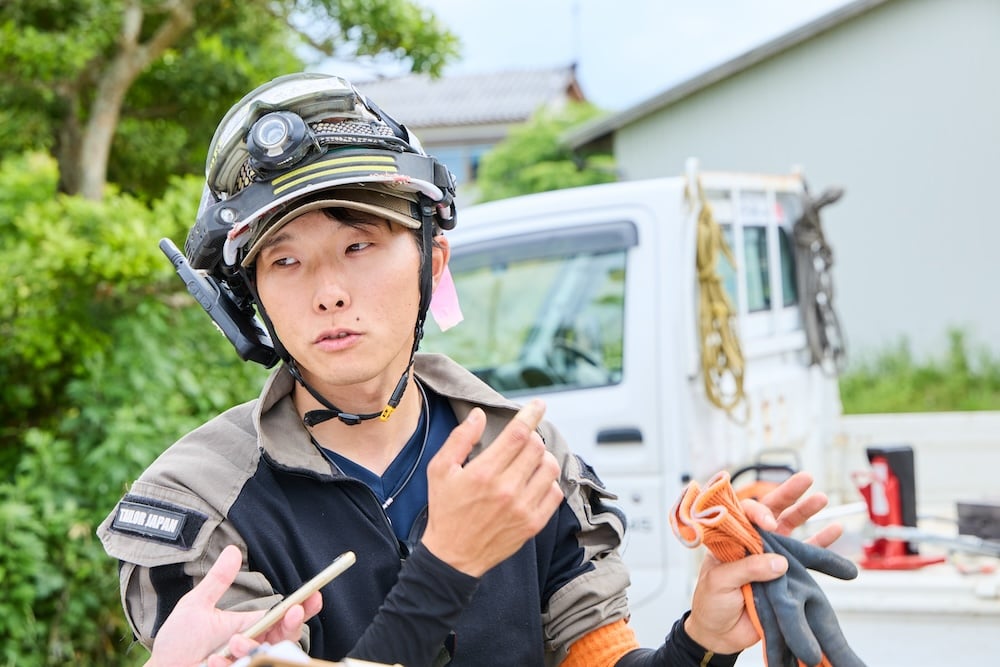
Journal: From your perspective, what do you think were the relief challenges in the Noto Peninsula
Kato: There are too many to list them all, but if I had to name one, it would be that the vehicles used by firefighters and Self-Defense Force are too large.
During large-scale disasters, roads are often severed or overflow with debris, forcing people to take narrow roads. Large vehicles can’t get through, which creates a situation where operations simply cannot be conducted.
There were many instances where we had to clear roads with small heavy machinery before firefighters and Self-Defense Force personnel could finally get through, so I believe downsizing vehicles could be considered in the future.
Also, I always sense a strong motivation and sense of mission from the firefighters who come to disaster sites. So I hope national and local governments create an environment where they can make the most of their abilities. For example, I think disaster sites would be transformed just by equipping them with tools like chainsaws and jacks and training them to use those tools properly.
Journal: Holding training sessions for such highly motivated firefighters also helps raise overall disaster response capabilities, doesn’t it?
Kato: Firefighters train regularly, and I do not mean to diminish that. However, conducting hands-on training using collapsed houses in disaster zones holds great significance, and I believe it is the shortest path to improve disaster response skills.
Also, when firefighters get to know each other at workshops, it should change how easily they can collaborate during disasters. Knowing that the person at a site is someone you’ve worked with in a workshop before creates a sense of reassurance. That’s why I think it’s important to create these opportunities throughout Japan.
Journal: From the recovery site, is there anything you would like to convey to readers or have them know?
Kato: Among the people in the disaster zone living in evacuation shelters and temporary housing, many have made the decision to continue living in this area. For those people, I would like everyone to think, as their own personal concern, about what each of us can do.
Of course, there is a limit to what one person can do alone. But everyone has their own strengths. For example, if you’re good at talking with people, even that can help the disaster zone. Holding events for people in disaster-affected areas can provide encouragement and lift spirits.
I think recovery support is the accumulation of what each individual can do. That is why building connections between people comes first. If people come together, something can happen. I hope that can serve as a starting point for accelerating emotional recovery in the affected areas.
Editor’s Note
We felt a strong desire from the firefighters who participated in the rescue training workshop to save as many lives as possible. That dedication represents hope for recovery, and their presence ensures our safety.
At the same time, rather than just relying on them, we also feel the need for each of us to acquire basic knowledge about disaster rescue. As the saying goes, “Tomorrow it could be me,” and for those of us living in earthquake-prone Japan, disasters are something any of us could face.
Text: The Nippon Foundation Journal Editing Department
Photo: Eizaburo Sogo
Related Themes
Related Links
- 【The Nippon Foundation’s Projects】Support for Disaster Recovery
- Interim Report on 2024 Noto Peninsula Earthquake and Flood Damage Relief
- Disaster Recovery
- In the Cause of Life