Six Months on From the Noto Peninsula EarthquakeConcert by high school students and volunteers brings hope to disaster-affected community
Key Points
- A concert featuring high school students affected by the Noto Peninsula Earthquake and volunteers was held in the disaster area.
- The concert, which transcended the boundaries between those impacted by the disaster and those providing support, brought hope to the many residents who gathered at the venue.
- The damage from the earthquake was extensive. To achieve a recovery, it is essential that people understand the reality of the disaster-affected region and continue to extend support.
Six months have now passed since the 2024 Noto Peninsula Earthquake, which struck on January 1, 2024, recording a maximum seismic intensity of 7 on the Japanese shindo seismic intensity scale.
In Ishikawa Prefecture, which suffered extensive damage, approximately 70% of the required number of temporary housing units have been completed, and residents affected by the disaster have begun the process of rebuilding their lives. However, a shortage of labor has meant slow progress in demolishing collapsed buildings and restoring infrastructure, and many challenges must still be overcome to achieve a fully-fledged recovery.
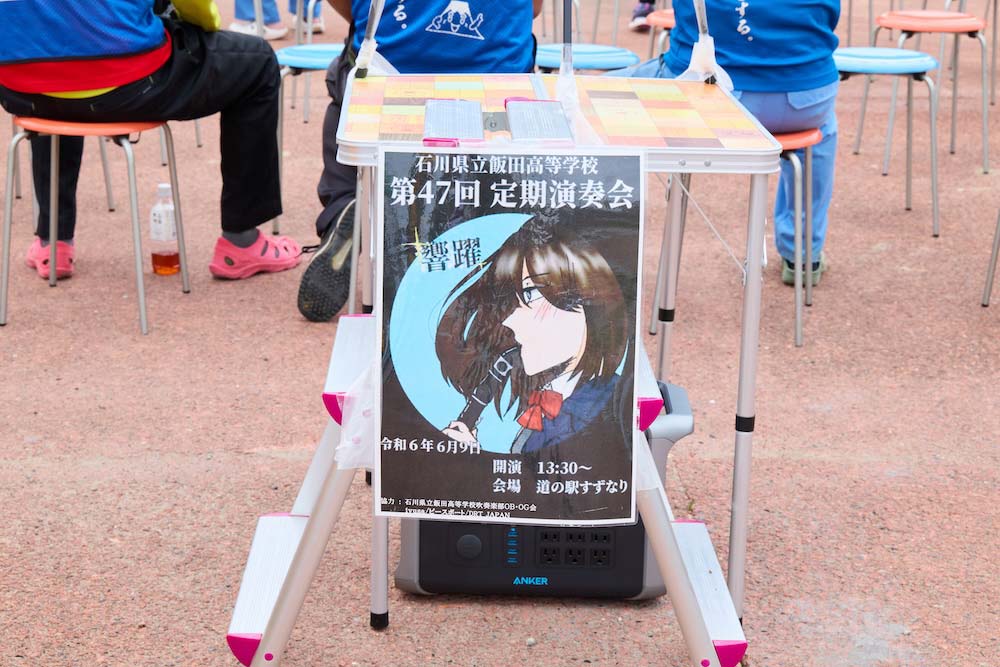
Amid these circumstances, on June 9, 2024, an annual concert by the wind band of Ishikawa Prefectural Iida High School (external link, in Japanese) was held at Roadside Station Suzunari in Suzu City, Ishikawa Prefecture.
Organized with the aim of bringing encouragement to those affected by the disaster, the concert also featured participation by members of several volunteer groups involved in recovery efforts in Suzu City, who were invited by the students to join.
In this article, we look behind the scenes of the concert, which transcended the boundaries between those affected by the earthquake and those providing support to touch the hearts of the large audience in attendance, along with thoughts on the recovery efforts from both the students and volunteers as the region moves to heal after the disaster.
The concert by high school students and volunteers touched the hearts of residents in the disaster-affected area
On a sunny Sunday afternoon, Roadside Station Suzunari was packed with local residents as well as volunteers supporting recovery efforts in Suzu City. The occasion for the large gathering was an annual concert by the Iida High School Wind Band.
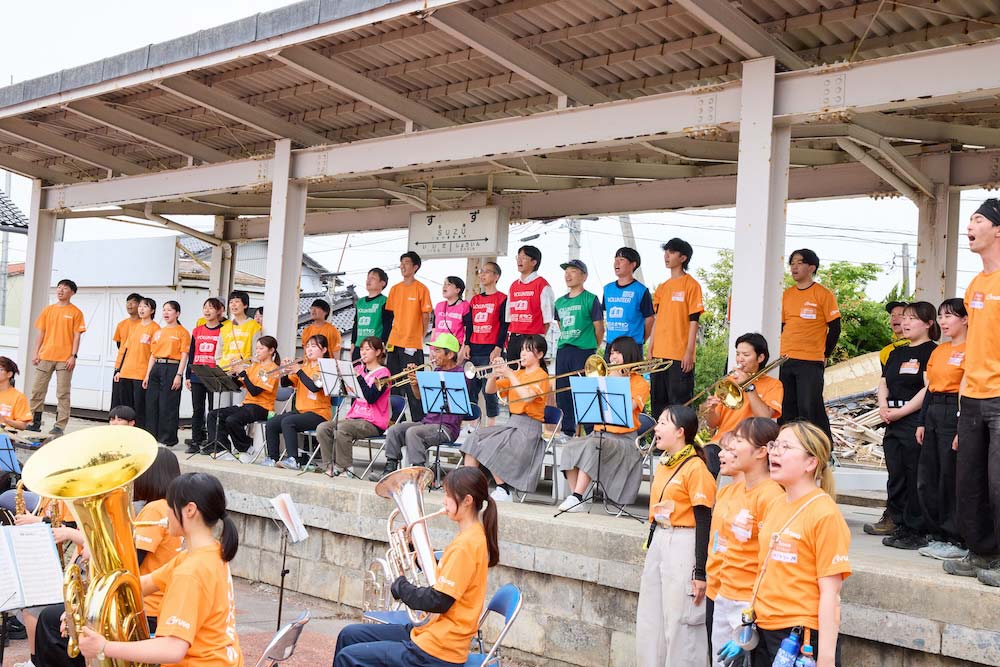
As the performance began, the powerful sound of the instruments resonated through the town. The band currently consists of eight students. Although there were originally 11 members in the ensemble, some were forced to transfer schools after the earthquake, reducing the group in size. Nevertheless, their rousing performance, which belied their small number, drew enthusiastic applause from the crowd.
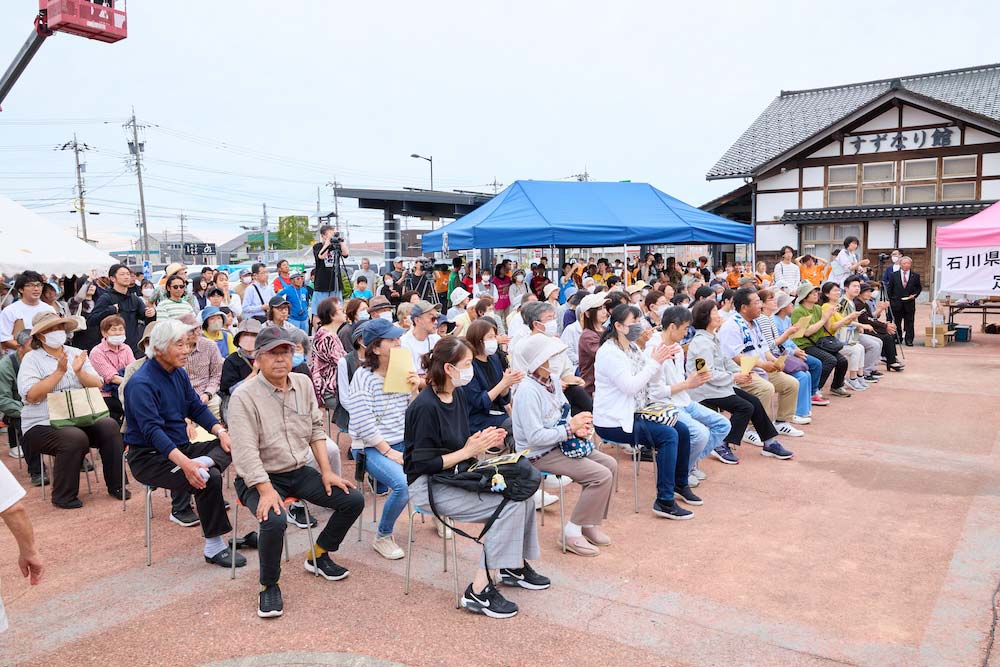
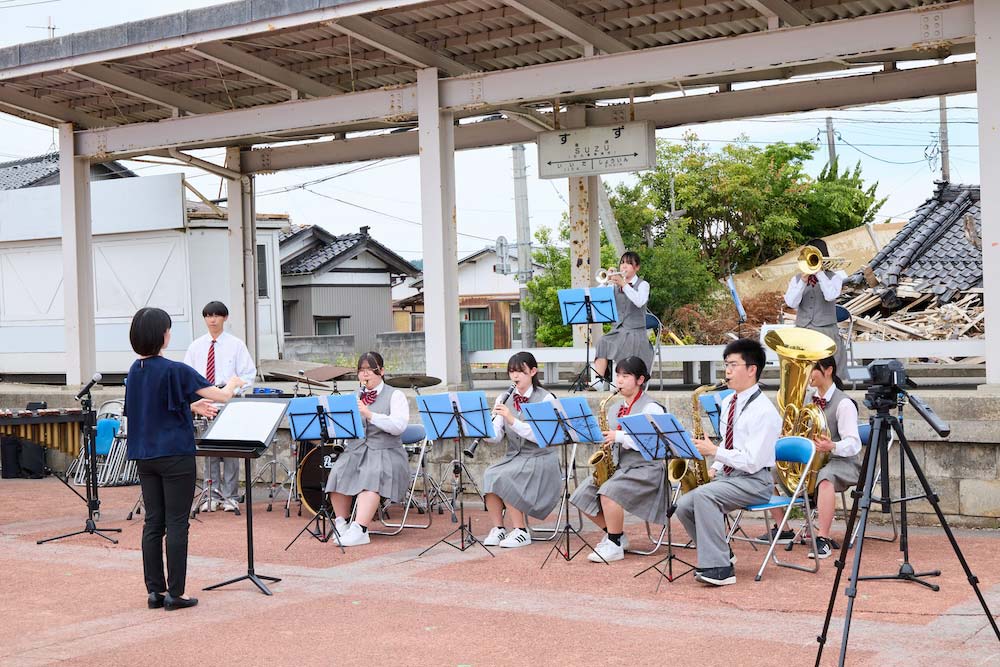
After the first piece, Iida High School’s vice principal addressed the audience: “The students on stage have persevered through difficulties to perform here today, including the three years of the COVID-19 pandemic and the recent earthquake. In particular, today marks a milestone for our third-year students as their last performance with the wind band. Please give them a warm hand today.”
The following program featured a mix of classic and contemporary hit pieces. The arrangement of “Ware wa Umi no Ko (I am a Child of the Sea),” adapted by a former instructor from the wind band of Ishikawa Prefectural Suzu Jitsugyo High School, a specialized high school that merged with Iida High School in 2010, drew warm applause from the older members in attendance. Meanwhile, the band’s performance of singer-songwriter Yuuri’s hit song “Betelgeuse” brought smiles to the faces of younger audience members.
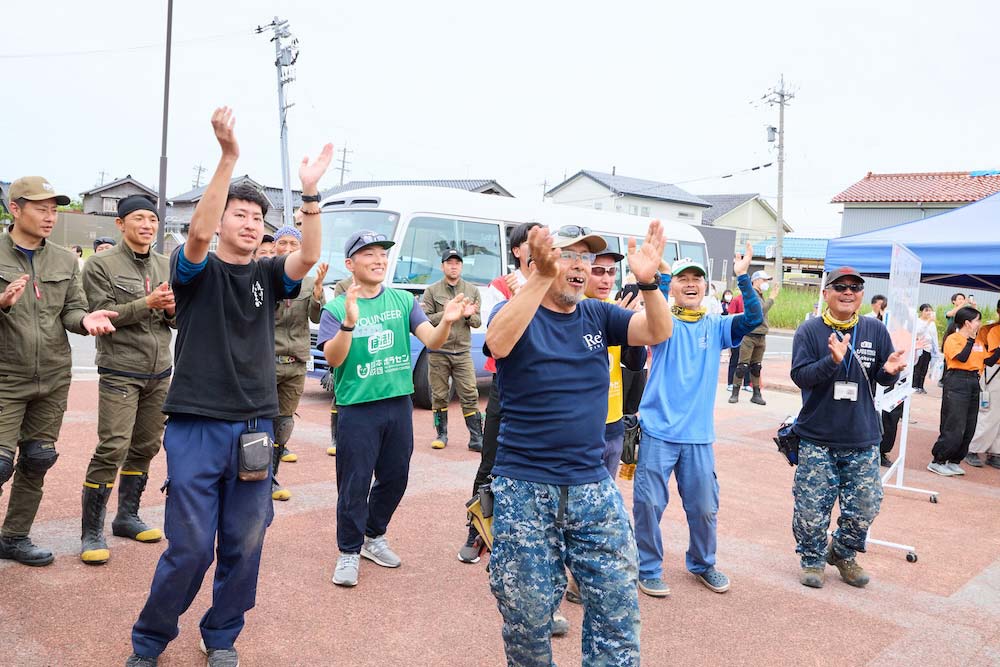
Partway through the concert, members of volunteer organizations joined the performance, including the technical volunteer group DRT-JAPAN (external link, in Japanese), volunteer organization IVUSA (external link, in Japanese), composed of university students from across Japan, and student volunteers working with The Nippon Foundation Volunteer Center (external link, in Japanese). What started as an eight-member ensemble grew into a large-scale wind band with a choir, filling Suzunari Roadside Station with powerful and moving melodies.
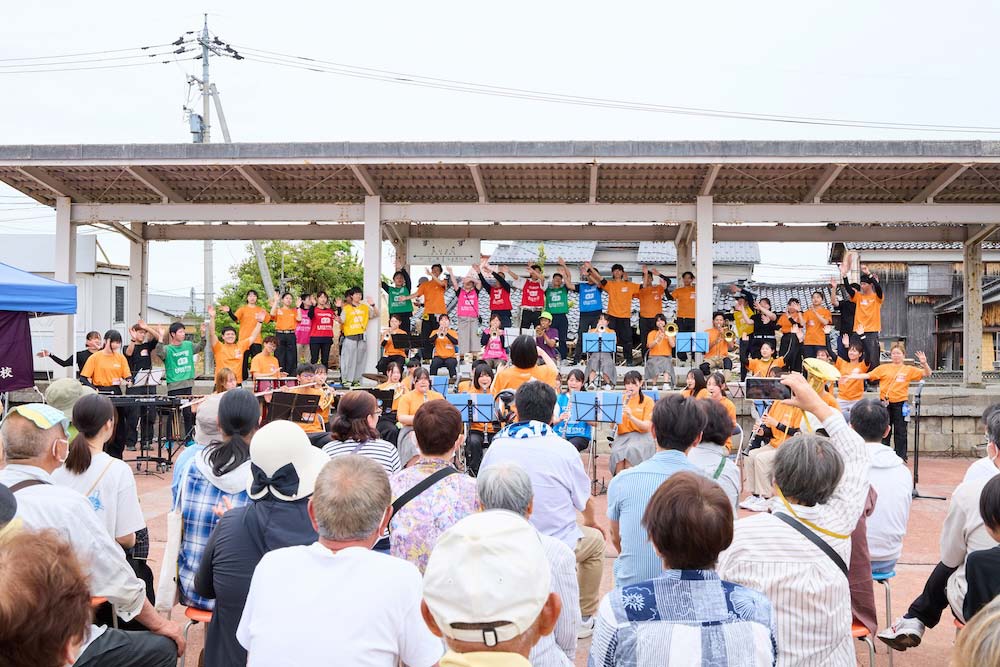
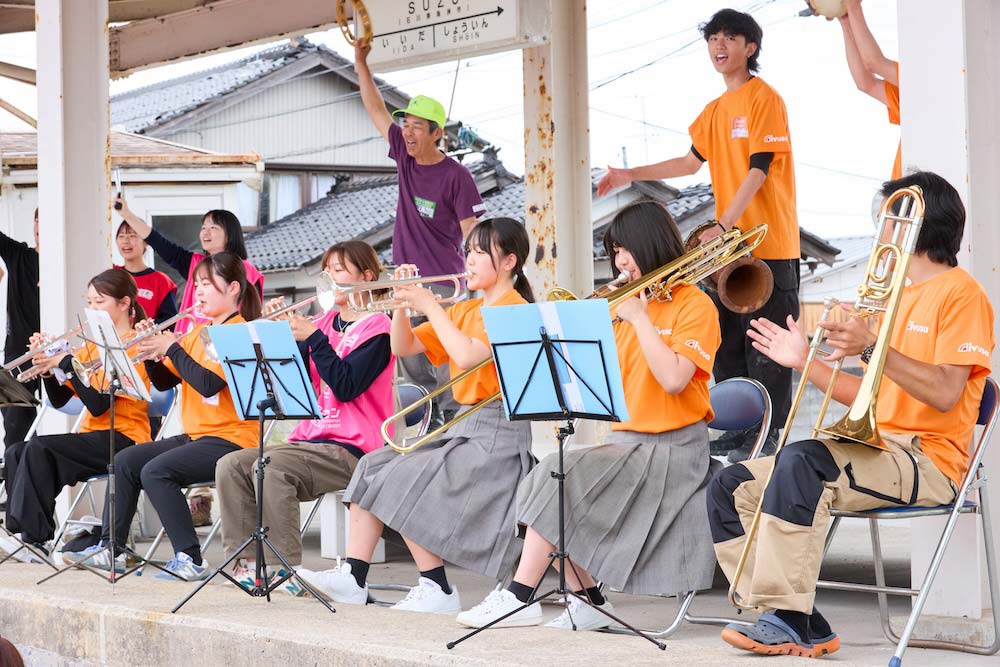
The final piece in the program was “Marezora,” the theme song of NHK’s serial televised novel “Mare,” parts of which were set in the Noto Peninsula. Some audience members had tears in their eyes, reflecting how deeply the performance by the Iida High School Wind Band had touched the hearts of residents who continue to battle bravely to restore the region after the earthquake.
The concert taught students the importance of human connections
What were the students’ thoughts about the successful concert? We spoke with Ms. Katsurahara, the wind band’s president, and Mr. Otsubo, its vice president.
The Nippon Foundation Journal Editing Department: Where were you when the earthquake struck?
Katsurahara: My family owns a shrine, and I was helping as a shrine maiden at the time. The torii gate of the shrine collapsed, but thankfully our house remained intact, and we have been sheltering there since.
Otsubo: The earthquake caused a landslide on the mountain behind our house, and the debris hit our house directly. Fortunately, we managed to escape through the wreckage. We are now living in an accommodation facility in Suzu City, and I am attending school from there.
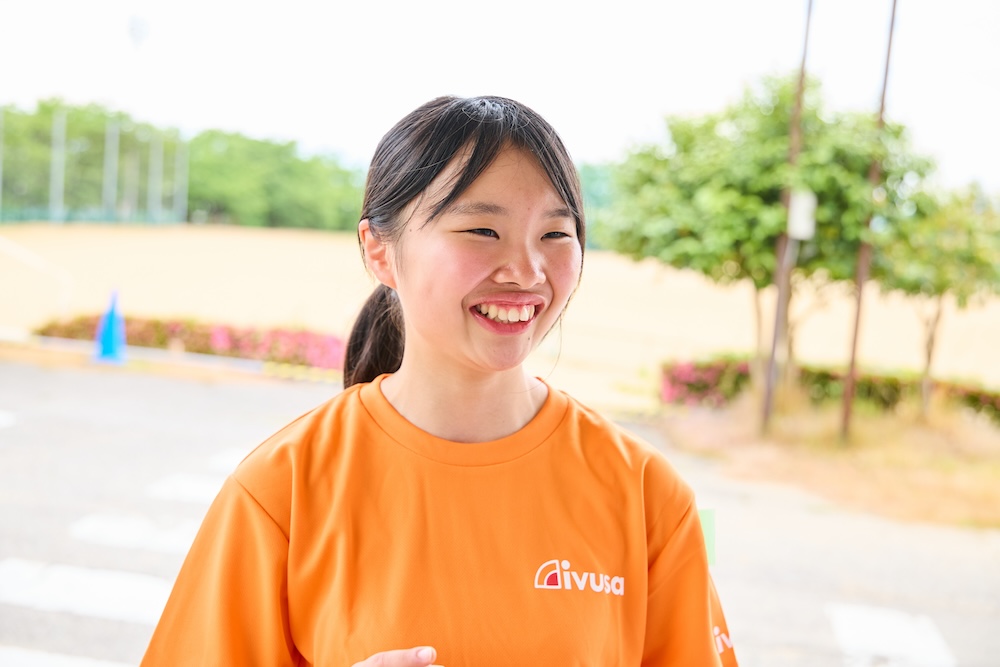
Otsubo: Although school club activities resumed around late January, frequent aftershocks meant that we could only practice for about an hour at a time at first. It’s only recently that we’ve been able to start practicing again in earnest.
Katsurahara: That said, not everything is back to normal. Some students had to transfer schools due to the earthquake, so our band, which used to have 11 members, is now down to eight. While I’m glad we can start practicing again, it was tough to lose some of our friends and bandmates.
Otsubo: We didn’t have enough members to cover all the parts, which made our sound a bit thinner. Even so, being able to gather together and play as a group means a lot to us.
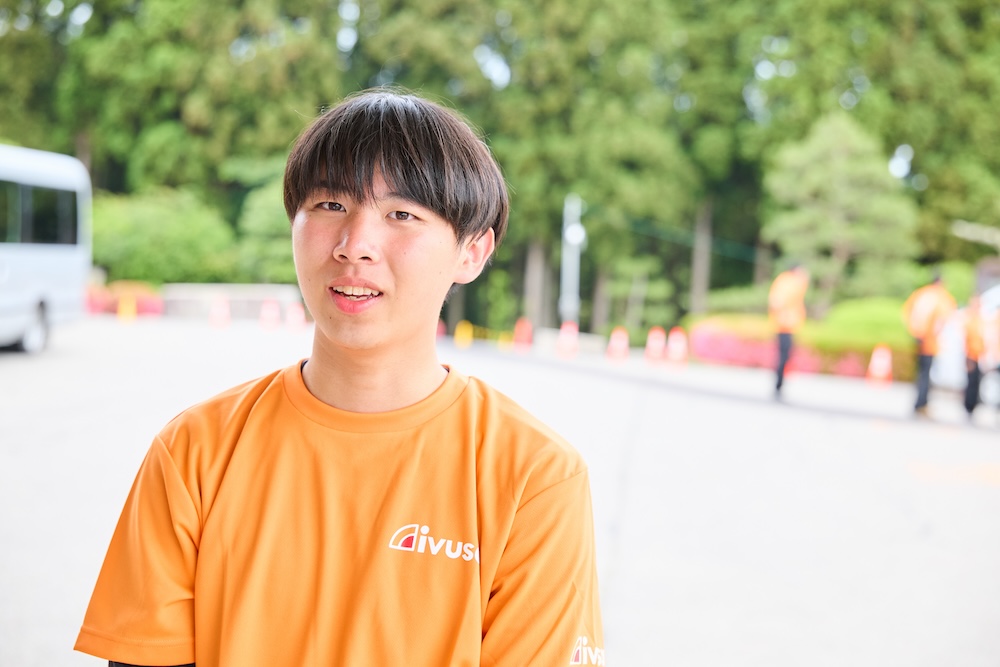
Journal: Despite the reduction in the band’s members, today’s concert was a great success, wasn’t it.
Katsurahara: Thank you. We were surprised by how many people turned up. We were a little nervous playing in front of such a big audience, but it was rewarding being able to share our music with so many people.
Otsubo: The turnout far exceeded our past annual concerts. It was a big surprise, but an incredible experience.
Journal: Many volunteers working to support relief efforts also joined the concert.
Otsubo: I actually reached out to a member of DRT-JAPAN, one of the volunteer groups who joined us today. It was this person who found and retrieved my clarinet and oboe from my house after it was buried in the landslide. Since we had that connection, I asked them, “Would you like to join us for our concert?”
Journal: This led to participation not only from DRT-JAPAN but also many volunteers from IVUSA and students working with The Nippon Foundation.
Katsurahara: That’s right. This concert really made me appreciate the importance of human connections. We made bonds with people we’d never met before, and I’m truly overwhelmed with gratitude.
This is why I want to do everything I can to repay that kindness in the future. This concert was also a major milestone for us third-year students, as we’re about to start our preparations for university entrance exams in earnest. Although I haven’t decided on my dreams for the future yet, I plan to go to university and study sociology.
Otsubo: I plan to study at a junior college in Ishikawa Prefecture and earn my certification as a librarian. I also plan to continue pursuing my passion for music by joining a community wind orchestra in addition to working as a librarian.
Eventually, I’d like to return to this town. The Noto Peninsula holds many traditions, and the people here continue to cherish and preserve them. That’s why I hope people across Japan won’t forget about the situation in the Noto Peninsula region. Seeing negative comments on social media, like “Rebuilding that place is a waste of money,” really breaks my heart.
I really hope that the struggles of the people here who are fighting to keep going and restore their lives won’t be forgotten.
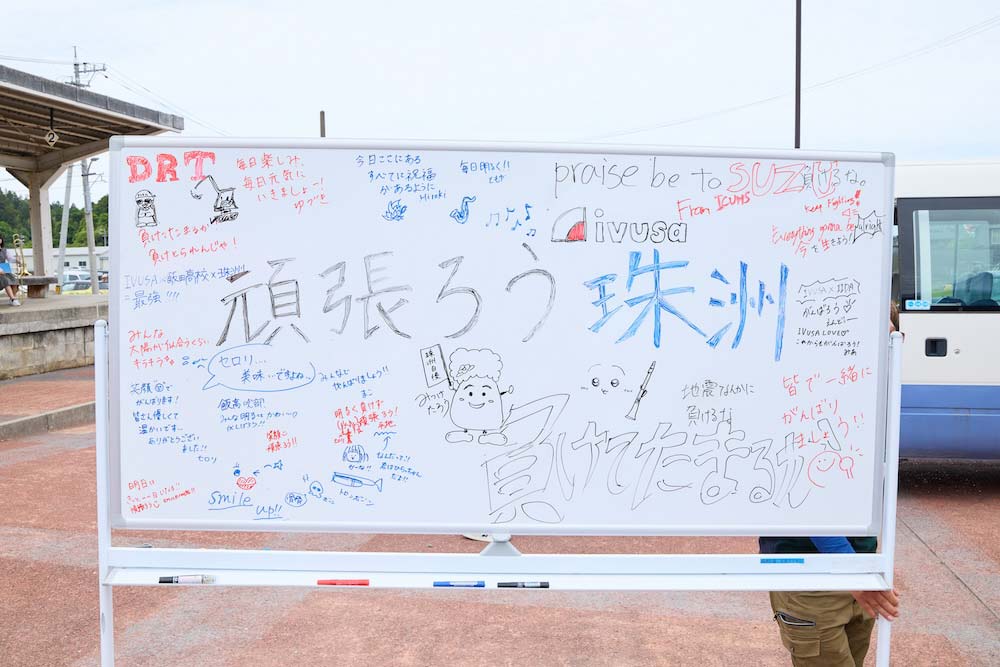
Teacher expresses hope that the students will grow into adults who can express gratitude
Talking to the students, it is clear that the members of the wind band gained something very valuable from this concert. Afterwards, we spoke with a teacher in charge of the band, Ms. Nishiki.
Journal: Now that the concert is finished, how do you feel?
Nishiki: First and foremost, I’m relieved that the concert went smoothly. I’m also happy to see the students smiling more.
We planned this concert because the students wanted to bring some hope and encouragement to the people of the Noto Peninsula. However, some of the students were also going through tough times in their own lives, and they must have been anxious about the performance. I believe some students were in situations where, despite wanting to do their best, willpower alone wasn’t enough. Even as they expressed a desire to bring cheer to others, I’m sure they were struggling themselves.
Despite this, they were able to overcome these challenges thanks to the volunteers who supported them in so many ways. I believe it was this support that provided the momentum they needed to make the concert a success.
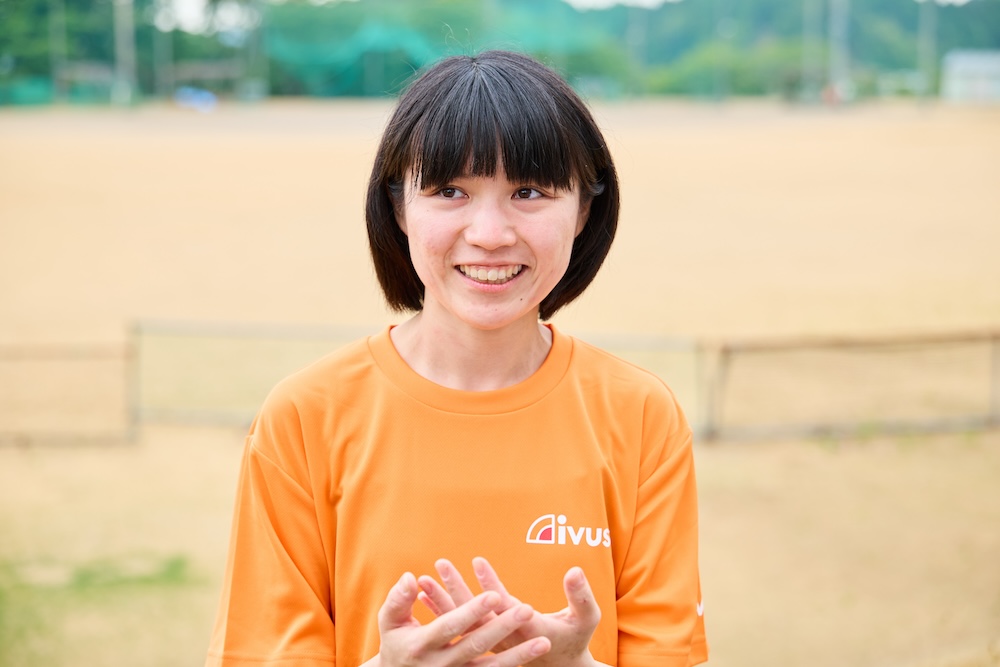
Journal: The performance moved some of the audience members to tears.
Nishiki: I’m happy if the performance brought them even a little cheer. I believe the students also gained a lot of strength from the experience. By putting on the concert, they realized that there are things that they can personally do to help others, and I believe this experience will give them hope for the future.
When events beyond your control arise, it’s natural to feel like giving up. But if the students find themselves in difficult situations in the future, I hope they will think back to this concert and find the strength to move forward.
Journal: The third-year students will now embark on a new journey toward their futures.
Nishiki: I hope those young men and women will continue pursuing their goals without giving up. At the same time, I hope they learn not to overburden themselves with things they can’t do on their own. By interacting with the volunteers to put on the concert, I think they learned the importance of supporting one another by having one person’s strengths in a certain area compensate for another’s weakness.
So moving forward, I hope they become adults who strive to do their absolute best with the skills they have, while also appreciating and expressing their gratitude to those who help make up for their shortcomings.
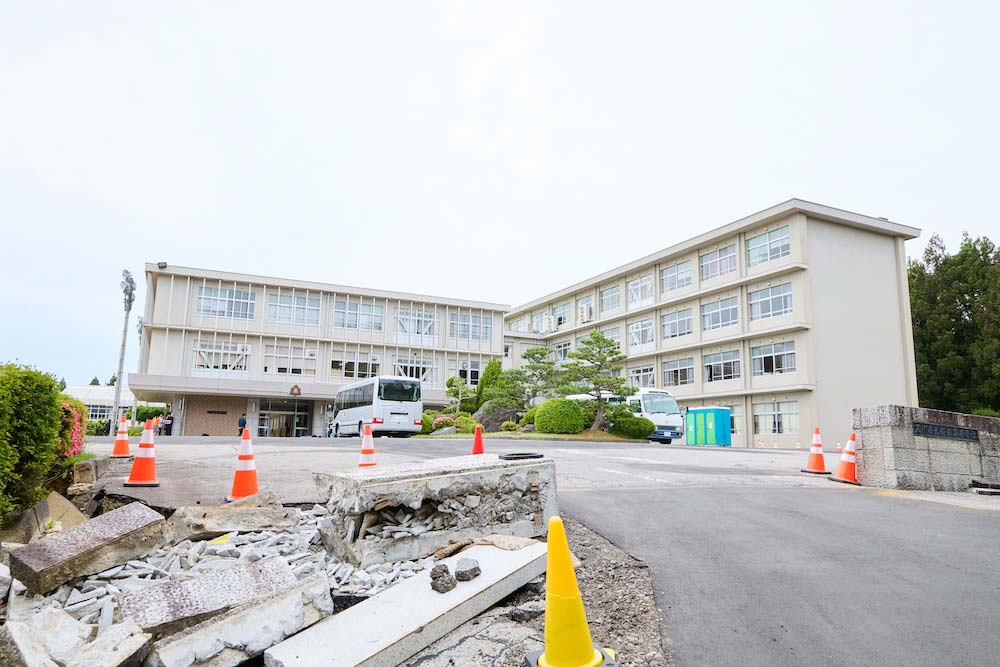
The children living in the disaster area represent the hope for the future of the Noto Peninsula
Volunteers played a vital role in making the concert a success. We spoke with Mr. Sugishita of DRT-JAPAN, who played a central role in organizing the event, about his reflections on participating in the concert.
Journal: How do you feel now that the concert is over?
Sugishita: We only had one opportunity to practice together with everyone, but I’m glad the concert was a success. Most of all, I was happy to see the students in the band smiling — the children living here represent our hope for the future.
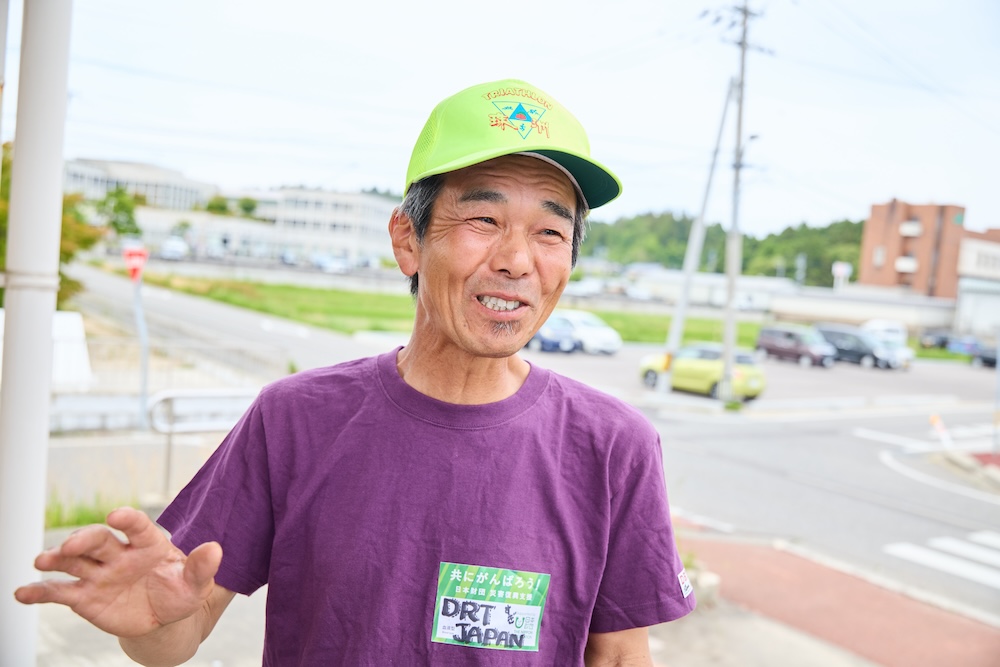
Journal: I understand it was Mr. Otsubo from the wind band who first suggested that volunteers participate in the concert
Sugishita: That’s right. We became friends after I found his clarinet and oboe in the wreckage of his house, and soon after, he asked me, “Would you like to join me in a concert?” It took me by surprise.
Although I used to play the trumpet myself back in the day, I hadn’t played in about 40 years. Nonetheless, I wanted to do whatever I could to help, so I reached out to my fellow volunteers as well.
Now that the concert is over, I think the children themselves must have gained courage from the experience, realizing that there are things they can personally do to help, serving as the kindling that keeps a small flame of hope alive. I really hope that through this experience, the students realized that their efforts can make a difference.
Journal: How are the recovery efforts on the Noto Peninsula progressing?
Sugishita: There is still a long way to go. To be honest, it’s frustrating that many people still don’t realize just how devastating this disaster was to the region. When I arrived on the Noto Peninsula, our first priority was saving lives. In other words, from the outset, this wasn’t simply about rebuilding infrastructure. Our volunteer team was operating in a life-and-death situation.
However, the extent of the damage is poorly understood and the government response has been slow. I want more people to know the reality of life in the disaster zone and I hope they will keep the region in their thoughts. Here in Noto, the children who represent the region’s future are battling to survive and lead a normal life.
Editor’s Note
Listening to the concert, what stood out most was the strength and hope of the people living in the Noto Peninsula area.
At the same time, it became clear that the burden of recovery should not fall solely on the residents alone. Although six months have passed since the earthquake, there is still a long road to recovery ahead. We, as fellow citizens of Japan, must not forget the devastation that the earthquake has brought to the area.
People in the disaster-affected area are still striving to overcome a range of challenges. In addition to holding onto this resilience as a source of hope, it is vital that each of us continues to offer whatever support we can. We feel that doing so will ultimately lead to a more rapid recovery for the communities affected by the earthquake.
Text: The Nippon Foundation Journal Editing Department
Photo: Eizaburo Sogo
List of Field Notes: Articles Related to the 2024 Noto Peninsula Earthquake
- Challenges Facing Disaster Zones Immediately After a Disaster Strikes
- Six Months After the Noto Peninsula Earthquake
- Support Challenges for Persons Requiring Special Assistance Who Have Difficulty Evacuating or Calling for Help on Their Own
Related Themes
Related Links
- 【The Nippon Foundation’s Projects】Support for Disaster Recovery
- Interim Report on 2024 Noto Peninsula Earthquake and Flood Damage Relief
- Disaster Recovery
- In the Cause of Life